
%20(11).png)
TL;DR: Generative AI models create new content from patterns in training data, and enterprises are deploying them across 4 main areas: personalization, content creation, product design, and translation. The technology delivers real productivity gains but brings compliance and security risks that need deliberate governance. TextCortex gives enterprise teams secure, multi-model AI infrastructure with knowledge integration, agent workflows, and 30,000+ integrations.
Generative AI applications are becoming a practical part of enterprise operations. The ability to automate complex tasks, generate content at scale, and surface insights from large knowledge bases has moved from experiment to production for a growing number of businesses.
This article covers what generative AI is, how it works, the risks you need to manage, and the tools delivering real enterprise value today.
Generative AI
Generative AI is a type of artificial intelligence that involves creating models that can generate new data or content that is similar to the input data it was trained on.

How Do Generative AI Models Work?
Generative AI models use deep learning techniques to learn patterns and relationships in the input data, then generate new data that is similar in style or content.
Training involves feeding the model large amounts of data in the form of images, text, or other content. The model learns patterns and creates a mathematical representation of that knowledge. Once trained, it generates new outputs in response to prompts.
Key Benefits for Enterprises
Generative AI creates direct business value across 4 areas.
Personalization. Generative AI creates personalized content and recommendations for individual customers based on past behavior and preferences. A model trained on customer purchase history can generate tailored recommendations at scale, without manual curation.
Content creation. Enterprises automatically generate content for websites, social media, product descriptions, and marketing materials, reducing the time and cost of content production significantly.
Product design. Generative AI creates new designs based on input parameters such as size, shape, materials, and constraints. This is particularly useful in fields like architecture, manufacturing, and product development.
Translation. Generative AI translates content into 25+ languages, making it easier to reach customers across markets without maintaining separate translation teams.
Risks to Manage
Deploying generative AI in enterprise environments requires deliberate risk management. Models can reflect biases from training data, producing unfair or inaccurate outputs. Outputs resembling existing copyrighted material raise intellectual property concerns. Models require large amounts of training data, which creates privacy and security exposure if not properly governed.
Enterprises must have security infrastructure in place before deploying AI at scale. Choosing a platform with ISO 27001, SOC 2, and GDPR certifications removes much of this compliance risk upfront.
AI Applications for Enterprises
Here are 4 of the most widely deployed generative AI tools in enterprise environments today.
ChatGPT (GPT-4o)
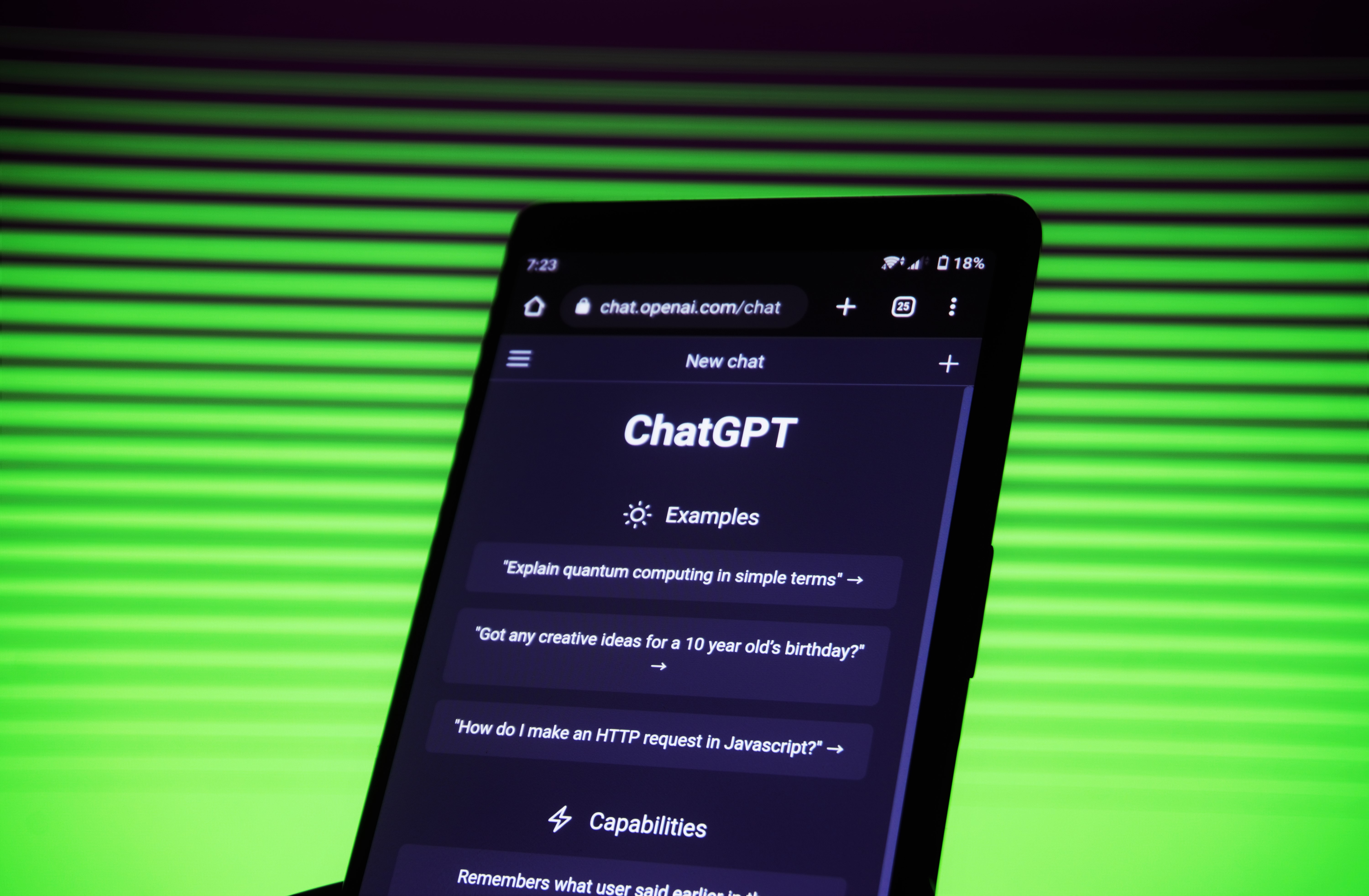
OpenAI's ChatGPT, powered by GPT-4o, is the most widely adopted AI assistant in the enterprise market. It handles text generation, code review, data analysis, document summarization, and complex reasoning. ChatGPT Team and Enterprise plans include data controls that prevent inputs from being used for model training.
Microsoft 365 Copilot
Microsoft 365 Copilot integrates directly into Word, Excel, PowerPoint, Outlook, and Teams. It generates drafts, summarizes meetings, builds presentations from prompts, and analyzes data inside the applications your team already uses. For Microsoft-heavy organizations, it's typically the lowest-friction entry point for enterprise AI.
Google Gemini for Workspace
Google Gemini for Workspace brings AI capabilities into Docs, Sheets, Gmail, and Meet. It handles summarization, drafting, and analysis inside Google's productivity suite. For organizations already on Google Workspace, it integrates without additional infrastructure setup.
UiPath
UiPath is the leading Robotic Process Automation (RPA) platform for automating repetitive tasks across enterprise systems. It's particularly strong for structured, rule-based automation. With added AI capabilities, it now handles more complex document processing and decision automation workflows.
TextCortex: Enterprise AI Infrastructure
TextCortex is EU-based enterprise AI infrastructure that lets organizations deploy and govern AI agents on their own company data, securely. It's used by Fortune 500 and DAX 40 companies and is ISO 27001 certified, SOC 2 certified, GDPR compliant, and EU AI Act compliant.
Knowledge Integration
TextCortex connects to Notion, Google Drive, SharePoint, OneDrive, and custom document repositories. Employees can search across all company knowledge in natural language and get direct answers, without manual uploads or IT intervention.
AI Flows and Agents
TextCortex Flows let teams automate multi-step workflows across systems. Repetitive processes that previously required human coordination become agents that run reliably without intervention.
Multi-Model Access
GPT-4o, Claude, Gemini, and other models are all accessible from a single platform. Teams route tasks to the best model for the job without switching tools or managing separate subscriptions.
Customizable Templates
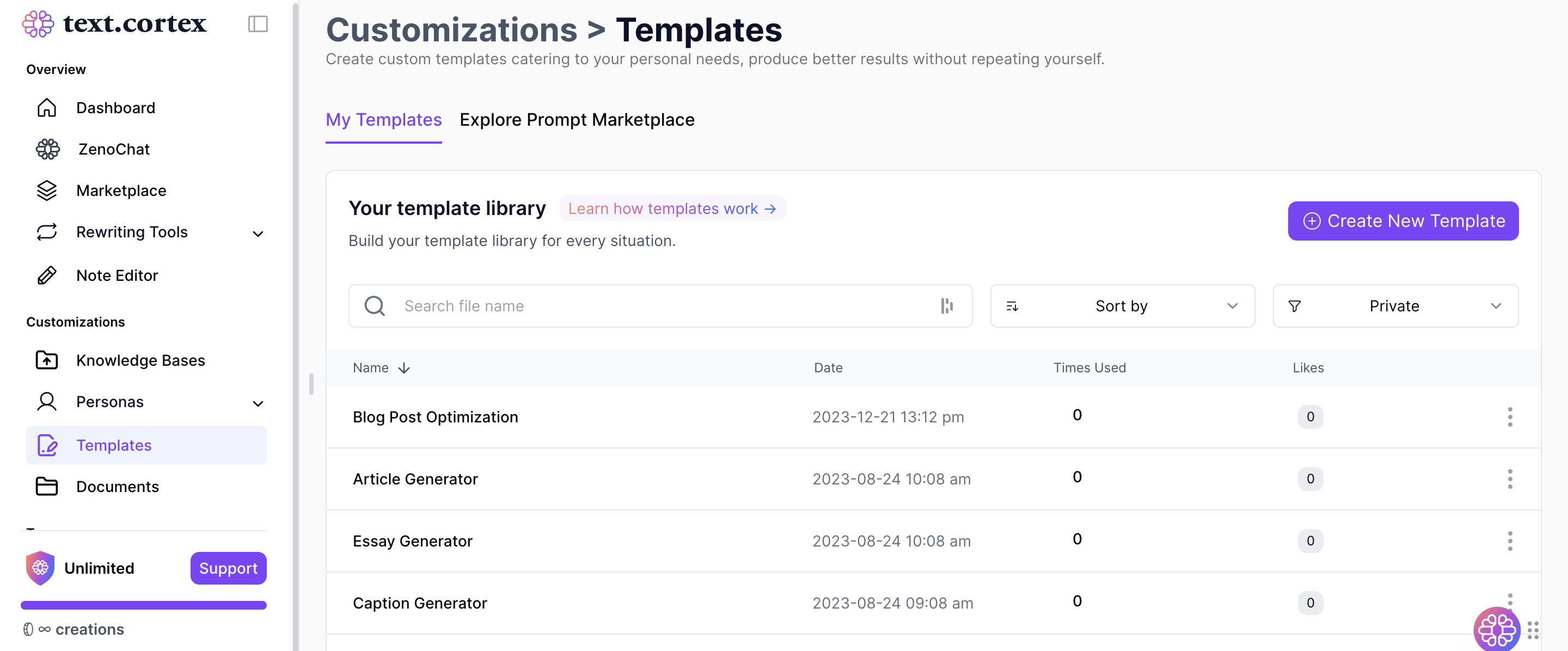
Custom Templates let teams build reusable prompts for specific tasks, with dynamic input fields filled in for each new interaction. The Marketplace also gives access to community-created templates.
Proven Results
From the Atares case study: the team saves 20 hours per week across their workflows after deploying TextCortex as their enterprise AI platform, automating content creation, research, and knowledge retrieval tasks that previously required manual effort.
Frequently Asked Questions
What is generative AI and how does it differ from traditional AI?
Traditional AI classifies, predicts, or makes decisions based on existing data. Generative AI creates new content: text, images, code, audio, or video. It learns patterns from training data and uses those patterns to generate new outputs in response to prompts.
What are the main use cases for generative AI in enterprises?
The 4 most common enterprise use cases are personalization, content creation, product design, and translation. Enterprises also deploy generative AI for knowledge management, agent automation, customer service, and code generation.
What are the biggest risks of deploying generative AI in an enterprise?
Bias in model outputs, intellectual property exposure, data privacy issues, and security risk if the platform isn't properly certified. Choosing a platform with ISO 27001, SOC 2, and GDPR compliance significantly reduces these risks.
How does TextCortex differ from ChatGPT or Microsoft Copilot?
TextCortex is designed specifically for enterprise knowledge governance and multi-model access. It lets teams build AI agents on their own company data, deploy across all tools via a browser extension, and choose from GPT-4o, Claude, and Gemini on a single platform. Its EU base and four certifications (ISO 27001, SOC 2, GDPR, EU AI Act) make it particularly relevant for European enterprises and regulated industries.
What security certifications should an enterprise AI tool have?
ISO 27001 and SOC 2 are the baseline. For organizations in Europe or handling EU citizen data, GDPR compliance and EU AI Act readiness are also required.
How long does it take to deploy TextCortex for an enterprise team?
Initial deployment takes hours. Full enterprise adoption, including knowledge base setup, team onboarding, and certification, takes a few weeks through TextCortex's structured 3-month program with 4 workshops and a dedicated account manager.
.png)
.png)
.png)