
%20(42).png)
AI reduces workload and automates repetitive tasks for individuals and teams alike. Generative AI takes this further: it produces unique text, visuals, code, and structured data on demand, making it useful across nearly every enterprise function.
In this article, we will cover what generative AI is and walk through 6 enterprise use cases that decision-makers are prioritizing right now.
TL;DR: Generative AI automates repetitive tasks, accelerates content production, personalizes customer interactions, and surfaces institutional knowledge on demand. McKinsey's 2025 research puts AI adoption at 78% of organizations globally, with generative AI specifically used by 71% of companies in at least one business function. The 6 use cases below span knowledge management, customer support, content generation, sales, code, and employee operations.
Generative AI Overview
Generative AI is a program that analyses and learns text, visuals, code, and other types of data. This data is used in different ways depending on the purpose of the AI and is learned by generative AI to generate the perfect output. For example, large language models (LLMs) are used for text and language, and GANs and VAEs are used for images or videos.
How Does Generative AI Work?
Generative AI relies on a command to produce output using its diverse training data. Upon receiving a user prompt, the AI tool scrutinizes it, drawing on its trained data, parameters, and patterns to generate the desired output. By selecting data with the highest probability based on its parameters, generative AI creates output quickly, often in just a few seconds.
While each output from generative AI is original and distinctive, it adheres to specific patterns. The quality of output from an AI tool depends heavily on its training data and parameters. If an AI tool is trained to create fictional narratives, using it to generate business emails or website copy may produce unsatisfactory outcomes.
Generative AI Tool Types
Generative AI tools fall into 2 categories: ready-to-use, and customizable with your own data.
Ready-to-use AI tools are trained by their developers with the same parameters for everyone, ChatGPT or Midjourney, for instance. The advantage: you can start using them by entering a prompt without any further configuration. These tools handle general enterprise tasks well.
Customizable AI tools let you add your own company data and generate output using that data. The advantage here is that you can build workflows around your enterprise's specific context, customer support, internal knowledge retrieval, or data analysis.
Generative AI Enterprise Use Cases
Generative AI tools are suitable for a wide range of enterprise use cases with their code, text, and image generation capabilities. Here are the 6 use cases shaping adoption in 2025.
Knowledge Management & Collaboration
One of the most impactful enterprise use cases for generative AI is knowledge management, specifically, making institutional knowledge accessible and actionable for every team member, including new hires.
TextCortex lets organizations integrate company data and use it across all enterprise tasks, from content generation to structured knowledge retrieval.
Results from one of our case studies:
- TextCortex was implemented for Kemény Boehme Consultants, and today employees report increased efficiency and productivity (saving 24 hours/month on average).
- AICX, an ecosystem partner of TextCortex, helped achieve a 70% activation rate of the team within the first weeks.
- Employee confidence in using and working with AI increased by 60%.
- The implementation results in a 28x return on investment (ROI).
TextCortex also smoothes the initial training and onboarding process by giving new staff access to company resources via natural language queries. New employees can get the information they need by asking questions about the enterprise rather than waiting for a colleague or digging through documents.
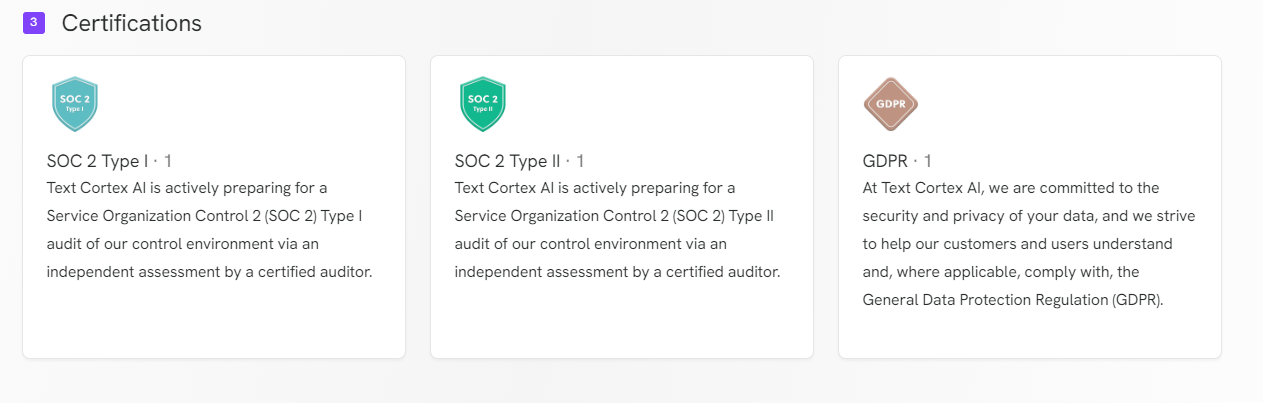
TextCortex deploys ISO 27001 and SOC 2 certified security standards to keep your enterprise data safe and private. Your data stays within your controlled infrastructure.
Customer Support and Customer Service
Traditional chatbots give pre-prepared standard answers to customers. AI-powered chatbots give unique, context-aware responses to each customer, and they can be customized with your enterprise data to maintain your brand's tone of voice.
See how Klarna demonstrated the impact of AI in customer support operations:
- The AI assistant handled 2.3 million conversations, two-thirds of Klarna's customer service chats
- It is doing the equivalent work of 700 full-time agents
- It is on par with human agents in customer satisfaction scores
- More accurate in errand resolution, leading to a 25% drop in repeat inquiries
- Customers resolve their errands in less than 2 minutes, compared to 11 minutes previously
- It's available in 23 markets, 24/7 and communicates in more than 35 languages
BCG research shows that customer-facing support functions generate 38% of AI's total business value in most organizations, making this one of the highest-ROI places to start.1
Content Generation
One major enterprise use case for generative AI is on the operational side: generating content like blog posts, how-to guides, FAQs, and social media posts at scale.
You can generate general content through ready-to-use AI tools, or produce target-focused content with customizable AI tools such as TextCortex. Content types you can produce using generative AI tools include:
- Blog Posts
- Product Descriptions
- Emails
- Marketing Copies
- Social Media Captions
- Articles
- Hashtags
- Images
Sales and Marketing
The most effective modern marketing uses digital communication methods, email, social media, SMS. But customers delete generic marketing emails addressed to everyone. With generative AI tools, you can analyse your customer base and generate personalized marketing emails and newsletters for each customer, introducing the products or services each customer actually needs.
McKinsey's 2025 research identifies marketing and sales as the top function for generative AI deployment, with adoption having more than doubled since 2023. Personalized outreach, AI-generated proposals, and pipeline automation are the use cases enterprise sales teams are acting on now.2
Code Generation
Software developers use generative AI to reduce their workload and automate repetitive coding tasks. Experienced developers can apply models like GPT-4o, Claude Sonnet 4, or Gemini 2.0 to complete complex coding tasks at higher performance. Advanced LLMs can detect and correct errors in given code or provide a structured error summary.
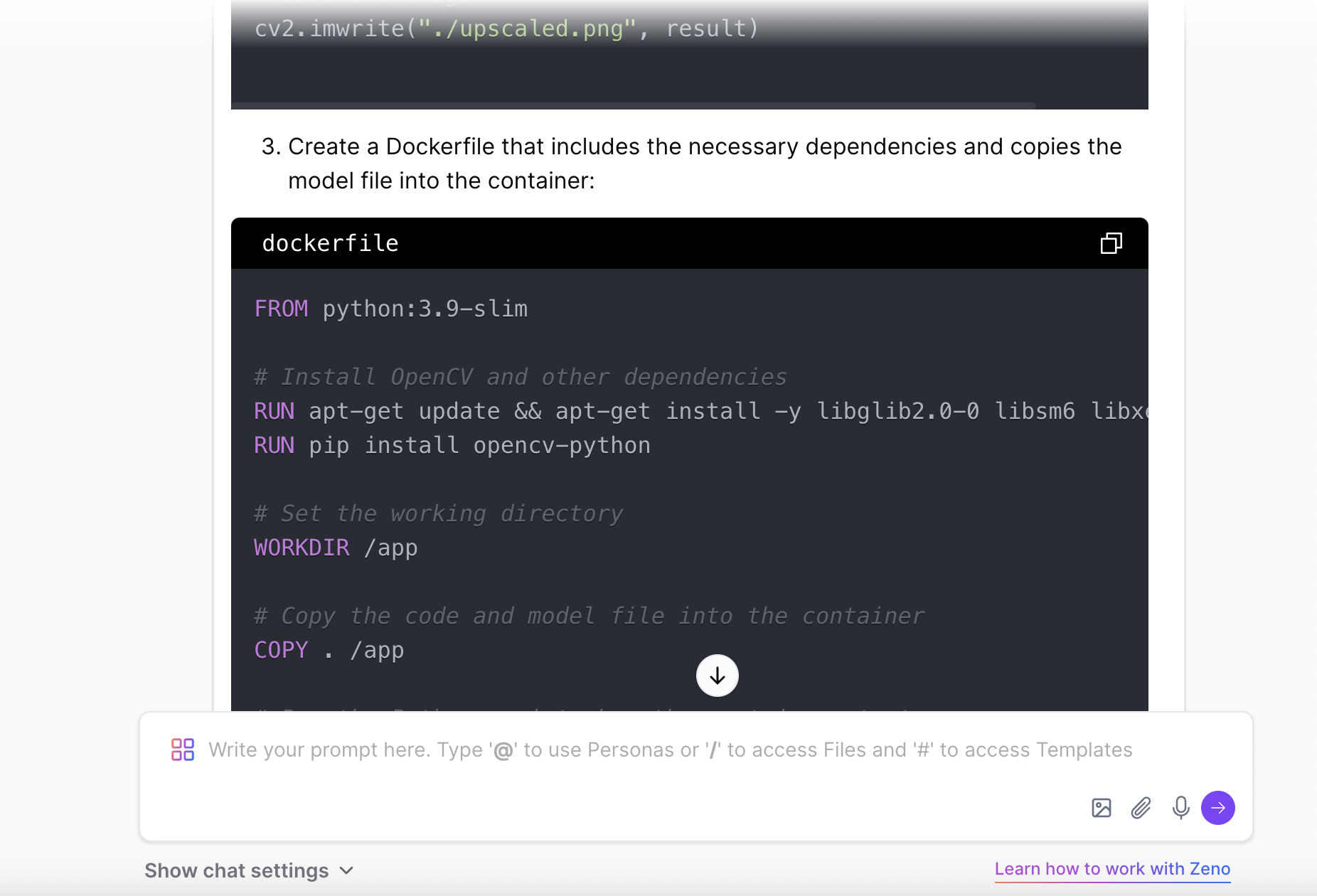
Generative AI tools can also test code to confirm it works as intended and meets quality standards. You can use it to complete your enterprise's coding tasks and increase development throughput across sprints.
Enterprise and Employee Management
AI tools that integrate with your enterprise data can handle team tasks like employee-manager interactions, performance evaluations, feedback collection, knowledge sharing, and task management. Generative AI gives managers a structured way to track roadmap progress, keep teams aligned, and surface the information each employee needs.
MAHLE, a global automotive supplier and DAX company, achieved 65% AI adoption within the first month of deploying TextCortex, with employees saving more than 5 hours per week each. See the full case study here.
TextCortex for Enterprise Teams
TextCortex is an EU-based enterprise AI platform that lets organizations deploy and govern AI agents on their own company data, securely. It gives every team (sales, legal, product, HR, support) access to a multi-model AI assistant running on GPT-4o, Claude, Gemini, and others from one platform.
It's ISO 27001 certified, SOC 2 certified, fully GDPR and EU AI Act compliant. Fortune 500 and DAX 40 companies use it today. The onboarding includes a 3-month AI training program: 4 workshops, team certification, and a dedicated account manager to drive adoption from the start.
Frequently Asked Questions
What are the most common generative AI use cases for enterprises?
The most common enterprise use cases include knowledge management, customer support automation, content generation, personalized sales and marketing, code generation, and employee onboarding. McKinsey's 2025 data shows enterprises are using AI across an average of 3 business functions simultaneously.
How does generative AI improve knowledge management in enterprises?
Generative AI connects to company data sources and lets employees retrieve information through natural language queries instead of digging through file systems. This reduces onboarding time, speeds up decision-making, and prevents institutional knowledge from leaving with employees.
Is generative AI safe for enterprise data?
It depends on the platform. Enterprise-grade AI tools like TextCortex are ISO 27001 and SOC 2 certified, GDPR compliant, and run on private infrastructure so your data never trains public models. Always verify compliance certifications before deploying any AI tool on sensitive company data.
How quickly can an enterprise see ROI from generative AI?
Enterprise deployments typically move from pilot to meaningful impact in 7 to 12 months. TextCortex customers like KBC report a 28x ROI once adoption reaches critical mass within the team, achieved at a 70% activation rate within the first weeks of deployment.
What is the difference between ready-to-use and customizable generative AI tools?
Ready-to-use tools like ChatGPT are trained on public data and available off the shelf. Customizable tools let you integrate your own company data, which makes them far more useful for specific enterprise tasks like customer support, internal knowledge retrieval, and workflow automation.
How do enterprises use generative AI in sales and marketing?
Enterprises use generative AI to analyze customer data and generate personalized outreach, automate proposal drafting, score leads, and build targeted messaging at scale. McKinsey identifies marketing and sales as the leading function for gen AI deployment, with adoption having more than doubled since 2023.
1 BCG. "AI-Powered Customer Service Automation." 2024. bcg.com
2 McKinsey & Company. "The State of AI: How Organizations Are Rewiring to Capture Value." 2025. mckinsey.com
.png)
.png)
.png)