
.png)
Every new technology positively impacts the functioning of professions, and AI is no exception. Just as AI technology has transformed every profession, it has also transformed the way the legal profession works. In today's business environment, professions that integrate AI technology into their workspace operate more effectively and provide higher-quality service to their clients. If you're curious about how AI technology is changing the legal profession, read on!
In this article, we'll examine how AI is changing the legal profession.
Ready?
Let's dive in!
TL; DR
- AI for legal professions are AI tools that offer features for lawyers and other legal professions.
- AI tools aim to assist, rather than replace, professions such as lawyers and paralegals.
- AI tools support the legal profession by accelerating legal search and documentation.
- Legal professions can use AI tools to facilitate document review, predictive analytics, and client engagement.
- If you're looking for an AI solution that will support legal professions with a wide range of tasks, including automation, TextCortex is the way to go.
What is AI for Law?
AI for law refers to artificial intelligence applications that offer features to assist with legal tasks. AI tools are used by the legal profession for their capabilities to automate repetitive tasks, facilitate research, and analyze data and legal documents.
Will AI Replace Lawyers?
The short answer is no. While AI tools offer features like data analysis and document generation, they are not a replacement for lawyers. However, lawyers can lighten their workload and save time by leveraging AI tools' deep thinking and analytical capabilities.
Will AI Replace Paralegals?
While AI tools have the capabilities to complete basic paralegal tasks, when it comes to complex tasks, human input is needed. Therefore, it would be more effective for paralegals to lighten their workload by using AI tools for tasks such as data analysis and identifying relevant laws and cases.
How is AI Changing the Legal Profession?
Thanks to their various features, AI tools can transform the legal profession and its operations. From lawyers to prosecutors to legal teams, all legal professions have the potential to reduce their workload by using AI tools. Let's examine how AI is changing the legal profession.
1. AI-powered Legal Search
AI tools with legal search capabilities are effective solutions for accelerating research tasks in the legal profession. Traditionally, legal search is a time-consuming and cumbersome task. However, AI tools can now perform this task faster, analyzing large datasets in seconds and identifying relevant information. With AI legal search, legal professionals can reduce research processes that would manually take tens of hours to just a few minutes.
2. Legal Document Drafting
Legal document creation, one of the repetitive tasks in legal practice, can be completed much more easily thanks to AI. AI tools' natural language capabilities allow you to quickly perform tasks such as contract drafting, legal form creation, and agreement drafting. Furthermore, some AI tools provide templates for legal documents, allowing you to complete your legal document creation process much faster and more efficiently.
3. Document Review
Legal professionals are often responsible for reading and analyzing dozens of documents. Thanks to AI tools' data analysis, you can review your documents by uploading them, connecting them, and even chatting with them. If you want to speed up the document review process, AI tools are the perfect solution for you.
4. Predictive Analytics
In addition to their data analysis capabilities, AI tools also have the ability to generate useful insights from the data they analyze. AI can analyze historical data to forecast the outcomes of cases, allowing lawyers to assess the likelihood of success and tailor their strategies accordingly.
5. Enhanced Client Engagement via AI Chatbots
To better serve your clients in your legal firm, you can build custom AI chatbots and have them handle basic legal inquiries, schedule appointments, and provide 24/7 support. By enabling AI chatbots to interact with your clients, guide them, and provide the necessary support, you can free up employees to focus on more complex tasks.
6. Workflow Automation
The best part about AI tools with AI agent features is that they can automate all the tasks mentioned above, saving you time. AI agents can automate a wide range of tasks, from document review to legal research, saving time and increasing efficiency. AI agent frameworks also allow users to build custom solutions for specific tasks, enabling the creation of a tailored AI agent for a legal firm's unique needs.
Stay Ahead of the Curve with TextCortex AI
If you're looking for an AI tool to support your legal tasks, helping you with a wide range of tasks from legal research to document review, TextCortex is the way to go. TextCortex offers users AI agents for automation, legal search for research, knowledge bases for knowledge management, predictive analytics, document review, and writing assistance for legal document drafting.
Let's take a closer look at the features of TextCortex tailored for the legal profession.
AI-powered Legal Search
Using TextCortex's legal search feature, you can conduct research covering the constitutions, cases, and laws of 14+ countries. With TextCortex, you can efficiently perform legal searches, analyze large online datasets in seconds, and find relevant information with your query.
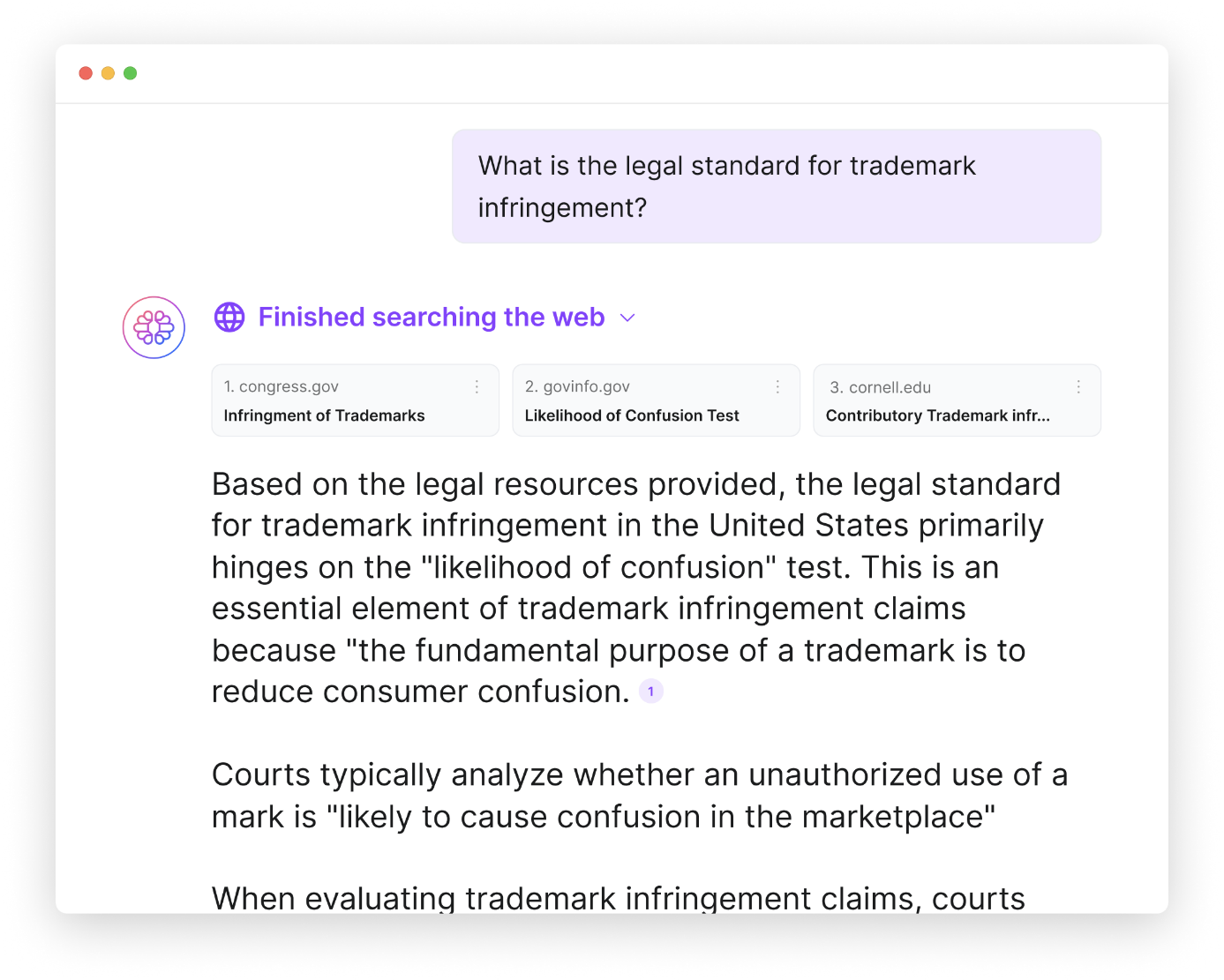
To activate TextCortex legal search, simply open the TextCortex web application or browser extension, click "legal search" in the chat settings, and select the target country.
Knowledge Bases for Document Review and Analysis
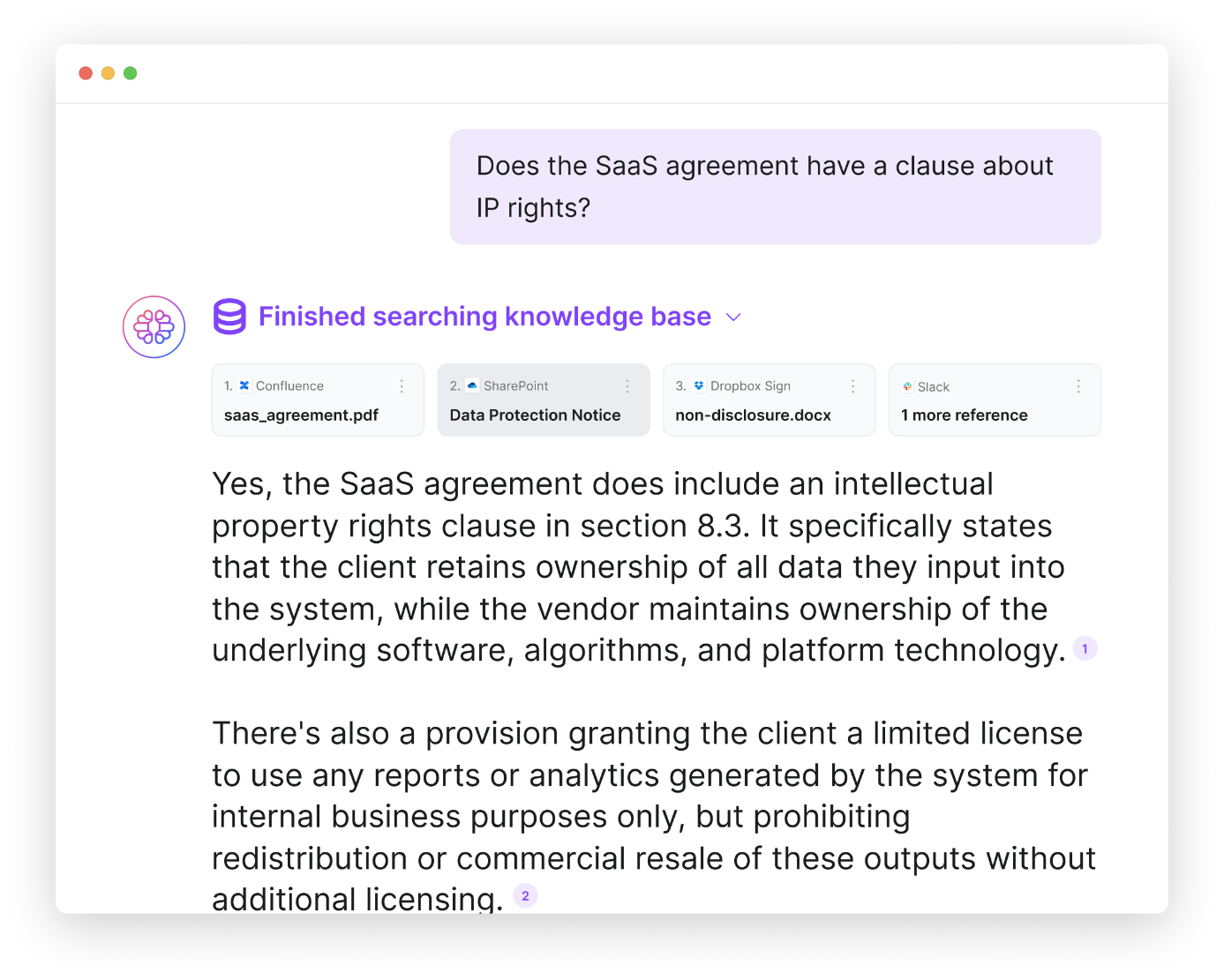
TextCortex offers users knowledge bases to which they can upload or connect their documents. With our knowledge bases, you can upload, categorize, analyze, generate insights, and chat with your legal documents. TextCortex knowledge bases integrate with tools like Google Drive, Microsoft OneDrive, and Notion. Once you upload or connect your documents to our knowledge base, you can chat with them, generate insights, and review them.
Writing Assistance for Legal Document Drafting
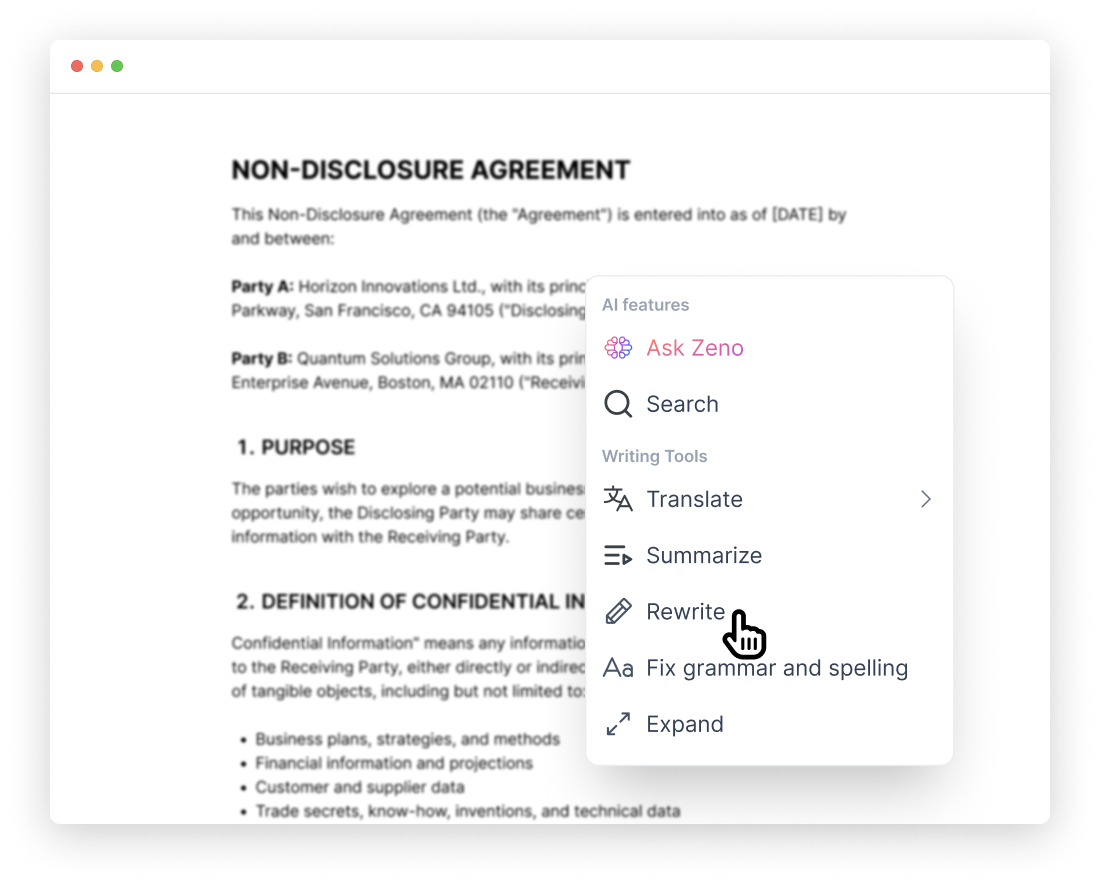
With TextCortex writing assistance, you can streamline and standardize all your legal documentation tasks, including contracts. Furthermore, by generating outlines and templates for your legal documents with TextCortex, you can enable all your employees to complete documentation tasks more efficiently.
Automate Repetitive Tasks via AI Agents
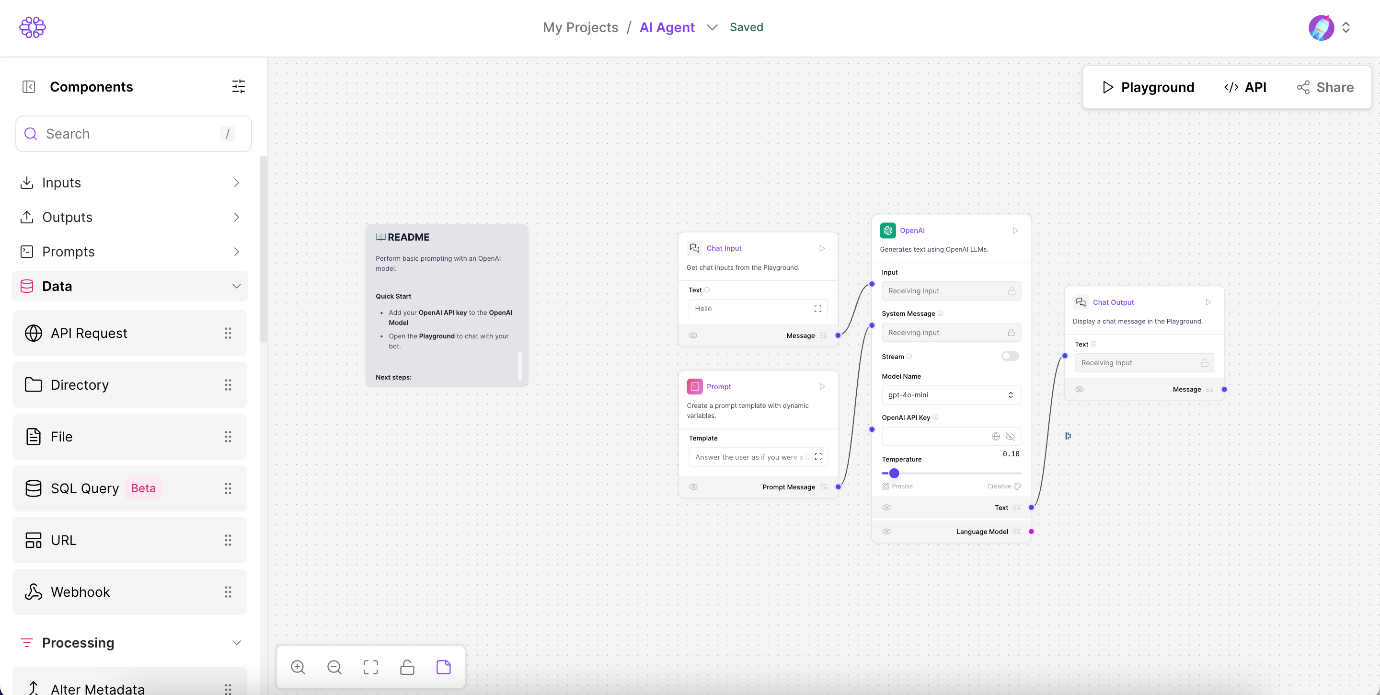
With the TextCortex AI agent framework, you can automate a variety of tasks, from document review to legal research, and free up your time for more complex tasks. The TextCortex AI agent framework allows you to build customized AI agents for your specific needs and tasks.
Frequently Asked Questions
How is AI transforming the legal profession?
AI tools help legal professionals automate repetitive tasks, accelerate legal research, and streamline document review and analytics. This allows them to complete tasks more efficiently and quickly, providing higher-quality service to their clients.
What are the disadvantages of AI in law?
The biggest disadvantage of AI in law is the risk of generating hallucinatory output. While refined, AI tools can still generate inaccurate, filler, and hallucinatory outputs on topics they lack knowledge about. Therefore, we recommend using AI tools as assistants to support you in your tasks rather than simply generating final output.
Is AI an ethical threat to the legal profession?
AI tools pose risks for legal professions because they can generate hallucinatory output or fake citations. Therefore, you should double-check the outputs when using AI tools.
.png)
.png)
.png)