%20(8).png)
Organizations are constantly searching for ways to enhance employee productivity and streamline operations. AI agents have emerged as a practical solution, offering automation, real-time assistance, and data-driven insights that let employees focus on work that actually requires human judgment.
This article explores how AI agents work, how they boost workplace productivity, and practical use cases across 3 key areas.
TL;DR: AI agents are sophisticated software programs that perform tasks autonomously using AI and machine learning. In the workplace, they boost productivity through task automation, real-time assistance, data-driven insights, 24/7 availability, and error reduction. Key use cases are streamlining repetitive tasks, enhancing decision-making, and improving team collaboration. TextCortex lets enterprises deploy AI agents on their own company data, with KBC customers saving 24 hours per month on average.
What Are AI Agents?
AI agents are sophisticated software programs designed to perform tasks autonomously or with minimal human intervention. These intelligent systems use artificial intelligence and machine learning algorithms to understand, interpret, and respond to various inputs and situations. In the workplace, AI agents serve as digital assistants, collaborating with human employees to streamline processes and enhance overall productivity.
The core strength of AI agents lies in their ability to learn and adapt. They can analyze patterns, make decisions based on vast amounts of data, and continuously improve their performance through experience. This adaptability makes them valuable in dynamic business environments where flexibility and quick decision-making matter.
How AI Agents Enhance Employee Productivity
AI agents boost productivity by changing how employees work across 5 dimensions:
- Task Automation: By taking over repetitive and time-consuming tasks, AI agents free up employees' time for more strategic work. This includes data entry, report generation, and basic customer inquiries.
- Real-time Assistance: AI agents provide instant support, offering information, suggestions, and solutions as employees work. This reduces time spent searching for information and minimizes workflow interruptions.
- Data-driven Insights: By analyzing large datasets quickly, AI agents offer valuable insights that inform decision-making, helping employees make more informed choices efficiently.
- 24/7 Availability: AI agents work around the clock, ensuring continuity in operations and support.
- Error Reduction: AI agents minimize human errors in repetitive tasks, improving accuracy and reducing time spent on corrections.
This enhanced efficiency allows employees to focus on higher-value work that requires uniquely human skills: creativity, critical thinking, emotional intelligence, and complex problem-solving.
Types of AI Agents Used in Business Environments
Various types of AI agents are deployed in modern business environments, each designed to address specific needs:
- Chatbots and Virtual Customer Service Agents: These handle customer inquiries, provide product information, and resolve simple issues, improving customer service efficiency.
- Virtual Personal Assistants: These agents help with scheduling, email management, and task prioritization, enhancing individual productivity.
- Data Analysis and Business Intelligence Tools: These process vast amounts of data to identify trends, predict outcomes, and provide actionable insights for strategic decision-making.
- Automated Writing Assistants: These aid in content creation by suggesting improvements, checking grammar and style, and generating draft content.
Use Cases of AI Agents for Productivity
Here are 3 key areas where AI agents are delivering measurable productivity gains.
Streamlining Repetitive Tasks and Automating Workflows
AI agents handle routine tasks across 4 areas that consume significant employee time:
Data Entry Automation
- AI-powered optical character recognition (OCR) extracts data from documents including handwritten forms, receipts, and invoices.
- Natural Language Processing (NLP) understands and categorizes unstructured data, making it easier to input into structured databases.
Report Generation
- AI agents automatically compile data from multiple sources, analyze trends, and generate comprehensive reports.
- Reports can be customized based on predefined templates and user preferences, ensuring consistency and saving time.
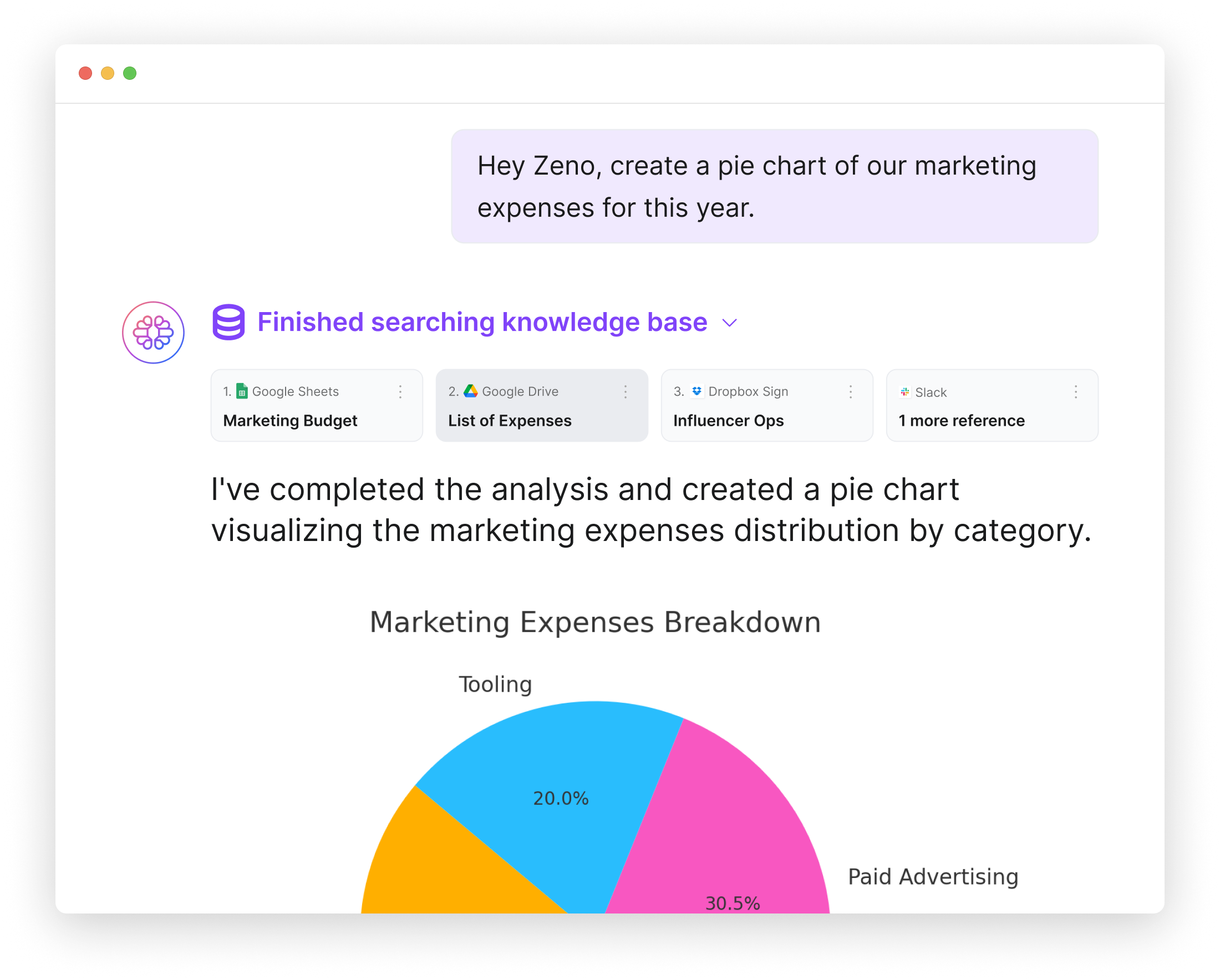
Email Management
- AI-powered email filters categorize incoming messages, prioritize important emails, and draft responses based on content analysis.
- Intelligent scheduling assistants manage calendar invites and coordinate meeting times among multiple participants.
Process Automation
- Robotic Process Automation (RPA) bots handle complex, rule-based tasks across multiple applications such as processing invoices or updating customer records.
- These bots work 24/7, reducing processing times and eliminating backlogs.
Key benefits of task automation: reduced human error, increased speed and efficiency, improved consistency in task execution, and more employee time for higher-value strategic work.
Enhancing Decision-Making Through Data Analysis
AI analytics tools have changed how businesses process data for decision-making across 4 capabilities:
Big Data Processing
- AI algorithms quickly analyze vast amounts of structured and unstructured data from various sources.
- This includes internal company data, market trends, social media sentiment, and more.
Predictive Analytics
- Machine learning models identify patterns and trends in historical data to make accurate predictions about future outcomes.
- This applies to sales forecasting, inventory management, risk assessment, and more.
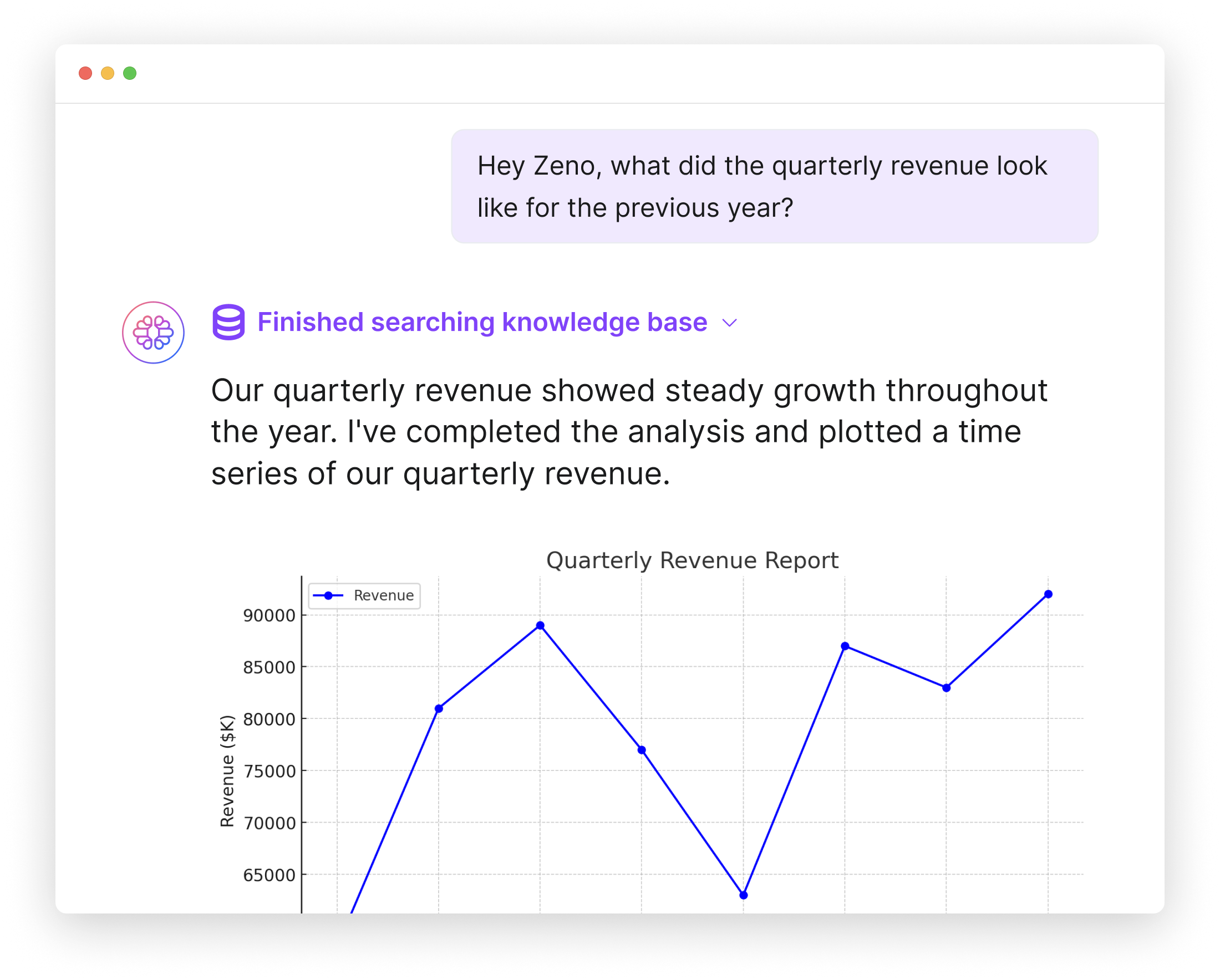
Real-time Insights
- AI agents provide up-to-the-minute analysis of key performance indicators (KPIs) and other crucial metrics.
- This enables businesses to respond quickly to changing market conditions or emerging opportunities.
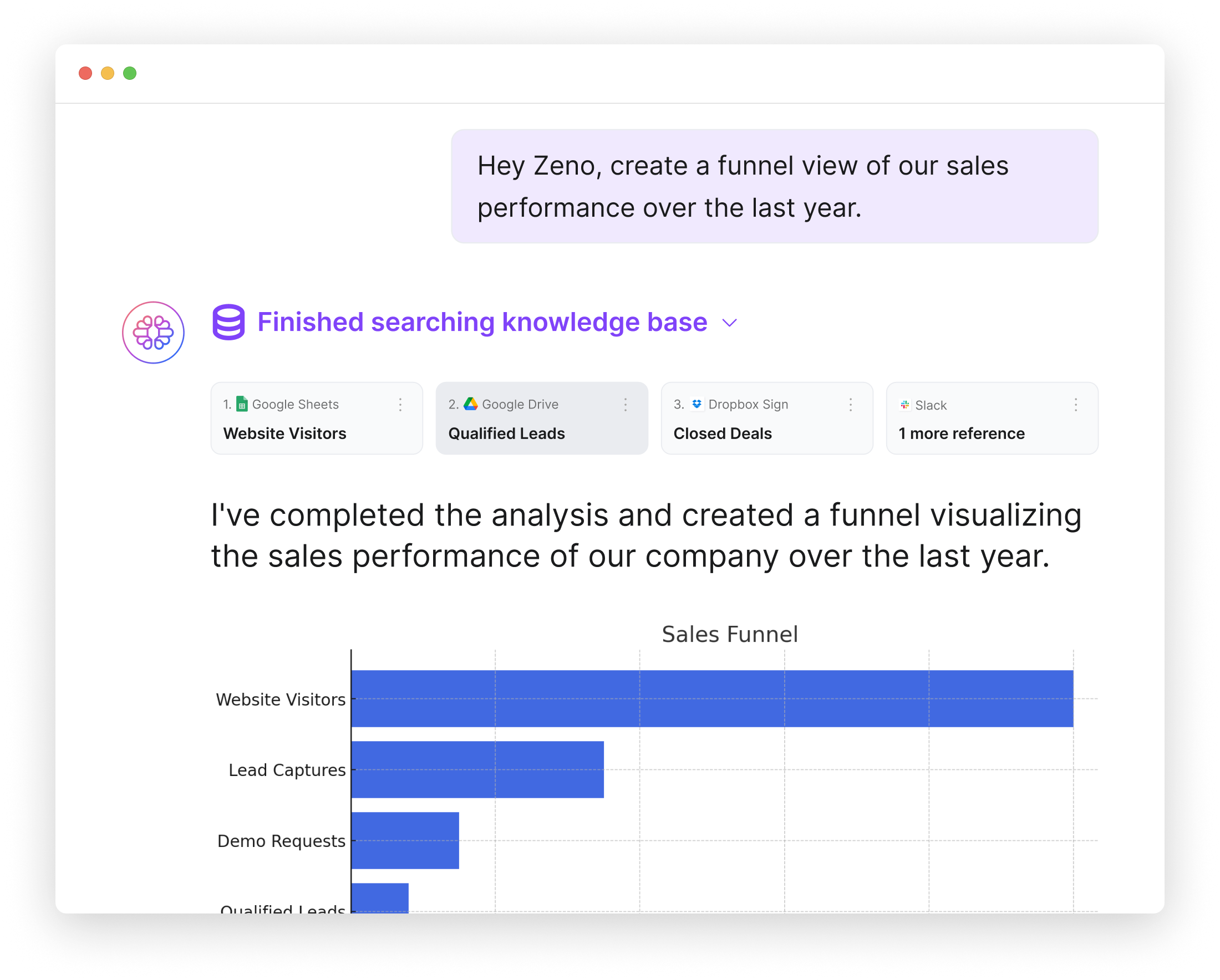
Personalized Recommendations
- AI analyzes individual user behavior and preferences to provide tailored product recommendations or content suggestions.
- This improves customer experience and drives increased sales or engagement.
Key benefits of AI-enhanced decision-making: faster, more informed choices; reduced bias in decision-making; improved risk management; and early identification of new opportunities or potential issues.
Improving Communication and Collaboration
AI agents have improved how teams communicate and work together, especially in remote and distributed environments:
Language Translation
- Real-time AI translation tools facilitate communication in multilingual teams or international business settings.
- This includes both text-based translation for written communication and voice translation for spoken interactions.
Meeting Scheduling and Management
- AI assistants coordinate schedules across time zones, find optimal meeting times, and suggest agenda items based on team priorities.
- They can also transcribe meetings in real-time, allowing for easy reference and follow-up.
Project Management
- AI-powered project management tools track progress, allocate resources, and identify potential bottlenecks or delays.
- They suggest task prioritization based on team capacity and project deadlines.
Knowledge Management
- AI agents organize and categorize company knowledge, making it easier for team members to find relevant information quickly.
- They suggest relevant documents or expertise based on the context of ongoing work or discussions.
Collaborative Document Editing
- AI assists in real-time document collaboration by suggesting edits, providing writing assistance, and resolving conflicting changes.
Key benefits: improved efficiency in team coordination, reduced language barriers, enhanced knowledge sharing and accessibility, more productive meetings, and smoother collaboration in remote or distributed teams.
TextCortex: AI Agents for Employee Productivity
TextCortex is an EU-based enterprise AI platform designed to boost productivity across your entire organization. It deploys AI agents on your company data, with knowledge base integration, workflow automation, multi-model LLM access, and a browser extension that works within 30,000+ apps.
Results from Kemény Boehme Consultants (KBC):
- 24 hours saved per month per employee on average after deployment
- AICX, an ecosystem partner of TextCortex, achieved a 70% team activation rate within the first few weeks
- 60% growth in employee confidence using and handling AI
- The implementation resulted in a 28x return on investment (ROI)
From marketing teams crafting ad copy to HR professionals writing job descriptions, TextCortex integrates with your company's knowledge base to ensure content reflects your unique voice and expertise. TextCortex is ISO 27001 certified, SOC 2 certified, fully GDPR and EU AI Act compliant. Sign up to deploy AI agents on your company data.
Frequently Asked Questions
How do AI agents improve employee productivity?
AI agents improve productivity by automating repetitive tasks (data entry, report generation, email management), providing real-time knowledge retrieval so employees spend less time searching, enabling 24/7 availability for customer and internal support, and improving decision quality through data analysis. TextCortex customers like KBC report saving 24 hours per employee per month after deployment.
What types of AI agents are used in business?
The main types are customer service chatbots (handling customer inquiries and routing), virtual personal assistants (scheduling, email management, task prioritization), data analysis and BI tools (pattern recognition, forecasting, KPI monitoring), and automated writing assistants (content generation, draft improvement, grammar checking). Most enterprises deploy multiple agent types across different functions.
How do AI agents help with data-driven decision-making?
AI agents process large volumes of structured and unstructured data faster than any human analyst, identify patterns and correlations that wouldn't surface in manual review, generate real-time KPI dashboards, and produce predictive models for forecasting. The result is faster decisions, better risk management, and reduced bias in the decision-making process.
How do AI agents improve team collaboration?
AI agents improve collaboration through real-time language translation for multilingual teams, automated meeting scheduling across time zones, meeting transcription and action item tracking, project management assistance (resource allocation, bottleneck identification), and knowledge management that surfaces relevant information in the context of ongoing work. Remote and distributed teams see the largest gains.
Is AI safe for employee data and internal knowledge?
It depends on the platform. TextCortex is ISO 27001 certified, SOC 2 certified, fully GDPR compliant, and EU AI Act aligned. Your company data stays within your controlled infrastructure and never trains public models. Role-based access controls ensure employees can only query data they're already authorized to see.
How quickly do employees adopt AI agents?
Adoption timelines vary by team and deployment structure. KBC achieved 70% team activation within the first few weeks using TextCortex's structured onboarding program: 4 workshops, team certification, and a dedicated account manager. ActivTrak's 2025 research found 80% of employees now use AI in their daily work, suggesting resistance is lower than it was 2 years ago.
.png)
.png)
.png)