
Enterprise AI security enables organizations to protect their sensitive data while using artificial intelligence models and tools. With enterprise AI security, companies can protect their databases, AI systems, model outputs, and employee data. AI security for enterprises should be planned as a long-term strategy and be adaptable to evolving AI technologies. In this article, we will explore what enterprise AI security is and how you can protect your company's data while using AI.
TL;DR: Enterprise AI security combines technical controls, policies, and oversight to protect AI systems, data, and ensure compliance. Core elements include data encryption, access management, threat detection, and protection against model theft and poisoning. AI model security covers secure storage, controlled training data access, runtime monitoring, and prompt injection safeguards. Compliance frameworks like SOC 2, ISO 27001, GDPR, and EU AI Act standardize and enforce AI security standards. AI risk management involves identifying risks, classifying systems by risk level, and continuous monitoring for emerging threats. TextCortex offers SOC 2, ISO 27001, GDPR, and EU AI Act compliance with comprehensive security policies and monitoring.
What is Enterprise AI Security?
Enterprise AI security refers to a combination of technical controls, policies, processes, compliance, and oversight mechanisms that ensure AI systems are secure, compliant, and trustworthy. Enterprise AI security offers the following elements:
- Protection of data used to train, fine-tune, and execute AI models
- Security controls across AI infrastructure, runtime, and systems
- Compliance with industry regulations
- Risk management for automation and AI-driven decision-making
- Monitoring, auditing, and reporting systems
- User-level permission and usage limitation control
All these elements are designed to enable you to securely integrate and monitor AI models within your enterprise. These systems allow you to use AI models safely, legally, and in compliance with your enterprise standards. Also, AI models must meet the legal requirements of your AI usage by complying with the regulations of your region.
Why does Enterprise AI Security Matter?
AI systems frequently process sensitive data from your customers, company, and employees, use your business data, and work with your datasets. To protect all this sensitive data, your enterprise AI security needs to be strong. Enterprise AI security provides:
- Protect sensitive, personal, and company data
- Reduce exposure to cyber threats and data breaches
- Maintain trust with employees, partners, and customers
- Reduce risk of data leakage
- Meet regulations and compliance requirements
Core Elements of Enterprise AI Security
Core enterprise AI security elements include:
- Secure data ingestion and storage controls
- Data encryption for protecting data in transit
- Identity and access management of users, services, and models
- Private data, model, and execution environments
- Protection against model theft and poisoning
- Threat detection and security monitoring
- Regulatory Compliance
Data Security for Enterprise AI
Data is the most valuable and vulnerable asset in AI security systems. Enterprise AI security offers strong data protection solutions to companies. AI platforms provide enterprises with secure AI integration, AI usage, and reduced data leakage risk through effective data governance. Also, enterprise AI security helps protect data flow by restricting access to sensitive data to specific users. Put differently, databases are categorized according to their priority, and each internal role can access a certain data layer. Therefore, it is up to you to manage who in your organization can access sensitive data, deploy or modify AI models; enterprise AI security simply provides you with the control and configuration capabilities.
AI Model Security
AI models come with their own risks and vulnerabilities. Enterprise AI security monitors AI models, observes their behavior, and checks their security in case of unusual behavior. AI model security for enterprises includes:
- Secure model storage and version control
- Controlled access to training data
- Validation to detect model poisoning or manipulation
- Runtime monitoring for abnormal behavior
- Safeguard against prompt injection
Monitoring prompt injection attacks is particularly important because potential attackers will attempt to access your sensitive enterprise data by using prompting methods for unauthorized actions and data theft.
AI Compliance Frameworks for Enterprise AI Security
Enterprise AI security ensures AI systems meet legal, regulatory, and industry-specific requirements. AI platforms must comply with frameworks such as ISO, SOC 2, GDPR, and IEC, designed to standardize the security of AI models and systems. While each compliance framework has its own standards, their common goal is to protect enterprise-sensitive data and prevent AI use from causing significant harm. We recommend paying attention to the security certifications and compliance of an AI tool before integrating it into your enterprise.
Regulatory Compliance
With the development of AI tools, governments have designed rules and regulations regarding the use and deployment of AI models. These regulations are designed to ensure that everyone, from enterprises to individual users, avoids harm when using AI models. AI systems must comply with regulations such as GDPR, CCPA, and the EU AI Act to ensure responsible and safe AI use.
Secure Enterprise AI Deployment
Security and compliance must be embedded into AI systems, not added after deployment. We recommend choosing AI platforms that comply with AI regulations and offer compliance services. AI implementation should include education and professional certifications to enhance employees' understanding and use of AI.
AI Risk Management
Like any new technology, AI has brought its own unique risks. AI risks differ from traditional IT risks and require different approaches and knowledge. AI risk management includes:
- Identification of risks associated with AI use cases
- Classification of AI systems by risk level
- Pre-deployment risk assessments
- Continuous monitoring for emerging risks
TextCortex: Enterprise AI with Security Built In
TextCortex is an EU-based enterprise AI infrastructure platform. Organizations use it to deploy and govern AI agents on their own company data, with multi-model access (GPT-4o, Claude, Gemini) from one secure environment, plus built-in RBAC, permission-aware retrieval, and full audit logging.
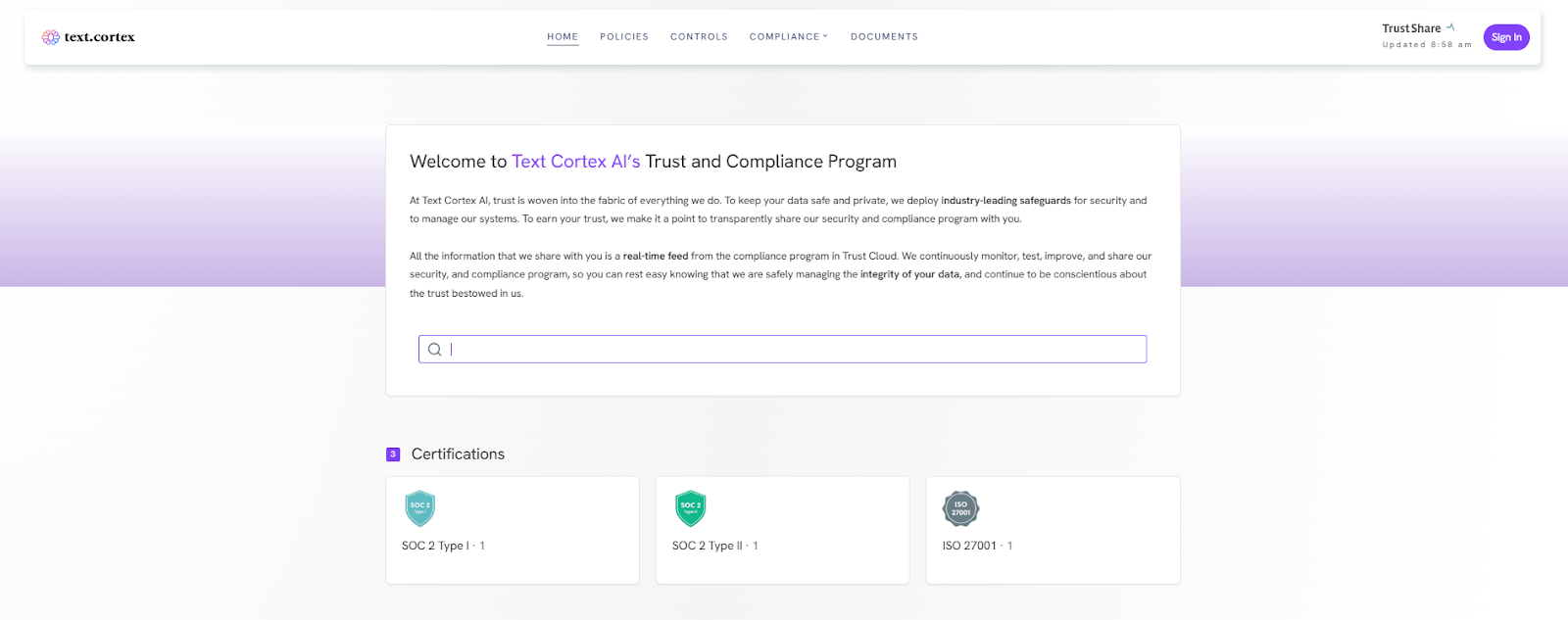
TextCortex AI Security and Safety
TextCortex holds ISO 27001 and SOC 2 Type II certifications, and is fully compliant with GDPR and the EU AI Act. All data stays in EU-hosted infrastructure, with no cross-border processing unless you explicitly configure it. Full details at trust.textcortex.com.
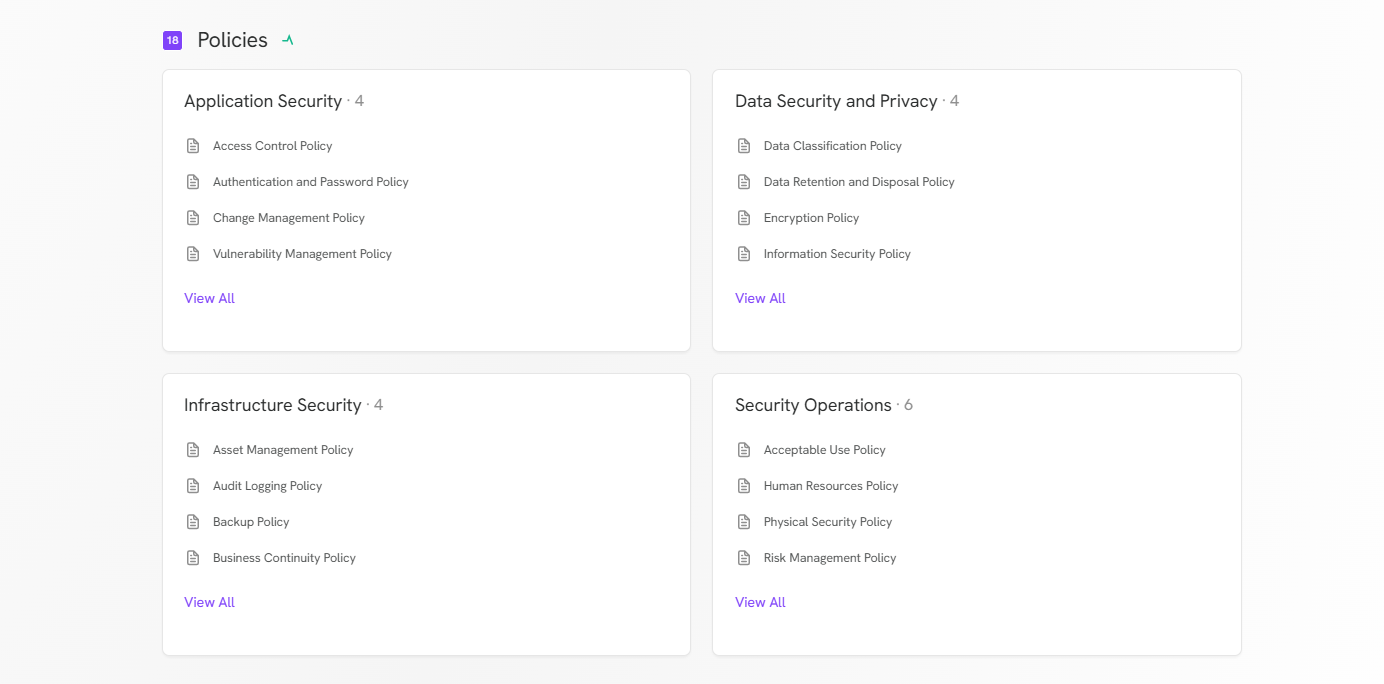
Policies
TextCortex offers policies in four areas: Application Security, Data Security and Privacy, Infrastructure Security, and Security Operations.
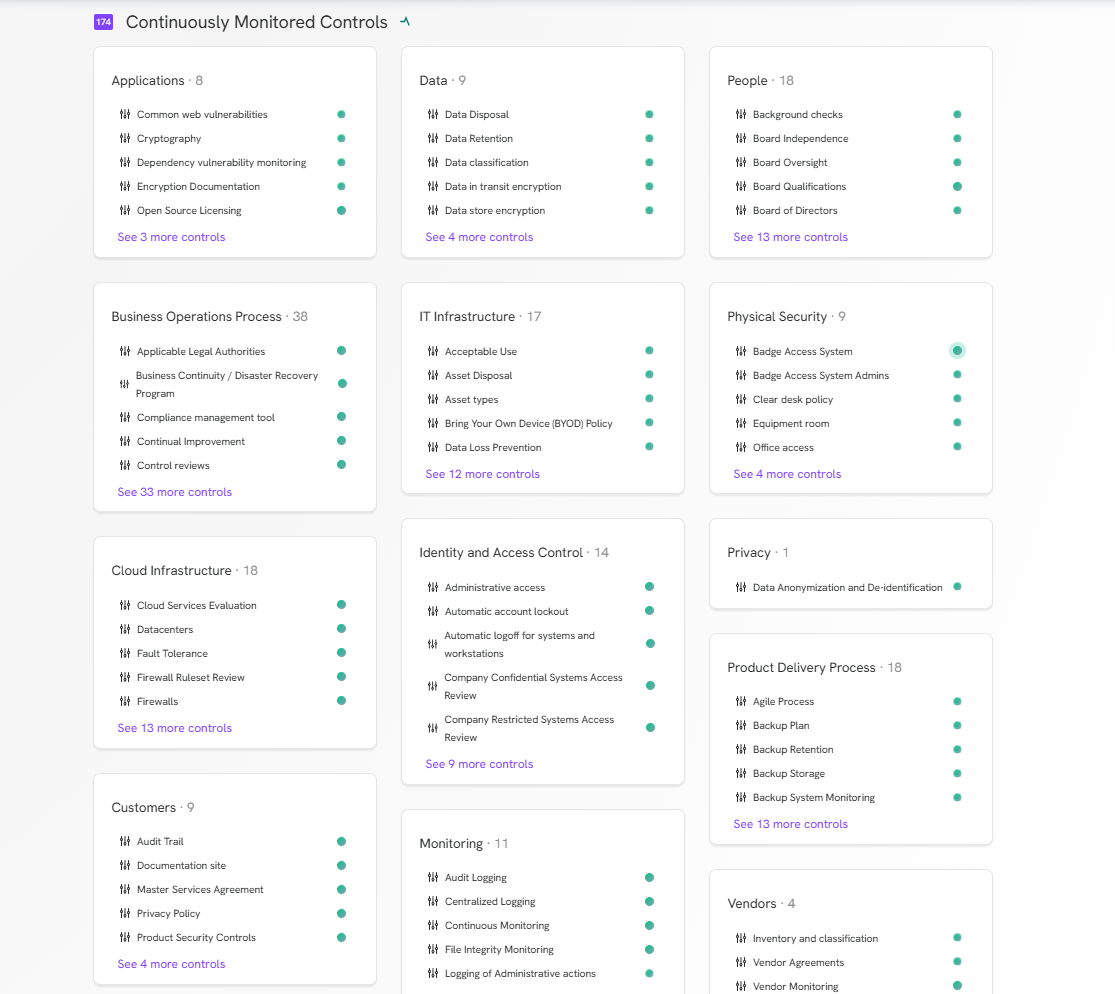
Continuously Monitored Controls
TextCortex lets you continuously monitor controls across Applications, Data, People, Business Operations, IT Infrastructure, Physical Security, Cloud Infrastructure, Identity and Access Control, Privacy, Customers, Monitoring, Product Delivery, and Vendors.
KBC (Kemény Boehme Consultants) deployed TextCortex and saw 3 work days saved per employee per month, with a 28x ROI and 70% platform activation. Read the full case study here.
Frequently Asked Questions
What is enterprise AI security?
Enterprise AI security is a set of controls, policies, and compliance that protect AI systems, data, and models for enterprises. It ensures AI operates securely, safely, and responsibly.
What does enterprise AI security protect?
Enterprise AI security protects AI systems, customer and enterprise data, identities, and execution environments.
What certifications should an enterprise AI platform have?
At minimum, look for ISO 27001, SOC 2 Type II, GDPR compliance, and EU AI Act alignment. These certifications mean the vendor treats security as a continuous discipline, not a one-time audit.
What is AI compliance?
AI compliance refers to the process of ensuring AI systems adhere to legal, ethical, and regulatory laws such as GDPR, EU AI Act and NIST.
.png)
.png)
.png)