.png)
In today’s AI era, businesses and organizations need to integrate AI tools into the workplace and benefit from their capabilities. One of the areas where AI is most useful is knowledge management and data retrieval. When it comes to the performance of data retrieval, the whole process depends on the RAG (retrieval augmented generation) capabilities of the tool. If you want to make sure that AI tools have high knowledge management and accurate data pull performance, you need to use an AI tool that offers advanced RAG.
In this article, we will explore what RAG (retrieval augmented generation) is and its benefits.
Ready?
Let’s dive in!
TL; DR
- RAG (retrieval augmented generation) is the process of optimizing the output of large language models by connecting it with knowledge bases.
- RAG has 5 steps from analyzing user input to generating relevant output by analyzing external knowledge bases.
- A RAG system has 4 components: knowledge base, retriever, integration layer and generator.
- The RAG unlocks various use cases for companies and organizations.
- Some of the benefits of RAG include cost-efficiency, up-to-date information, lower risk of AI hallucinations and increased trust.
If you are looking for an AI assistant with powerful RAG knowledge bases that you can integrate with your company data, TextCortex is the solution for you.
What is RAG (Retrieval Augmented Generation)?
Retrieval-augmented generation is the process of optimizing the output of large language models by connecting it with external knowledge bases. Large language models basically use trained data to generate output. To train it with your internal data or integrate it with your dynamic knowledge base, the AI model needs to use RAG. If you want to process your business’s knowledge and enable your employees to find fast and accurate outputs in their knowledge base, you need to use an AI tool that offers powerful retrieval-augmented generation capabilities.
How Does RAG work?
Without RAG, large language models take user input and generate responses based on information on which it was trained. With RAG, large language models generate responses based on knowledge bases that you connect or upload. Large language models that work with RAG follow five steps to generate output:
- Analyze User Input
- The information retrieval model searches the knowledge base for relevant data
- Relevant data is taken to the integration layer for processing
- The RAG system analyzes the data in the integration layer and enhances it according to user input.
- The large language model generates output based on RAG's analysis
Components of a RAG System
Every RAG-powered large language model has four primary components. Without these components, a RAG system will not function properly and will not be able to generate accurate output.
- The Knowledge Base: The data source from which the RAG system will retrieve information.
- The Retriever: An AI model that searches the knowledge base for relevant data.
- The Integration Layer: The collection area of relevant data extracted from the knowledge base by LLM.
- The Generator: A generative AI model that creates outputs based on the user input and retrieved data.
RAG Use Cases
RAG systems enable users to query specific databases with conversational formats. Enterprises, businesses, and organizations in particular can leverage RAG systems to save their employees time and boost overall productivity. Some of the best use cases of RAG systems include:
- AI Chatbots and Virtual Assistants
- Research
- Content Generation
- Market Analysis
- Documentation
- Knowledge Engines
- Recommendation Services
- Knowledge Management
Benefits of RAG (Retrieval Augmented Generation)?
RAG (retrieval augmented generation) is one of the must-use features for businesses and organizations to increase their performance and profitability in today’s technology and AI era. If you have an organization that is directly connected to knowledge and want to simplify knowledge management tasks, RAG is a technology you should take advantage of. Let’s look at the benefits of RAG together.
RAG is Cost-Effective
Manually searching databases for information and collecting all the data related to a topic can be a long process. This process can take days, especially if you have a lot of data related to a topic. However, RAG-powered large language models complete this entire process in a few minutes and save you time. As a result, implementing RAG systems into your knowledge base will reduce your time costs. In addition, powerful RAG systems are included by default in AI assistants such as TextCortex, which will facilitate your knowledge management.
If you are using an AI tool without RAG integration, you can easily implement and fine-tune RAG systems within them. Another cost-effective benefit of RAG systems is that your employees can quickly find the information they are looking for, completing tasks much more easily and quickly, and completing projects before deadlines.
Up-to-Date Information
The biggest disadvantage of large language models for enterprises is that they generate output with trained data. AI models with an RAG (retrieval augmented generation) system can eliminate this disadvantage and generate output by accessing your business's current data.
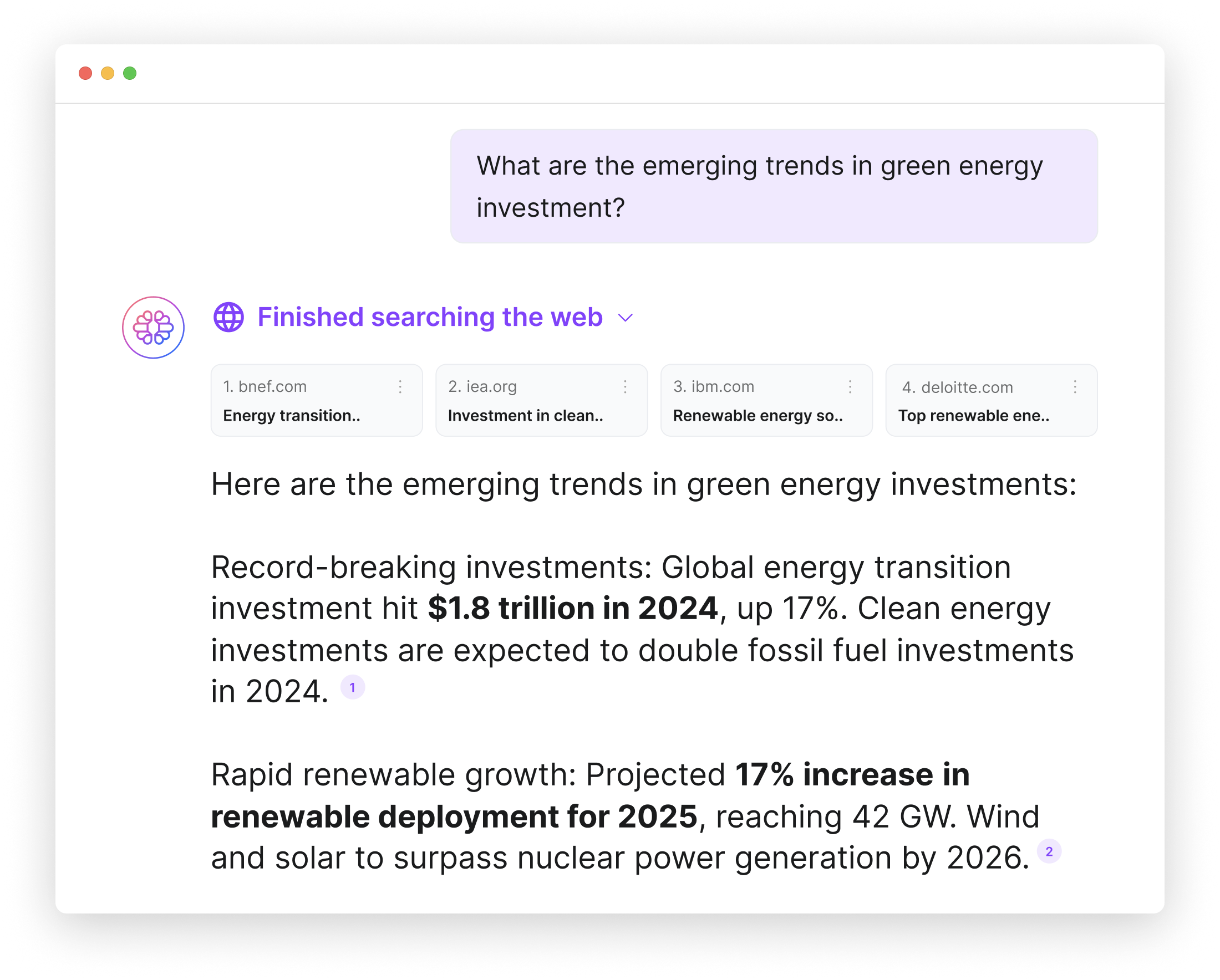
Since RAG (retrieval augmented generation) systems work integrated with your internal or external knowledge base, they are updated according to the progress of your projects and tasks. As long as employees update the current knowledge base, RAG can retrieve those data to generate output.
Lower Risk of AI Hallucinations
AI hallucination refers to large language models generating false and unrealistic filler outputs instead of relevant information to user queries. The importance of information accuracy, especially in businesses and organizations, makes AI hallucinations risky. If you want to avoid generating hallucinating outputs from AI models you leverage in your enterprise, you should use the RAG system.
Increased Trust
AI chatbots use their trained data to create generic responses for regular users. If you want to use a reliable AI chatbot for your company, you need to make sure that it comes with a powerful RAG. This way, your employees can continue with their tasks by trusting the responses they receive from the AI chatbot and not waste time with the double-checking process.
TextCortex – Leverage Powerful RAG
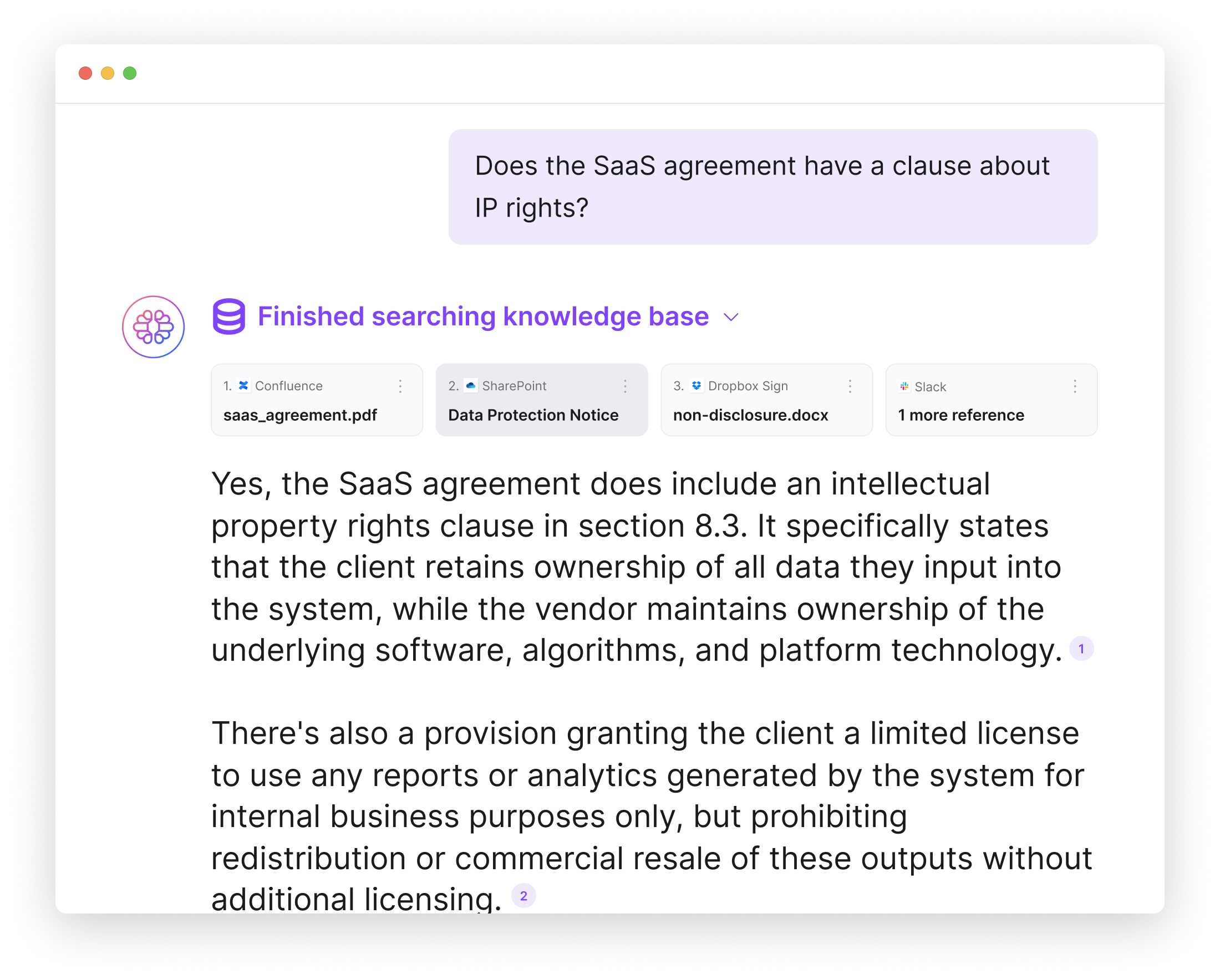
If you are looking for a company AI assistant that offers a powerful RAG that you can integrate into your company or organization, connect or upload your internal data, then TextCortex is designed for you.
TextCortex offers AI hallucinations-free, highly accurate, and powerful RAG for enterprise users. Moreover, TextCortex has a RAG system that can detect not only textual data but also images, graphs, charts, and even text in images and generate accurate output.
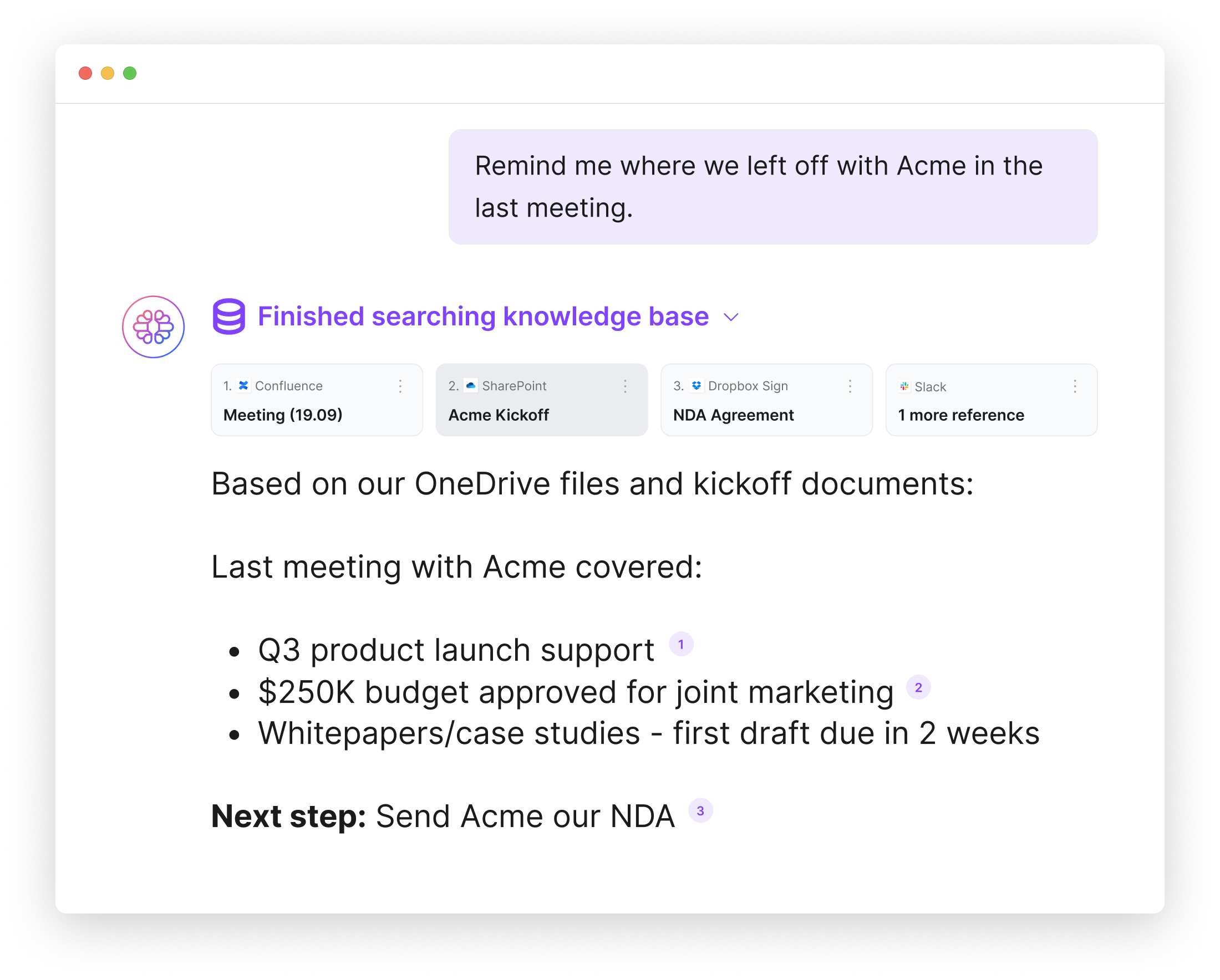
With TextCortex, you can manage invoices, streamline knowledge management, increase your employees’ performance, and boost your overall business profitability. TextCortex offers for enterprise users:
👍Workflow Automation: Automate repetitive and monotonous tasks with TextCortex.
👍Company Knowledge: Integrate your company data into TextCortex and utilize powerful RAG capabilities.
👍Writing Assistance: TextCortex offers features that will help you with your documentation.
👍AI Agents: With TextCortex, you can build AI agents that will automate your company-compatible projects.
👍Multiple LLMs: With TextCortex, you can choose task-oriented large language models.
👍AI Image Generation: TextCortex allows you to generate AI images.
Frequently Asked Questions
What is RAG in Gen AI?
RAG (retrieval augmented generation) in gen AI represents AI models generating output using specific knowledge sources. For example, ZenoChat by TextCortex can generate accurate output using knowledge bases uploaded or connected by its users, thanks to its powerful RAG.
What is the meaning of RAG?
The abbreviation RAG stands for retrieval-augmented generation and is a system that allows AI models to generate output using specific data sources. You can use AI assistants with the RAG system, such as TextCortex, to generate analyses, outputs, and insights using your company data.
What is a RAG in business?
RAG in business stands for retrieval augmented generation and it's a process applied to large language models to make their outputs more relevant to specific data. For example, with TextCortex, you can generate output using the data in your knowledge base.
.png)
.png)
.png)