
Businesses have begun to incorporate AI into their work environments, recognising its potential benefits and advantages. However, like any new technology, AI technology comes with its own rules, laws, and terms of use. Businesses must ensure compliance with regulations before integrating AI into their work environments. This is where enterprise AI governance enters the equation.
TL;DR: Enterprise AI governance provides a structured framework that protects organizations against AI risks by establishing consistent, ethically grounded policies and protocols. As AI regulations evolve globally, enterprises must prioritize AI governance to ensure legal compliance and access the full benefits of AI systems. The process involves assessing current status and risks, defining policies and compliance standards, and implementing data management and security protocols. Enterprise AI governance includes compliance alignment, monitoring systems, access control frameworks, and data permission management to ensure secure AI deployment. TextCortex is an enterprise AI platform that automates workflows and enhances knowledge management with full security compliance (GDPR, SOC 2, ISO 27001, EU AI Act) and real-time monitoring for organizational oversight.
What is Enterprise AI Governance?
Enterprise AI governance provides a structured framework that protects organizations and companies against AI risks by establishing consistent, ethically grounded policies and protocols. This allows organizations to use and develop AI responsibly, transparently, and fairly. Enterprise AI governance frameworks meet organizations' needs and requirements for AI use while providing AI that complies with regulations. Simply put, enterprise AI governance is a rulebook and referee for organizations to deploy and develop AI systems.
Why is AI Governance Important for Enterprises?
The proliferation of AI models and their increasing integration into daily and professional life have brought with them regulations and rules. Therefore, it has become essential for enterprises to prioritize AI governance and utilize AI systems that comply with constantly changing and evolving regulations. AI governance has become a necessity for organizations that want to actually use AI systems without running into regulatory walls. Also, governments have developed regulations to protect their citizens regarding the operation, training, and development of AI systems. It is not legally possible to use AI systems that don't comply with these regulations.
How to Implement Enterprise AI Governance?
While AI governance is important, the implementation process varies depending on the unique needs of each organization. Regardless of your organization's needs, the basic guidelines and processes don't differ significantly. You can get a general idea about AI governance by following the general framework headings:
- Access Current Status and Identify Risks
- Define Policies, Standards & Compliance Requirements
- Implement Data Management, Security & Testing Protocols
- Ensure Transparency, Explainability & Human Oversight
- Deploy Continuous Monitoring & Incident Response
- Measure, Optimize & Scale
Enterprise AI Governance Challenges
AI governance comes with its own challenges as organizations improve their working methods. For example, adapting to changing regulations and managing complex AI systems is a relatively new skill that not everyone possesses. Also, instability and uncertainty in legal and regulatory changes can create problems during the implementation process. Some of the most common enterprise AI governance challenges include:
- Lack of Clear Governance Structure
- Shadow AI & Unmanaged Deployments
- Data Quality & Trust Deficits
- Critical Skill Gaps & Expertise Shortage
- Unclear ROI Measurement
- Regulatory & Compliance Complexity
- Third-Party Risk Management
Enterprise AI Governance Components
Enterprise AI governance frameworks provide tools and components that your organization can use to monitor and control AI systems. Let's take a look at the enterprise AI governance components.
Compliance & Regulatory Alignment
Enterprise AI governance should provide certifications and compliance with standards such as GDPR, ISO, the EU AI Act, and more. This ensures that you use AI systems legally and avoid future problems. Also, regulations and compliance are designed to protect sensitive data and prevent its theft or misuse. AI systems that don't comply with this set of rules could potentially use your organization's data for training or share it with third parties or companies.
Monitoring and Control
Enterprise AI governance frameworks come with monitoring systems that allow you to control and oversee all AI systems. This enables you to monitor all AI systems and models, identify any problems instantly, and take action. Monitoring systems are essential for both protecting your data and monitoring the performance of AI systems.
Ownership Framework and User Access Control
Enterprise AI governance frameworks provide organizations with control settings that regulate access and control levels for data and AI systems. This allows you to manage which employees or individuals can access data and control AI systems. By providing each user with the necessary control and access, you ensure employees have access to the systems they need while managing sensitive data and control systems.
Data Permission and AI Access Control
To automate your workflow with AI agents and tools, you need to use your internal datasets. However, granting an AI model or agent access to all datasets carries potential risks. Enterprise AI governance systems allow you to restrict, select, and manage the databases that AI agents or models can access. This ensures that AI systems only access databases related to assigned tasks, rather than all your data. In this way, you can both benefit from AI automation and ensure the security of your organizational data.
TextCortex: Governed Enterprise AI Infrastructure
TextCortex is an EU-based enterprise AI infrastructure platform. Organizations use it to deploy and govern AI agents on their own company data, with multi-model access (GPT-4o, Claude, Gemini) from one secure, governed environment. It includes built-in RBAC, permission-aware retrieval, audit logging, and a 3-month AI training program with 4 workshops and team certification. Data handling details here.
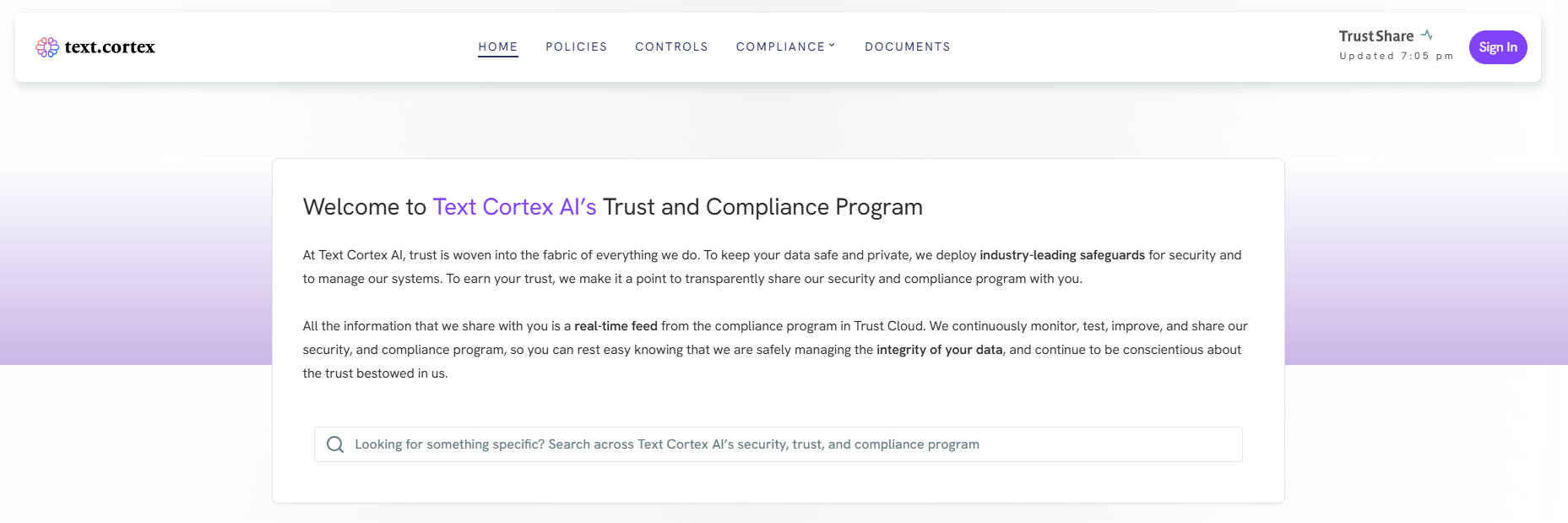
TextCortex Security and Compliance Program
TextCortex holds ISO 27001 and SOC 2 Type II certifications, and is fully compliant with GDPR and the EU AI Act. All data stays in EU-hosted infrastructure, with no cross-border processing unless you explicitly configure it.
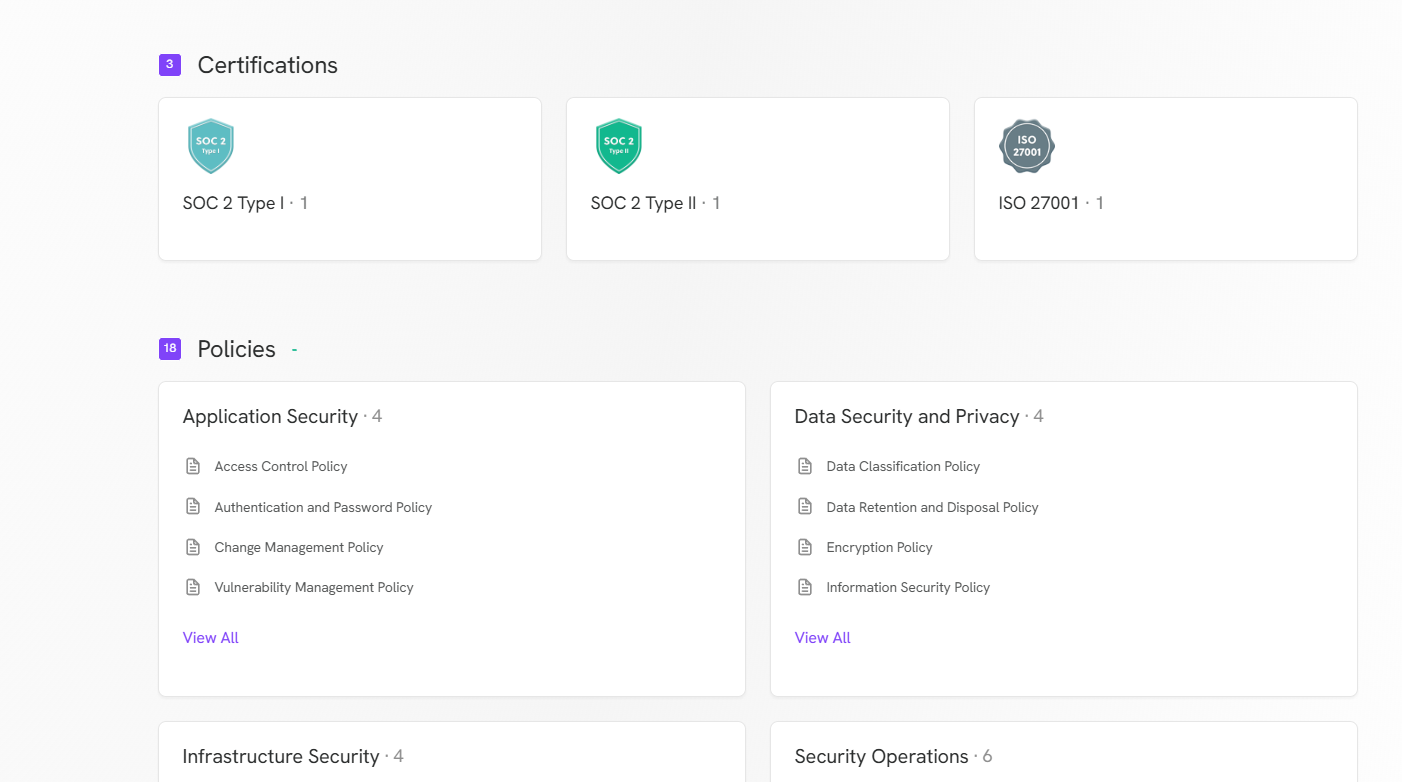
The platform includes monitoring controls for tracking all AI system activity continuously. Full security documentation at trust.textcortex.com.
MAHLE, a global automotive supplier and DAX company, deployed TextCortex and hit 65% adoption in under 1 month, with employees saving 5+ hours per week. Read the full case study here.
Frequently Asked Questions
What is AI governance?
AI governance is the framework of policies, procedures, and standards used to oversee the deployment, development, and maintenance of AI systems.
Why is AI governance important?
AI governance is crucial for ensuring and maintaining clean and safe AI system usage within your organization. With AI governance, you can be sure that AI systems operate transparently, manageably, and observably, while also being safe, ethical, and trustworthy.
How do you start implementing AI governance?
Start by mapping every AI use case in your organization and ranking them by data access and decision-making authority. Then define clear policies for data privacy and assign governance roles. The technical controls (RBAC, monitoring, audit logging) come after the organizational structure is in place.
What is AI compliance?
AI compliance is the process of ensuring AI systems keep legal, ethical, and regulatory standards to provide safe and legal AI usage.
.png)
.png)
.png)