.png)
Artificial intelligence technology has gained much more useful and functional features thanks to the implementation of retrieval-augmented generation (RAG). Retrieval-augmented generation (RAG) is an enhancement that helps LLMs generate accurate and relevant output by connecting large language models with external knowledge sources. If you're curious about the best use cases and business examples of retrieval-augmented generation (RAG), we've got you covered!
In this article, we'll explore what RAG is and its real-life use cases.
Ready?
Let's dive in!
TL; DR
- Retrieval-augmented generation (RAG) enables large language models to generate output using external knowledge bases instead of trained data.
- RAG systems analyze inputs and transmit all relevant information to large language models.
- You can use company AI assistants like TextCortex to implement RAG systems in your company.
- You can use RAG systems in a variety of areas, from customer support and content generation to finance and workflow automation.
- If you need a RAG-powered AI assistant that will integrate directly with your company and increase your employees' productivity, TextCortex is the solution for you!
What is Retrieval-Augmented Generation (RAG)?
Retrieval-augmented generation (RAG) is a plugin that allows large language models to use external data sources to generate output in addition to their trained data. Rather than relying solely on static training data, RAG systems retrieve relevant information from external knowledge bases in real-time. This means that if new information is added to the data source used by the RAG system, LLMs can generate output using the most current information.
How Does retrieval-augmented generation (RAG) Work?
When an employee or user submits a query, the RAG system encodes it into a vector using an embedding model. RAG searches the vectorized query against its external knowledge bases based on semantic similarity. The information found is then aggregated, summarized, and rewritten to create a meaningful response. RAG systems complete the entire process by focusing on the context of the query rather than keywords.
Relevant information collected by RAG is ranked by importance and passed to the large language model. Large language models generate a response containing the information based on their parameters and design and deliver it to the user. While this entire process takes a few seconds, it generates accurate and precise output.
Importance of RAG
Retrieval-augmented generation (RAG) systems are a more significant development for companies and organizations than it seems. In today's technological age, companies need to properly position and streamline data management and access to internal information to increase efficiency. RAG systems are a must-have because they simplify both data management and access to information. Some of the benefits of RAG include the following:
- Improved Accuracy
- Personalized Results
- Real-Time Adaptability
- Scalability
- Time-Saving
- Budget-Friendly
- Enhanced Analytics
- Improved Productivity
Implementing a RAG System
There are five main components you need to implement a retrieval-augmented generation (RAG) system in your company:
- Knowledge Base
- Embedding Models
- Retriever and Ranker
- LLMs
- Infrastructure
Instead of collecting and combining all the components, it's faster and more effective to use company AI assistant tools like TextCortex. In addition to a customizable knowledge base, TextCortex offers users multiple LLM options, powerful embedding models, a retriever and ranker, and an easy-to-use interface.
Real-Life Use Cases of RAG
If you're curious about how RAG systems can benefit your organization and want to learn about their uses, we've got you covered! Let's discover real-life use cases of Retrieval-augmented generation (RAG) together.
Customer Support Chatbot
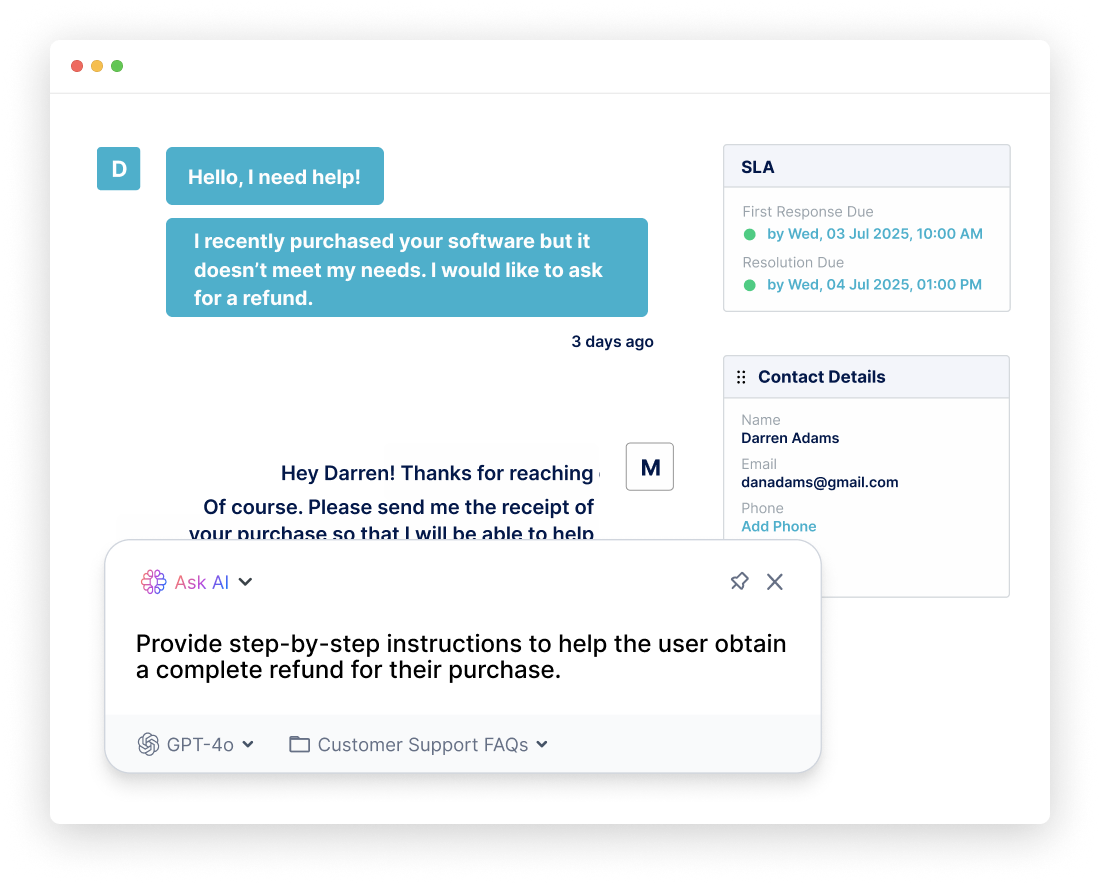
The retrieval-augmented generation (RAG) system allows your customer support AI chatbots, working with large language models, to retrieve the information they use to generate output directly from the help center database. Suppose it can't find the necessary information. In that case, it can quickly generate the information the customer needs by searching other company databases. This allows customers to access accurate and correct information much faster.
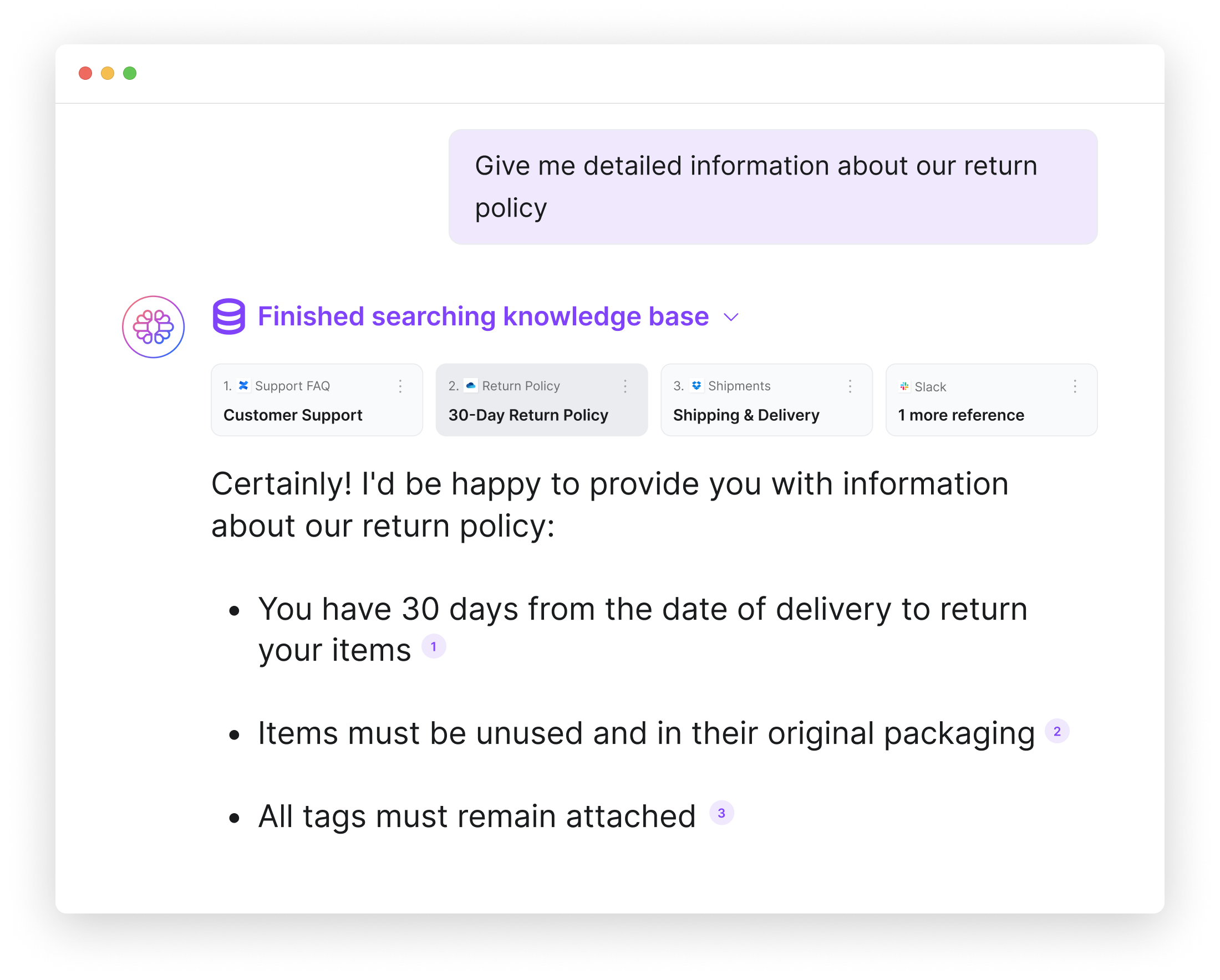
Using RAG in your customer support chatbot is key to improving customer satisfaction. Furthermore, RAG-powered AI chatbots automate repetitive and monotonous tasks in your customer support department, reducing their workload and allowing them to focus on more critical tasks.
Content Generation
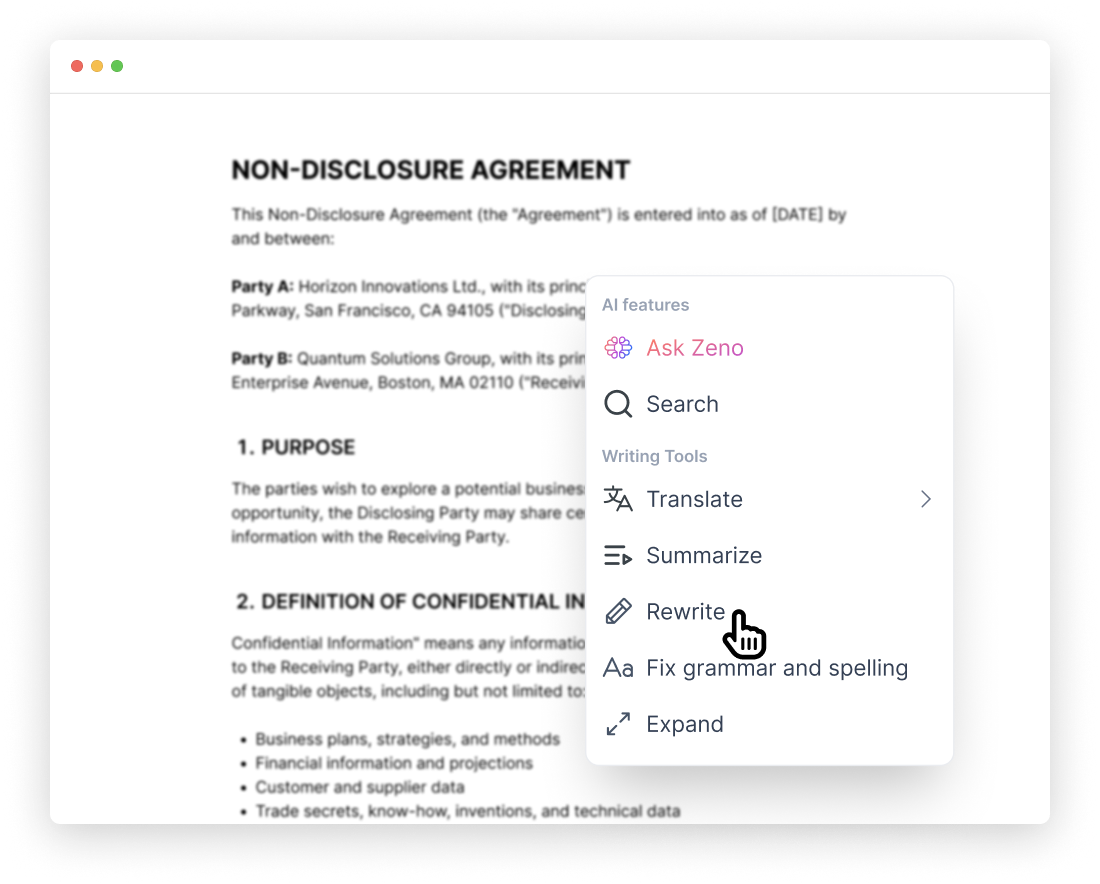
SEO and writing are essential supporting tasks for your company, and by automating this process, you can focus on other tasks more easily. Retrieval-augmented generation (RAG) technology can generate output by analyzing internal data, competitor analysis, and marketing data for all writing tasks, from product descriptions to blog post generation. This saves time and allows you to produce accurate, search engine-optimized output.
Summarization
If you don't have time to review all company documentation on a topic and need separate summaries for each document, RAG-powered AI tools will be your ultimate tool. RAG-powered AI tools can analyze your company data, summarize all documents on your input topic, perform a meta-analysis, and generate insights for you.
Better Information Search
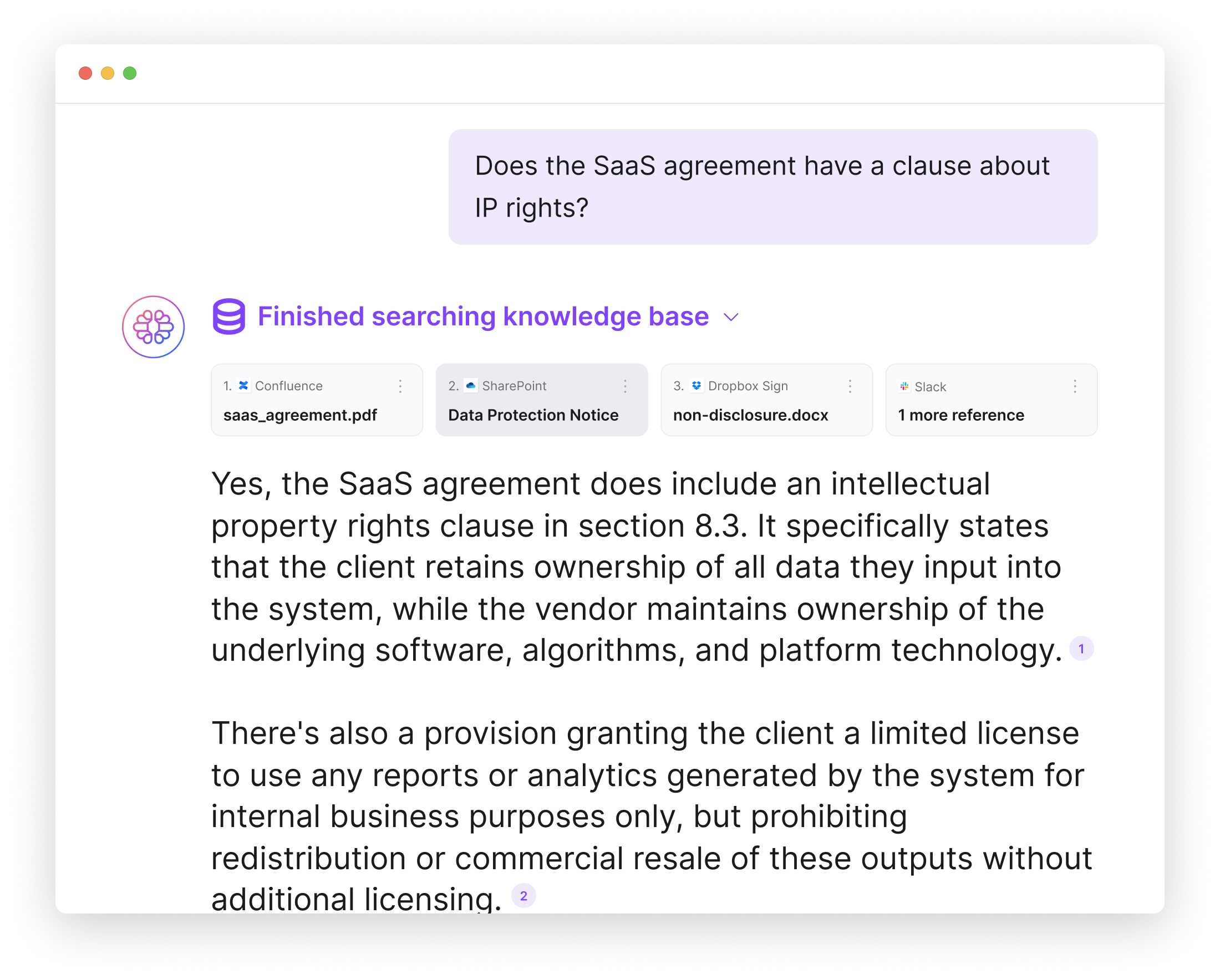
Large language models powered by retrieval-augmented generation (RAG) can make it much faster for your employees to find the information they're looking for. AI tools with RAG can scan the entire company database and output the information and documents employees are looking for in seconds. This improves onboarding, reduces time spent searching for information, and boosts productivity across departments.
Finance
Whether you're looking to automate all financial tasks, from transaction history to invoice payments, or simply lighten the workload of your finance department, RAG-powered AI assistants are designed for you. Furthermore, with company AI assistants like TextCortex, which can convert numbers and information in images into accurate text, you can streamline the entire process and avoid financial errors.
Workflow Automation
Retrieval-augmented generation (RAG) systems, integrated with your AI agent, are effective for automating repetitive and monotonous tasks in any department. For example, you can automate your customer support department's email response tasks with RAG-powered AI agents. This allows your employees to spend less time on standard tasks and focus on the department's critical aspects.
Third Party Integrations
If you have an AI assistant like TextCortex that integrates with third-party applications and offers a retrieval-augmented generation (RAG) system, you can integrate it into your workflow without changing any of your documents. Company AI assistants like TextCortex can integrate with Notion, Google Docs, Slack, browsers, and email applications to enhance your organization.
TextCortex – Leverage RAG in Your Company
If you need an AI assistant that offers powerful RAG, AI agents and automation, then TextCortex is for you. TextCortex was developed to meet the needs of enterprise users such as knowledge management, workflow automation, content creation, documentation, knowledge sharing, and data analysis.
Let’s break it down.
Seamless Integrations
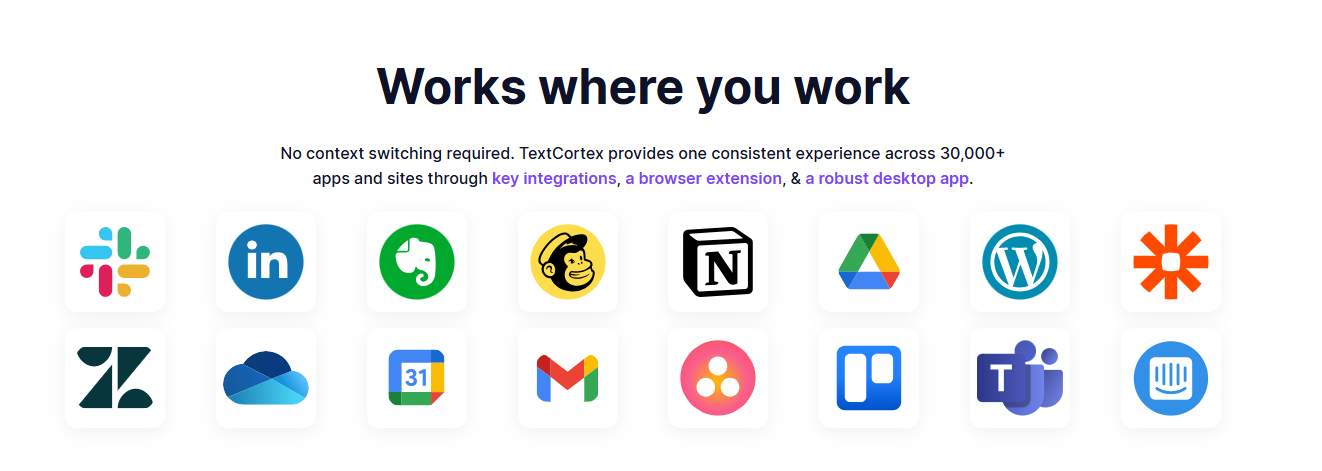
TextCortex offers integrations with 30,000+ websites and apps including Gmail, Google Docs, Pages, Notion, and Slack to be with its users anytime, anywhere. With TextCortex, you can continue working without having to switch tabs, thus saving time and energy. In other words, TextCortex aims to provide you with the best experience by adapting to your working style, pace, and needs.
TextCortex Knowledge Bases
TextCortex offers knowledge bases for individual and team users where they can store all their internal data and use it with various AI features. Using our knowledge bases, you can organize, share, and analyze your internal data, use it to generate insights, and use it to create new knowledge. By integrating TextCortex knowledge bases into your business, you can provide your employees with access to information in a conversational format through simple queries.
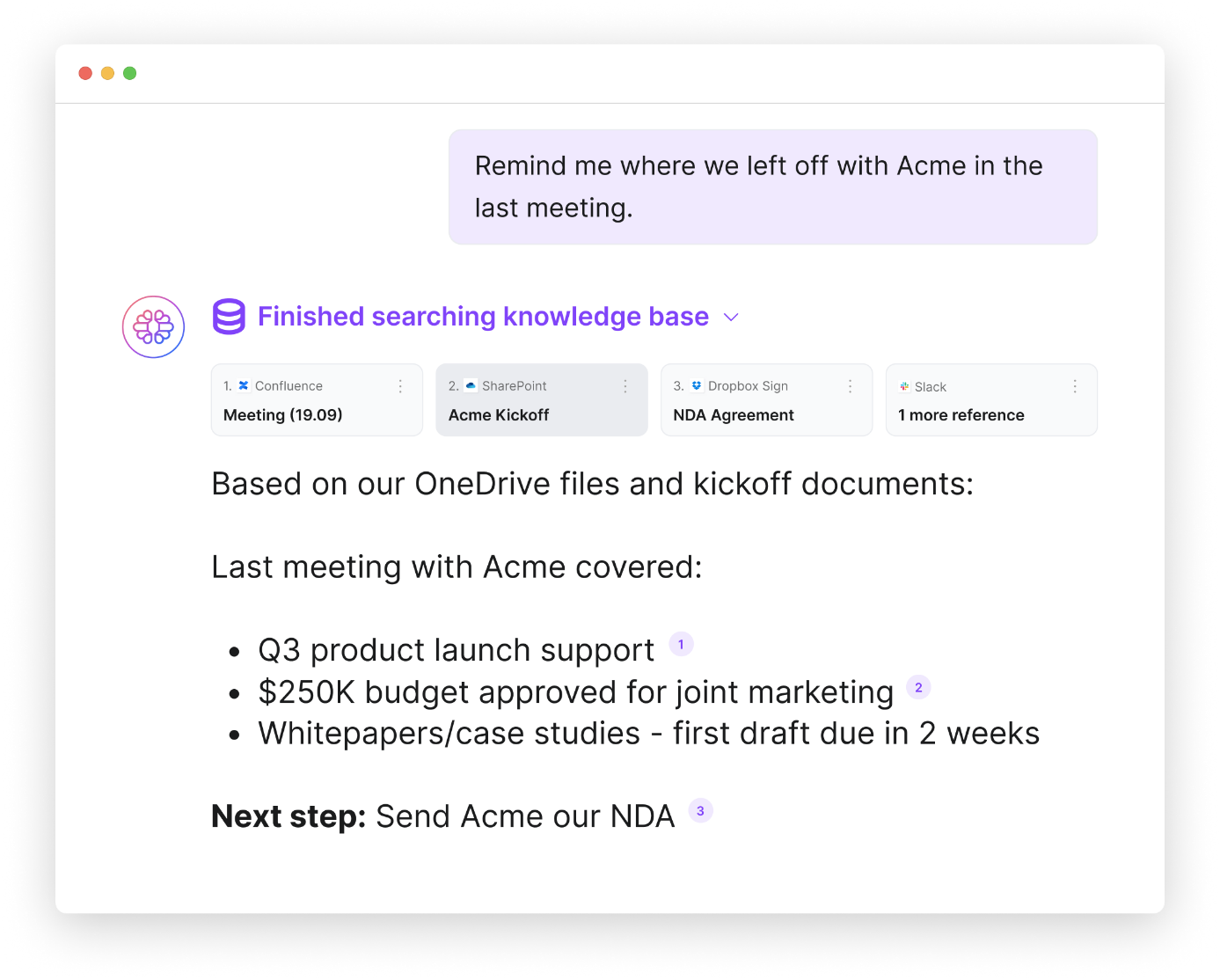
You can manually upload your data and documents to TextCortex knowledge bases or connect your existing knowledge sources such as Microsoft OneDrive, Google Drive, and Notion with a single click. Moreover, you can organize your documents and internal data by creating knowledge base files.
TextCortex Workflow Automation
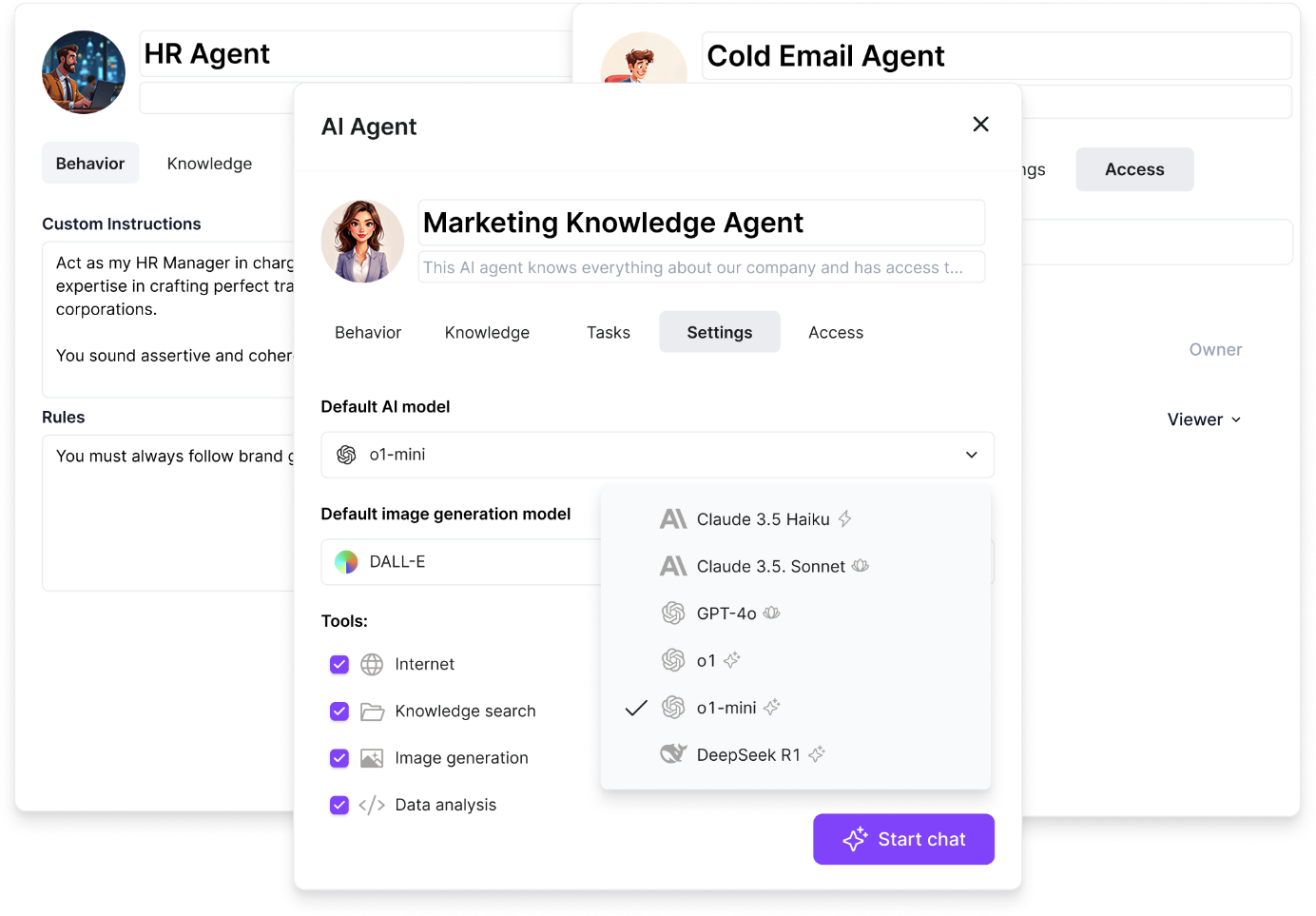
TextCortex offers automation of repetitive and monotonous tasks to all its users, including enterprises. With TextCortex AI agents, you can automate any repetitive workflow of your business and save time! TextCortex AI agent works integrated with your knowledge base and can complete tasks using your internal data. For example, using the TextCortex AI agent feature, you can build an assistant that will automate HR manager tasks and help you save time.
Writing Assistance
If you need to create documents frequently or want to make your enterprise documents compelling, contextual, well-organized, and error-free, then TextCortex writing assistance is designed for you. Our writing assistance stabilizes your brand voice and ensures consistency in all your written documents.
Frequently Asked Questions
What is a RAG use case?
You can increase productivity and ease your employees' workload by using the retrieval-augmented generation (RAG) system. Retrieval-augmented generation (RAG) systems enable the large language models you use in your company to generate output by scanning all company databases.
What can a RAG be used for?
Retrieval-augmented generation (RAG) systems enable large language models to use internal and external databases to generate output. Some of the most popular use cases of RAG include:
- Customer Support Chatbots
- Content Generation
- Summarization
- Finance
- Workflow Automation
- Information Search
Where can RAG be used?
Retrieval-augmented generation (RAG) systems can be utilized across a wide range of organizations, from startups to corporations. RAG systems are effective in all departments, from finance to customer service, alleviating workload and ensuring employees can quickly access the information they need.
.png)
.png)
.png)