
.png)
Designed to enhance natural language processing, Retrieval Augmented Generation (RAG) enables LLMs to generate output using specific databases as training data. With Retrieval Augmented Generation (RAG), you can blend the power of pre-trained language models with knowledge sources in external or internal databases. The new opportunities opened by Retrieval Augmented Generation (RAG) technology are especially critical for enterprises seeking to lighten their workload and increase efficiency.
In this article, we will explore what Retrieval Augmented Generation (RAG) is and its benefits for enterprises.
Ready?
Let's dive in!
TL; DR
- Retrieval Augmented Generation (RAG) models combine large language models with retrieval systems and enable them to work together.
- Retrieval Augmented Generation (RAG) models operate using indexing, retrieval, augmentation, and a generation loop.
- You can use RAG systems for tasks such as search, Q&A, customer support, finance, and analytics.
- RAG models can be quickly and easily integrated with enterprises and enable AI chatbots to generate output using real-time data.
- RAG-powered LLMs use citations when generating output, allowing employees to connect to the source of information.
- If you're looking to leverage RAG to take your enterprise to the next level, check out TextCortex and its company-focused AI features!
What are RAG Models?
Retrieval Augmented Generation (RAG) models are implementations that combine large language models with retrieval systems. Large language models can generate output using only training data. To overcome this limitation and enable output generation using real-time updated knowledge bases, you can integrate RAG models. This makes RAG particularly valuable in dynamic or domain-specific enterprise environments. With Retrieval Augmented Generation (RAG), you can enable your company AI tool to retrieve data from knowledge bases, departmental clouds, documents, and other tools.
How do RAG Models Work?
Retrieval Augmented Generation (RAG) models use a four-step loop system to operate. The first stage of this system, indexing, involves analyzing user input and categorizing relevant data in connected databases. At this stage, RAG systems don't focus solely on keywords; they search based on the contextual meaning of the input.
In the second stage, indexed data sources are scanned, and the data referred to by the query is retrieved. The retrieval method and sources may vary depending on the use case, the quality of the data sources, or the AI agent settings.
In the third phase, augmentation, the RAG system analyzes user input and retrieved data, enhancing the user's prompt for LLM. Thus, when generating LLM output, the RAG system receives guidance on how to reconcile the retrieved data with the user input.
In the final stage, generation, the large language model uses enhanced prompts and retrieved data to generate a response. Thanks to RAG, the prompt includes both retrieved data and the user query, resulting in more accurate and informative output.
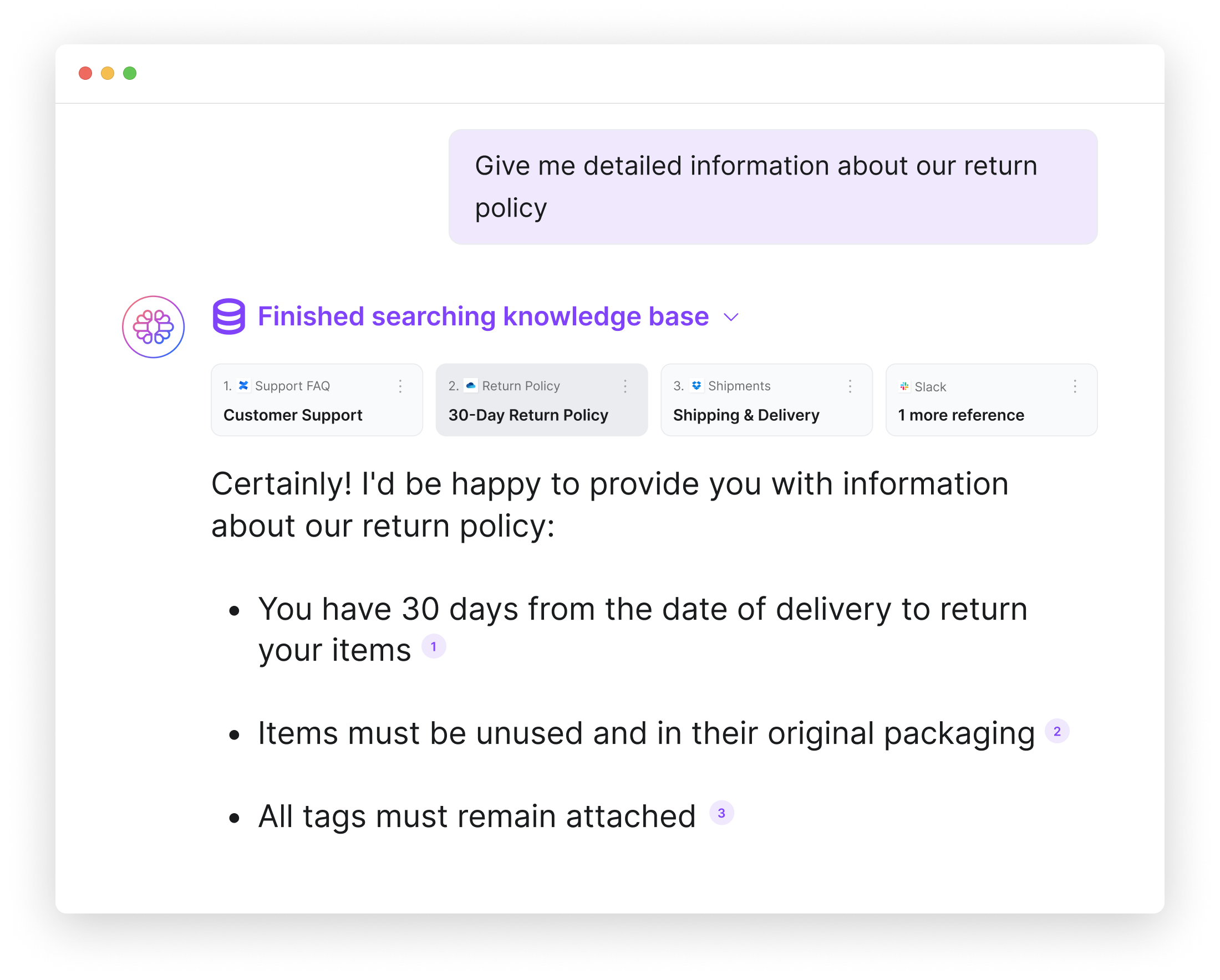
Applications and Use Cases of RAG for Enterprises
Retrieval Augmented Generation (RAG) models can assist various departments within a company, adapting to various workflows and assisting employees in completing tasks. Use cases where every company can benefit from RAG models include:
- Search and Q&A: Employees can use AI chatbots instead of manually searching company databases.
- Customer Support: RAG systems are effective for answering customer questions quickly and accurately.
- Sales: Employees can use RAG-powered AI tools to review and summarize real-time product specifications, pricing guidelines, or case studies to accelerate the sales cycle.
- Content Generation: From generating social media content to blog posts, RAG-powered AI tools can create generic content.
- Analytics: RAG-powered AI tools can analyze documents, input and output, and monthly changes to generate meaningful summaries and reports.
Why RAG Models Matter for Enterprises?
Retrieval Augmented Generation (RAG) models are particularly suitable for enterprises because they accelerate access to accurate information. Due to their work patterns, enterprises require data transfer between employees or departments. Using traditional cloud systems, despite search and categorization enhancements, is a time-consuming and tedious process. However, RAG systems are important for enterprises because they reduce this process to a few seconds and can generate accurate output. Let's explore other advantages of RAG models for enterprises.
Integration
Integrating Retrieval Augmented Generation (RAG) models into an enterprise is an easy and straightforward process. If your enterprise already uses data storage systems like Notion, Google Drive, and Microsoft OneDrive, simply designate RAG databases as your preferred sources. Your company's AI tools will then ensure that all your employees have quick and easy access to information.
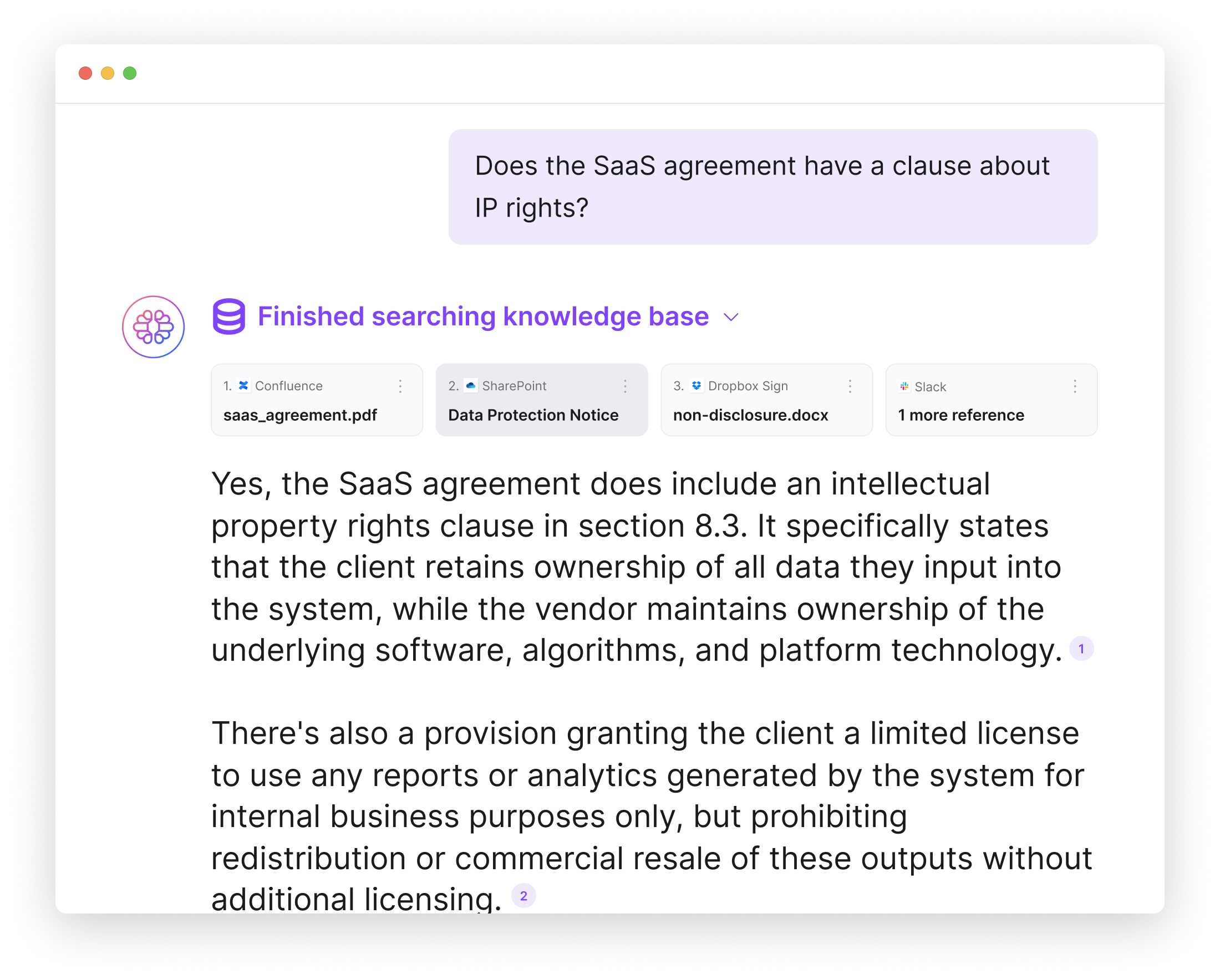
Actual Data
Unlike systems like LLM fine-tuning, Retrieval Augmented Generation (RAG) systems work with a knowledge base, not a specific dataset. This allows RAG-powered LLMs to retrieve data from knowledge bases in real-time while generating output. Even if your knowledge base was updated three seconds ago, RAG systems will add newly added data to the output generation section. This way, you can be sure that your company's AI tools are always generating up-to-date and accurate output.
Citations
Large language models powered by Retrieval Augmented Generation (RAG) will cite the document and knowledge base from which they retrieved information when generating output. You can use these citations if you need to review the entire document or want to modify it. Furthermore, RAG-powered LLMs cite the data sources they use in their output, eliminating the risk of AI hallucination.
Effortless Updates
Since the knowledge bases used by the RAG system are updated independently, neither you nor your employees need to manually update the RAG system. Simply implement the RAG system in your enterprise once and watch it leverage the power of your AI tools! In other words, maintaining RAG systems is easier and less expensive than other tools.
Scalability
There's no need to update or replace the RAG system as your enterprise grows. Retrieval Augmented Generation (RAG) systems can adapt to your knowledge base and adapt to your enterprise's growth. This allows you to build a reliable and enduring company AI tool system.
TextCortex: Integrate RAG into Your Business
If you want to implement a Retrieval Augmented Generation (RAG) system quickly and effortlessly in your enterprise, TextCortex is the solution for you. TextCortex offers features such as RAG, AI agents, workflow automation, writing assistance, multiple LLMs, seamless integrations, custom AI chatbot builds, and web search for enterprise users.
If you want to take your enterprise one step further, increase your employees' performance, and automate repetitive tasks, TextCortex is designed for you. Let's break down the features TextCortex offers for your enterprise!
TextCortex Seamless Integrations
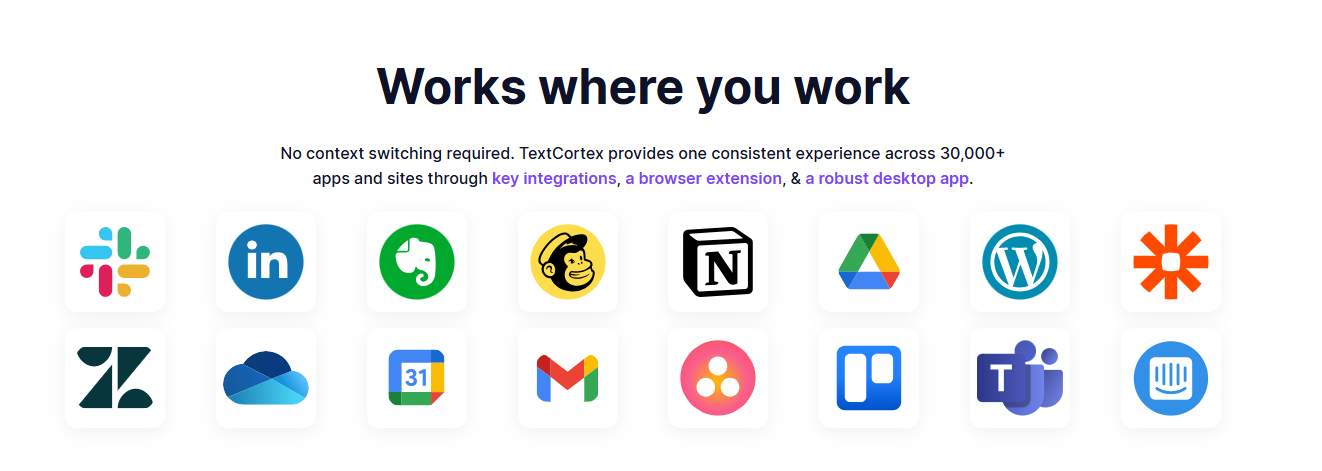
TextCortex offers integrations with 30,000+ websites and apps including Gmail, Google Docs, Pages, Notion, and Slack to be with its users anytime, anywhere. With TextCortex, you can continue working without having to switch tabs, thus saving time and energy. In other words, TextCortex aims to provide you with the best experience by adapting to your working style, pace, and needs.
TextCortex Knowledge Bases
TextCortex offers knowledge bases for individual and team users where they can store all their internal data and use it with various AI features. Using our knowledge bases, you can organize, share, and analyze your internal data, use it to generate insights, and use it to create new knowledge. TextCortex provides a powerful RAG upgrade with knowledge bases that allow you to generate output for multiple LLMs using specific knowledge sources.
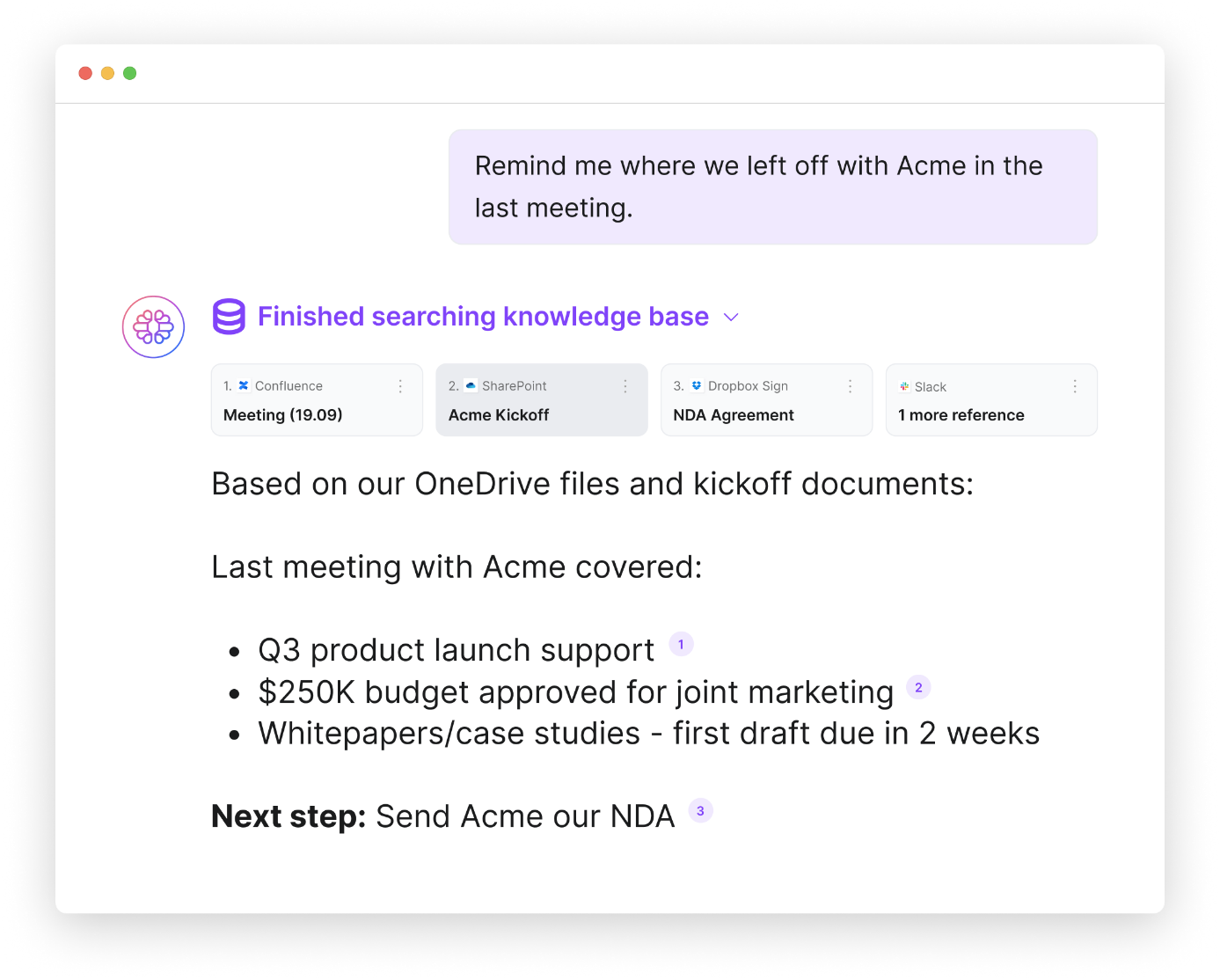
You can manually upload your data and documents to TextCortex knowledge bases or connect your existing knowledge sources such as Microsoft OneDrive, Google Drive, and Notion with a single click. Moreover, you can organize your documents and internal data by creating knowledge base files.
TextCortex Workflow Automation
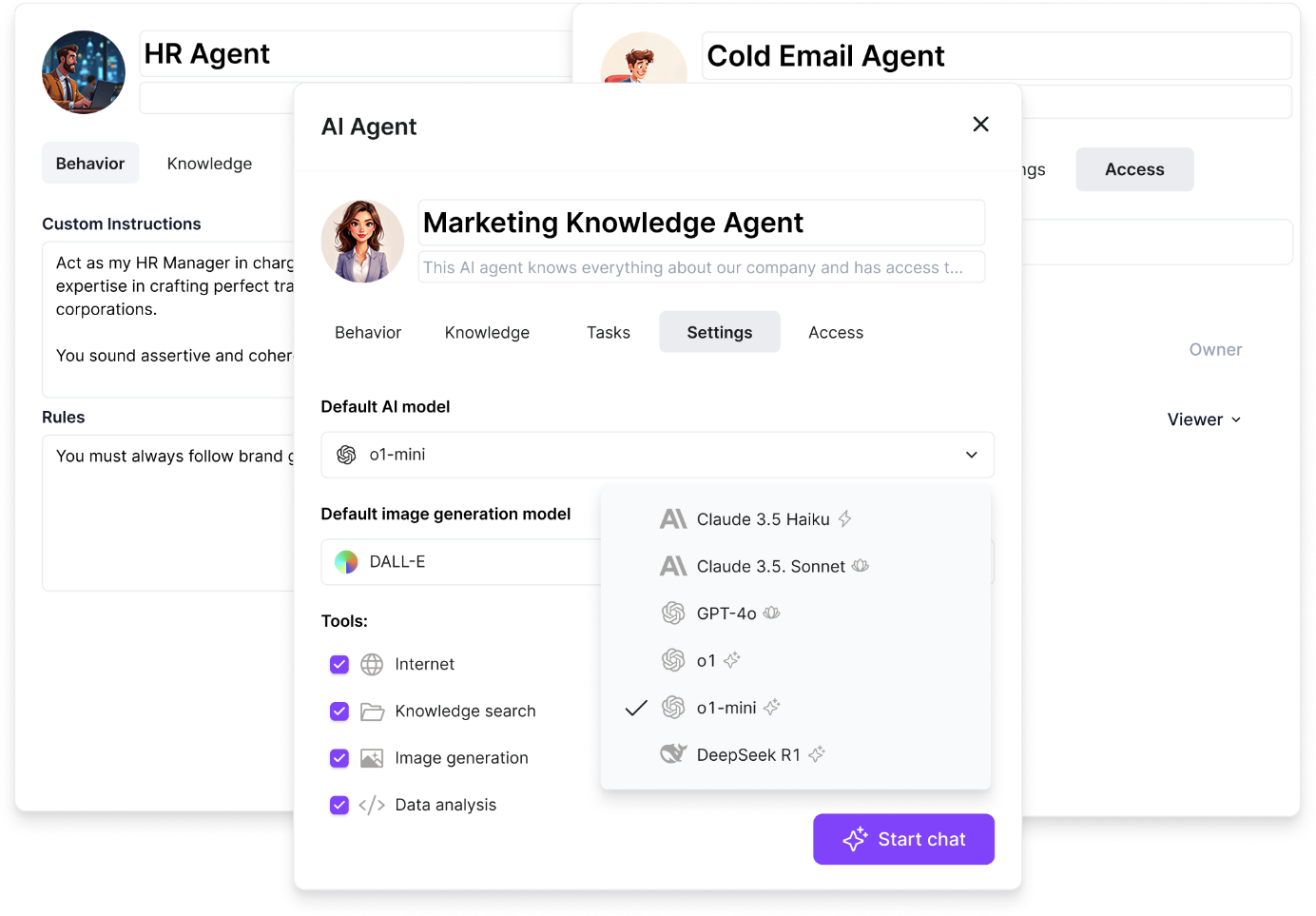
TextCortex offers automation of repetitive and monotonous tasks to all its users, including enterprises. With TextCortex AI agents, you can automate any repetitive workflow of your business and save time! TextCortex AI agent works integrated with your knowledge base and can complete tasks using your internal data. For example, using the TextCortex AI agent feature, you can build an assistant that will automate HR manager tasks and help you save time.
TextCortex Writing Assistance
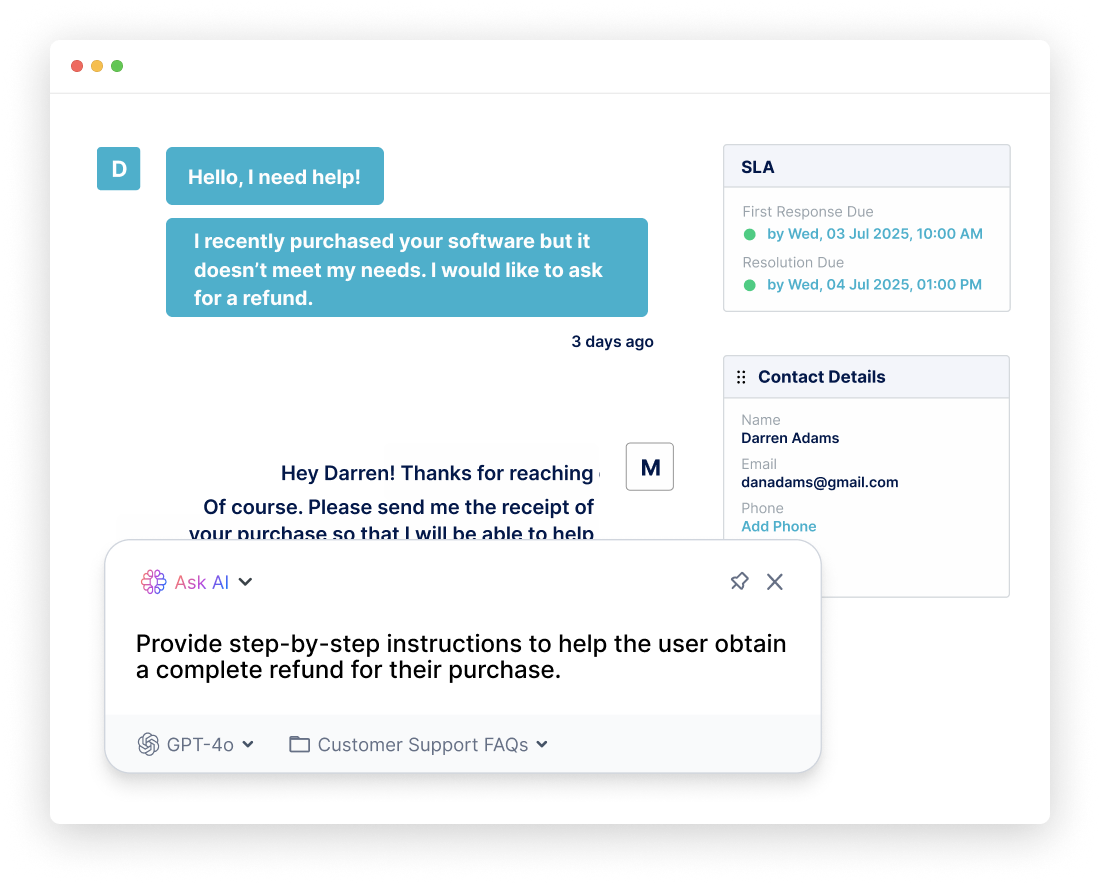
If you need to create documents frequently or want to make your enterprise documents compelling, contextual, well-organized, and error-free, then TextCortex writing assistance is designed for you. Our writing assistance stabilizes your brand voice and ensures consistency in all your written documents.
Frequently Asked Questions
What is a RAG model?
A Retrieval Augmented Generation (RAG) model is an enhancement that allows large language models to use specific data sources when generating output. Retrieval Augmented Generation (RAG) models enhance the output generation process of LLMs, allowing them to be adapted to specific use cases.
What is an enterprise RAG?
An enterprise retrieval augmented generation (RAG) system is a model designed to meet the specific needs of companies and enterprises. For example, TextCortex offers an enhanced RAG system and RAG-powered AI agents to meet the needs of enterprise users.
What is the purpose of a RAG?
The goal of a Retrieval Augmented Generation (RAG) system is to develop large language models and enable them to generate output using specific data sources. The goal of RAG systems is to enhance collaboration within enterprises, accelerate access to information, and save time.
.png)
.png)
.png)