
AI technology offers various advantages and uses in manufacturing, as it does in every industry. By integrating AI into manufacturing processes, companies can automate repetitive tasks, analyze large amounts of data, and streamline management tasks. While AI tools offer numerous benefits, they also have their cons.
In this article, we'll explore the pros and cons of AI in manufacturing.
Ready?
Let's dive in!
TL; DR
- AI in manufacturing refers to the integration of AI technologies such as machine learning (ML) and computer vision into manufacturing processes.
- Instead of eliminating manufacturing jobs, AI aims to increase manufacturers' efficiency and enhance their decision-making mechanisms.
- 5 pros of AI in manufacturing include automation, predictive analytics, supply chain optimization, data-driven decision-making, and digital twin technology.
- 4 cons of AI in manufacturing include expensive deployment, lack of experts, safety concerns, and AI hallucinations.
- If you're looking for an AI assistant that will enhance your manufacturing processes and support you from decision-making to automation, TextCortex is the way to go.
What is AI in Manufacturing?
AI in manufacturing refers to the implementation of artificial intelligence technologies such as machine learning, neural networks, computer vision, and natural language processing into manufacturing processes. AI in manufacturing has applications such as predictive analytics, workflow automation, optimizing processes, and improving decision-making.
How is AI Revolutionizing Manufacturing?
AI revoluionizes manufacturing by automating tasks, enhancing decision making, boosting efficiency and quality through predictive maintenance. Here are key areas where AI is revolutionizing the manufacturing industry:
- Supply Chain Management
- Task and Process Automation
- Product Development
- Process Optimization
- Predictive Maintenance
- Virtual Simulation
Will AI Eliminate Manufacturing Jobs?
AI is a tool that can enhance, rather than eliminate, manufacturing jobs. Manufacturers can leverage AI to automate their workflows, make data-driven decisions, generate actionable insights by analyzing manufacturing data, and perform predictive maintenance.
Pros of AI in Manufacturing
AI is a technology that opens new opportunities for manufacturing. Let's discover the pros of AI in manufacturing.
1. Automation
AI can automate repetitive tasks and workflows, enabling employees to focus on more critical aspects of your business. AI assistants like TextCortex allow you to build automations for specific tasks and workflows. This allows you to create customized automations for your manufacturing process.
2. Predictive Analytics
AI can analyze vast amounts of data in seconds and generate actionable insights and reports from them. AI can also analyze manufacturing data, predict potential problems, and find early solutions to anomalies. According to a study by McKinsey, AI predictive maintenance models can increase productivity by up to 20%.
3. Optimizing Supply Chain
You can optimize the supply chain process by integrating AI to analyze data from historical documents and reports, and to generate improvements. AI can collect data from multiple devices and analyze them in real-time to get more in-depth insight. Thus, you can reduce warehouse and shipping costs and prevent supplies from becoming waste.
4. Data-driven Decisions
With AI, you can analyze manufacturing processes, review relevant documentation, and make data-driven decisions. As in every industry, decisions in manufacturing must be based on data and reports. With AI, you can generate reports, suggestions, and analytics to enhance your decision-making process. Furthermore, unlike humans, AI can analyze data much faster and avoid human errors.
5. Digital Twin Technology
AI tools can analyze data from existing or planned manufacturing processes and simulate the entire process in a virtual environment to identify potential problems. This eliminates the need for manufacturers to wait for errors in the physical production process to discover problems. Furthermore, AI tools simulate the entire process and suggest possible improvements.
Cons of AI in Manufacturing
While AI tools have their advantages and benefits, they also have their cons. Let's take a look at the cons of AI in manufacturing.
1. Expensive Deployment
Although AI tools are a cost-effective solution in the mid and long term, they may require high budgets during the deployment phase. AI deployment is often so pricey for small companies and start-ups. Also if you don't want any cyberattack on your systems, you'll need to consider the cost of cyber threat protection.
2. You’ll Need Skilful Experts
Because generative AI is a relatively new and evolving field, finding experts with the necessary skills is difficult. Therefore, you need AI experts to ensure the proper functioning of AI systems. If you want to overcome this challenge, we recommend working with an AI company that will support and inform you from deployment to maintenance.
3. Safety Concerns
Because AI technology is vulnerable to cyberattacks, you need to ensure that the AI tools you use meet security standards. You should choose AI assistants from companies like TextCortex, which prioritize data privacy and security and hold certifications such as SOC 2 Type 1 and SOC 2 Type II.
4. AI Hallucinations
AI hallucinations refer to AI tools processing inaccurate information while generating output and providing responses containing incorrect information. These errors can be caused by a variety of factors, such as insufficient training data and incorrect assumptions made by LLMs. To avoid hallucinated outputs, you should always double-check AI-generated outputs.
Get Advantages of AI in Manufacturing Through TextCortex
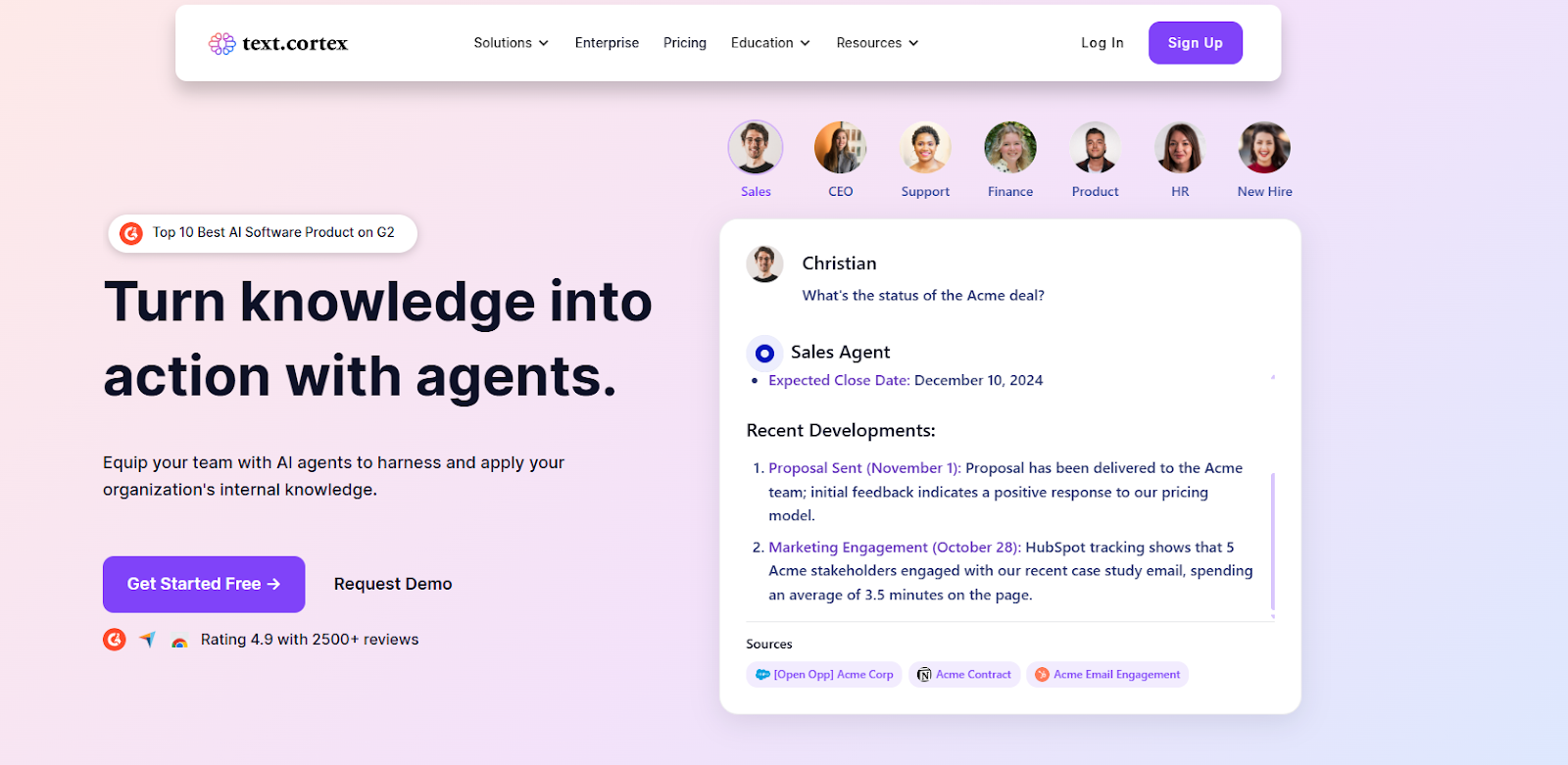
If you're looking to integrate AI's unique automation capabilities into manufacturing, TextCortex is the solution for you. TextCortex is a leading AI knowledge management and workflow automation tool that aims to reduce enterprise workload and boost efficiency. TextCortex offers a variety of advantages for manufacturing, including both automation and data analysis.
Let’s break it down!
Turn Your Data Into Actionable Insights via Knowledge Bases
Our knowledge bases allow you to store your company data and analyze it using various LLMs to generate insights. You can upload your documents and files to your custom knowledge base or connect your databases such as Google Drive, Notion, and Microsoft OneDrive.
With TextCortex, you can build customized knowledge bases for each project or department and search them in conversational format using Zeno. Furthermore, Zeno can analyze the documents and data in your knowledge base with just a few words, turning them into actionable insights, information, and reports that will enhance your decision-making processes.
Automate Manufacturing Workflow via AI Agents
TextCortex comes with AI agents that you can customize to automate repetitive or specific workflows. Our AI agent builder integrates with knowledge bases and can only use data you upload or connect as a data source. This way, you can save time by automating your specific workflows and tasks, including those in manufacturing. For instance, with TextCortex, you can build AI agents that will automatically generate reports and insights using your manufacturing data and documents!
Seems exciting? Click here to explore TextCortex and its features aimed at easing your workload!
Frequently Asked Questions
What is the biggest downside of AI?
The biggest downside of AI is that it can generate hallucinatory output, potentially providing false information. To avoid this downside, you should double-check the outputs to ensure the AI is well-trained and generates output with data appropriate for your intended use. Furthermore, AI models powered by technologies like an agentic RAG are less prone to producing hallucinatory output.
What are positive effects of AI?
The biggest positive effects of AI for manufacturing include:
- Automation
- Predictive Analytics
- Optimizing the Supply Chain
- Data-Driven Decisions
- Virtual Simulations via Digital Twin
What are pros and cons of AI in manufacturing?
Pros of AI in manufacturing:
- Automation
- Predictive Analytics
- Supply Chain Optimization
- Data-driven Decisions
- Digital Twin Technology
Cons of AI in manufacturing:
- Expensive Deployment
- Lack of Experts
- Safety Concerns
- AI Hallucination
.png)
.png)
.png)