
.png)
You know the information or data you're looking for is somewhere, perhaps in an old email, chat history, or a document stored years ago. The time it takes to find this information can be longer than the time it takes to complete the actual task. Fortunately, AI knowledge management tools have been developed to solve this problem! If you're curious about how AI is used in knowledge management, its benefits, and its use cases, we've got you covered!
In this article, we'll explore the benefits of AI in knowledge management and examine its use cases.
Ready?
Let's dive in!
TL; DR
- AI in knowledge management enables companies and employees to quickly find the information they are looking for.
- AI knowledge management tools operate faster and more systematically than traditional knowledge management tools.
- AI knowledge management tools have use cases such as intranet search, knowledge organization, content summarization, and data retrieval.
- AI knowledge management benefits companies by reducing manual effort, providing accurate search results, boosting collaboration, and accelerating access to information.
- If you are looking for an AI knowledge management solution to enhance your knowledge management game and automate your workflow, TextCortex is the way to go.
AI in Knowledge Management
AI knowledge management tools prevent companies and employees from spending hours searching for the information they're looking for. AI knowledge management tools sort, connect, organize, update, and manage your company's data and information, and retrieve them via AI chatbots.
While traditional knowledge management systems rely on manual tagging and filing, AI knowledge management tools depend on natural language processing and machine learning.
AI Knowledge Management vs. Traditional Knowledge Management
Traditional knowledge management tools can lead to lost information, long updates, and a complete mess when finding information. AI knowledge management tools streamline all these processes, allowing tasks to be completed much faster and easier.
Common Use Cases of AI in Knowledge Management
AI in knowledge management has various uses, such as easing workload, facilitating employee access to information, and saving time.
Intelligent Search and Retrieval
AI knowledge management tools can understand natural language queries and documents, delivering relevant results by understanding the input's context. Instead of relying solely on legacy techniques like keyword matching, AI knowledge management tools analyze user input to extract contextual meaning and respond to matching data sources based on relevance.
Automated Knowledge Organization
AI algorithms can automatically categorize, tag, and call your internal data, such as message history, emails, and documents, creating structured knowledge bases for companies and enterprises. This allows you to focus your time on more important tasks rather than manually categorizing and organizing data.
Knowledge Capture and Extraction
AI knowledge bases can analyze and understand your documents, emails, messages (even images from AI knowledge management assistants such as TextCortex) and generate actionable knowledge and insights.
Integrated AI Chatbots
AI knowledge management tools come with AI chatbots that integrate with your built knowledge base and generate output using only your company data. These chatbots allow you to find the information you're looking for in a question and answer format.
Knowledge Quality
AI knowledge management tools identify outdated information and suggest updates, keeping your knowledge base always accurate and trusted.
Content Summarization
AI knowledge management systems can summarize any company documentation, chat history, and emails, helping users quickly get the information they're looking for.
Multilingual Knowledge Access
AI knowledge management systems leverage natural language processing to analyze and translate company data to break language barriers. If you have multinational enterprise teams, this feature will be beneficial for your employees.
Benefits of AI in Knowledge Management
AI is evolving knowledge management, making it much easier and more systematic. Let's explore the benefits of AI in knowledge management.
Reduce Manual Effort
AI significantly enhances knowledge management by reducing manual labor. Traditional systems require considerable time for data entry, organization, and retrieval. AI-powered systems automate these processes, increasing efficiency and freeing up time for strategic work. AI also improves content creation, content management, and content discovery.
Accurate Search Results
AI knowledge management algorithms and RAG (Retrieval-Augmented Generation) systems understand the context of user input and recall relevant data from the company data. Although AI carries the risk of generating hallucinatory output, it is possible to obtain accurate responses by developing LLMs.
Knowledge Sharing & Collaboration
Team members and department employees can share and access the company knowledge base effortlessly, ensuring all company employees stay informed. Knowledge and data sharing between teams boosts both communication and collaboration.
Faster Access to Information
AI knowledge management tools enable employees, managers, and team leaders to quickly access the information they need through AI chatbots and search bars. Instead of spending hours manually searching through stacks of documents, AI's ability to respond to relevant data in seconds speeds up access to information.
TextCortex AI: Manage Your Company Knowledge
TextCortex is a leading AI knowledge management and workflow automation software that aims to boost teams and employees' collaboration, knowledge sharing and communication. TextCortex can transform company documents and datasets into knowledge and actionable insights. With TextCortex, you can build a custom company knowledge base by uploading or connecting company data, and create AI agents that work integrated with your knowledge base and enable you to automate your workflow.
Create Custom Knowledge Bases and Manage Them
TextCortex allows users to create custom and personalized knowledge bases by uploading files or connecting company databases such as Slack, Google Drive, and Microsoft OneDrive. You can also separate all your knowledge bases into folders and create separate knowledge bases for your departments or projects.
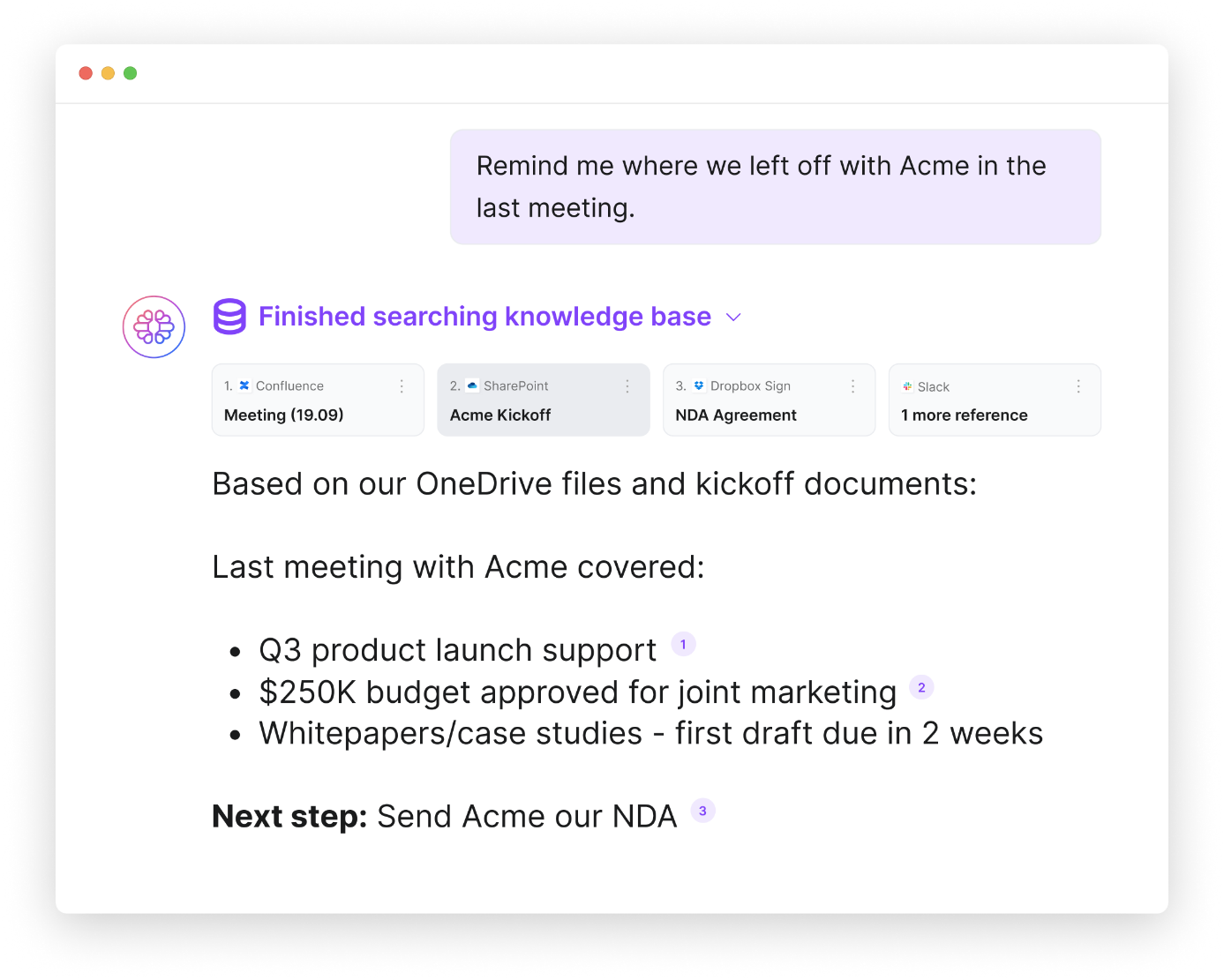
Once you've created your knowledge base, you can use our conversational AI assistant, Zeno, to summarize your documents, retrieve information, and search for information you need. Zeno also allows you to verify the source of the information by citing the documents it uses to generate output.
Create AI Agents That Use Your Knowledge Bases
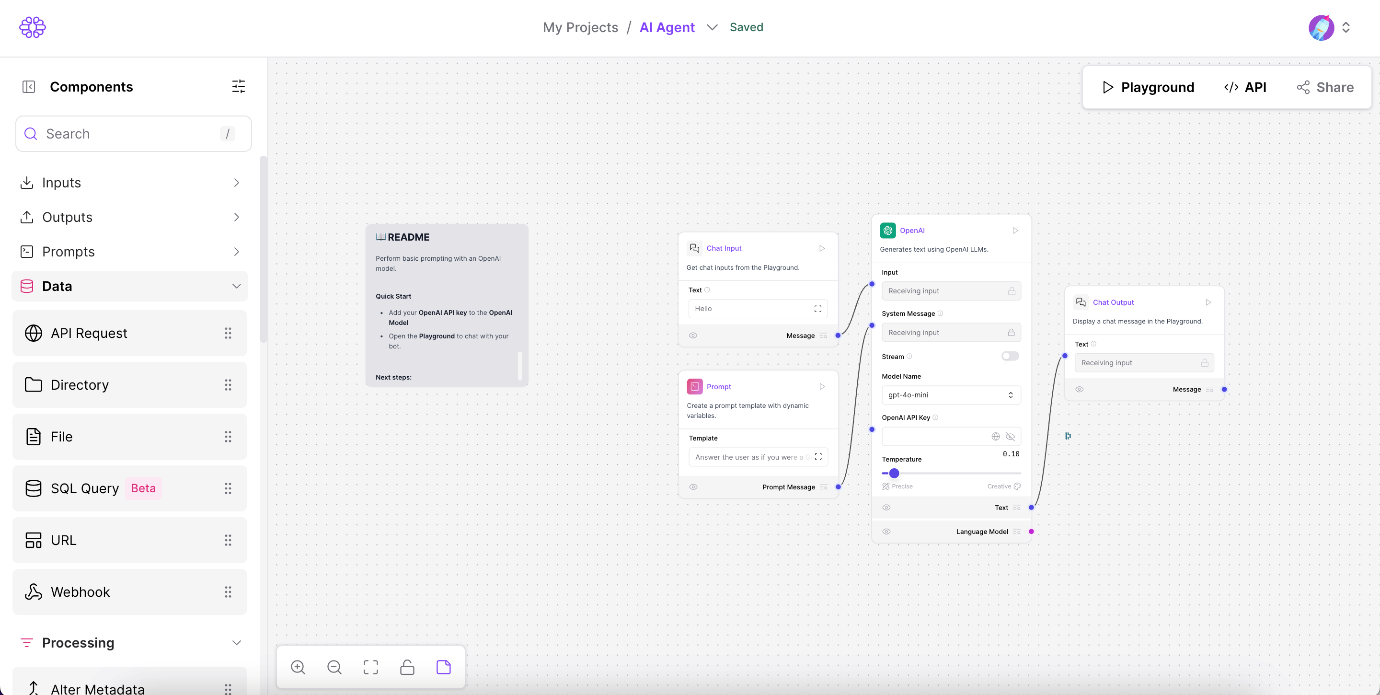
With the TextCortex AI agent builder, you can build working AI agents using the knowledge base you create. Our AI agents allow you to automate your custom workflows and daily or specific tasks.
Frequently Asked Questions
What are use cases of AI for knowledge management?
Some of the most common use cases of AI for knowledge management:
- Intelligent Search and Data Retrieval
- Automated Knowledge Organization
- Knowledge Capture and Extraction
- AI Chatbots
- Content Summarization
What are the benefits of AI knowledge management?
AI knowledge management saves time by allowing employees to quickly access information. Some of the benefits of AI in knowledge management:
- Reduced Manual Effort
- Accurate Search Results
- Knowledge Sharing
- Collaboration
- Streamlined Access to Information
How can AI help knowledge management?
AI technology can help knowledge management by easing the workload, enabling employees to quickly find the information they're looking for, and turning documents into actionable insights. For example, TextCortex helps users generate actionable insights from their documents and internal data, summarize company documentation, and automate knowledge management tasks.
.png)
.png)
.png)