
.png)
Retrieval-augmented generation (RAG) is a feature that upgrades large language models, providing them with new capabilities and enabling more systematic operation. Large language models can generate output using pre-trained data. In contrast, LLMs with a retrieval-augmented generation (RAG) implementation can generate output using specific data sources. While RAG is already an effective solution for businesses, it's possible to take it a step further with agentic RAG. Agentic RAG is a next-generation implementation that integrates with AI agents and utilizes accurate databases to automate your organization's tasks.
In this article, we'll explore what agentic retrieval-augmented generation (RAG) is and its benefits.
Ready?
Let's begin!
TL; DR
- Agentic RAG Retrieval-augmented generation (RAG) is a next-generation implementation of traditional retrieval augmented output generation.
- Retrieval-augmented generation (RAG) enhances LLM data sources, enabling them to utilize multiple databases.
- Agentic RAG provides companies with advantages such as real-time information access and complex, layered task automation.
- You can use Agentic RAG for workflow automation, knowledge support, document summarization, and data analysis.
- Agentic AI can generate personalized responses by analyzing employee profiles, and maximizing employee benefits.
- Agentic AI allows you to search multiple knowledge bases with a single prompt.
- If you're looking for a company AI assistant that offers Agentic RAG and can easily integrate into your enterprise, TextCortex is the way to go.
What is Agentic RAG?
Agentic RAG (Retrieval-augmented generation) is a next-generation implementation of traditional retrieval-augmented output generation. It enhances the existing RAG systems by AI agents that are autonomous AI tools that make independent decisions, plan actions, coordinate other tools in real-time, and manage the whole process by itself.
Unlike traditional AI tools, AI agents have independent decision-making and action-taking mechanisms. For the AI agent you leverage in your business to function properly and produce consistent output, it must be able to use your company databases. This is where agentic AI comes into play. Agentic AI is key to providing your AI agent tools with access to the internal data they need to take action, plan, and automate the entire workflow.
What is the Difference Between Agentic RAG and Traditional RAG?
Traditional RAG uses company databases for large language models, enabling data retrieval and allowing LLMs to generate output with specific data. While this method is effective for simple or medium-level queries, it can be weak for complex inputs or queries where the context is unclear, especially when the query involves reasoning across multiple systems.
On the other hand, Agentic RAG handles complex inputs and offers a flexible and intelligent approach. Agentic RAG can adapt retrieval in real-time based on what is found or missing. Agentic RAG can find alternative information sources by rewriting inputs to refine the context. Agentic RAG can break complex tasks down into simple steps and assign them to other AI tools. Thanks to its structure, Agentic AI can use multiple knowledge bases simultaneously.
Agentic RAG Components
Agentic RAG systems have different components that differ from traditional RAG systems. Agentic RAG is built on modular components that collaborate retrieval, reasoning, knowledge bases and response. Agentic RAG components include:
- Router Agents: Determine the best source and tool to query.
- Multi-agent System: Assign multiple agents for complex tasks.
- Planning and Reasoning Agents: Break down user prompts and decide task sequences.
- Vector Repositories: Allows fast and accurate retrieval.
- Knowledge LLMs: Generate context-aware responses.
- APIs: Connect agents to internal systems like CRMs and knowledge bases.
- Agent Memory: Keep track of past steps and shared context across tasks.
Benefits of Agentic RAG
Agentic RAG is a more functional tool for companies than traditional RAG, thanks to its ability to complete complex tasks and utilize multiple data sources simultaneously. The core benefits of Agentic RAG (Retrieval-augmented generation) include:
- Smarter and Relevant Responses
- Manage Complex and Layered Tasks
- Customizable
- Modular
- Real-Time Information Access
Best Use Cases and Applications of Agentic RAG
Agentic Retrieval-augmented generation (RAG) is especially useful in enterprise environments where knowledge is critical to completing tasks and generating insights. Let's discover the best agentic RAG use cases together.
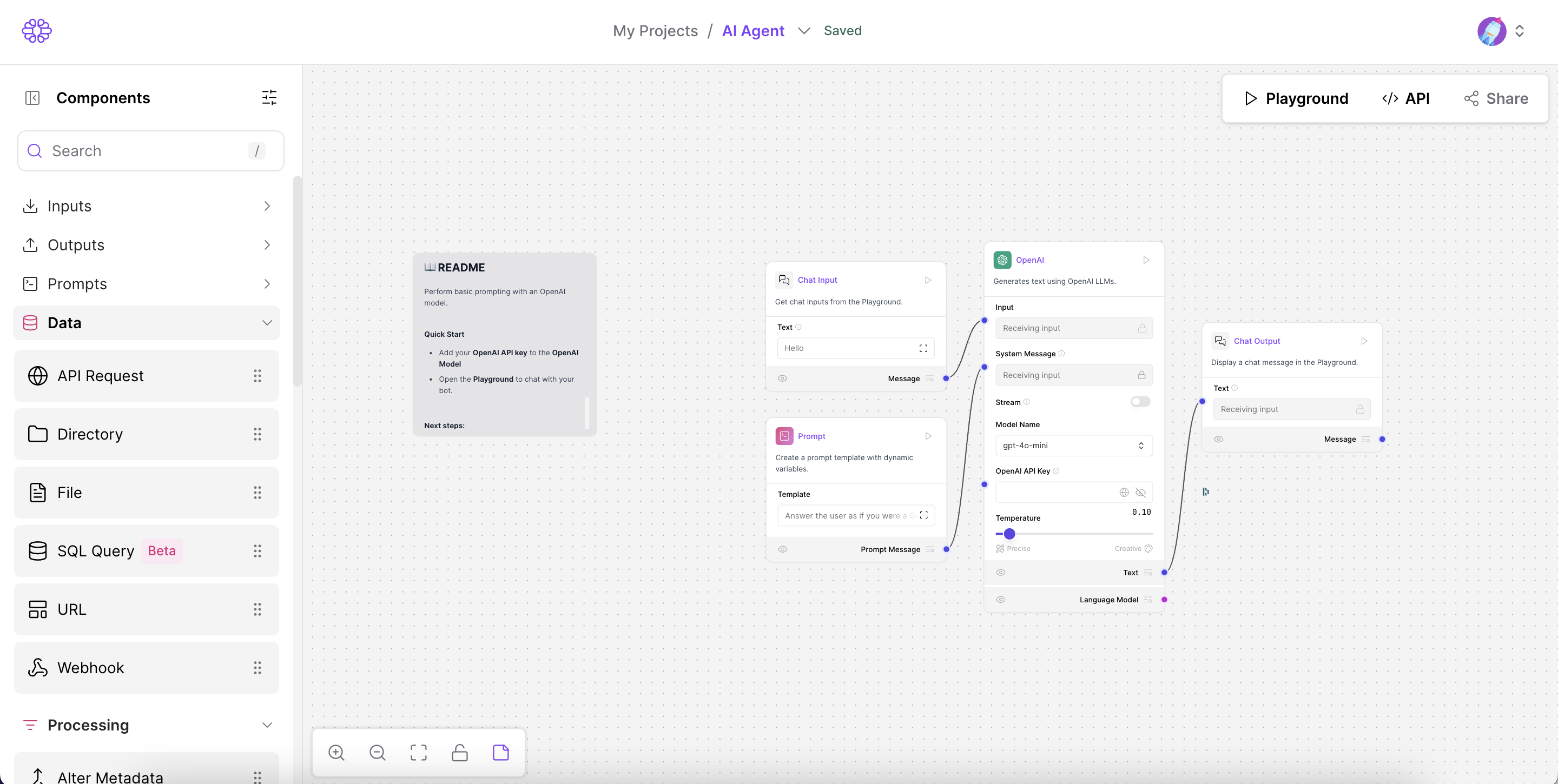
Workflow Automation
With Agentic RAG, you can save time by automating your company or organization's workflows. Agentic RAG uses relevant databases to complete tasks and workflows accurately. This way, you can be sure that the workflows you automate will always be reliable and comply with your business standards.
Knowledge Support
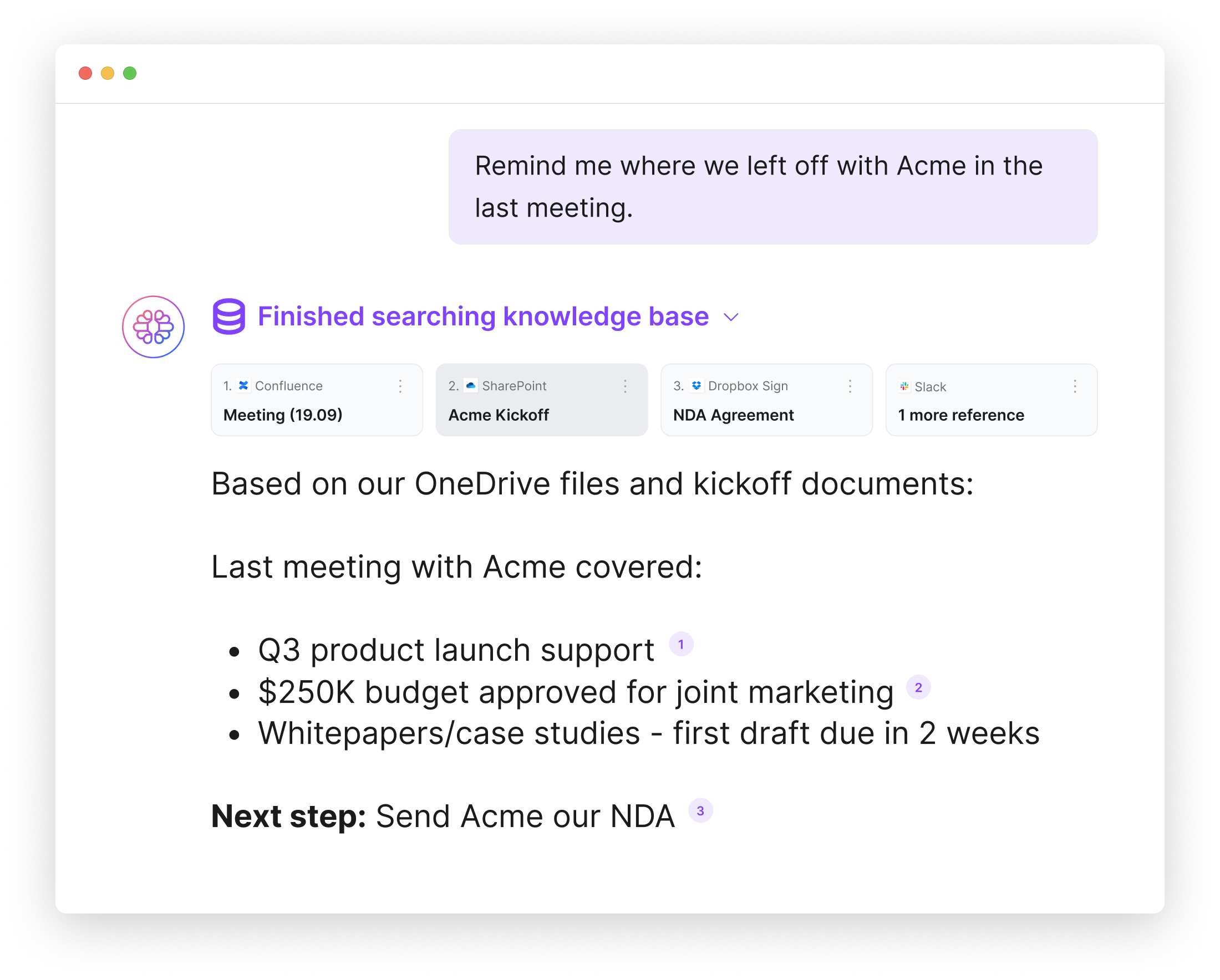
If you don't want your employees to waste time searching for documents across knowledge base systems, Agentic RAG is the solution for you. With Agentic RAG, your employees can quickly find information in any database through queries. This way, instead of wasting time searching for information, they can focus on their core tasks and increase their productivity.
Document Summarization and Analysis
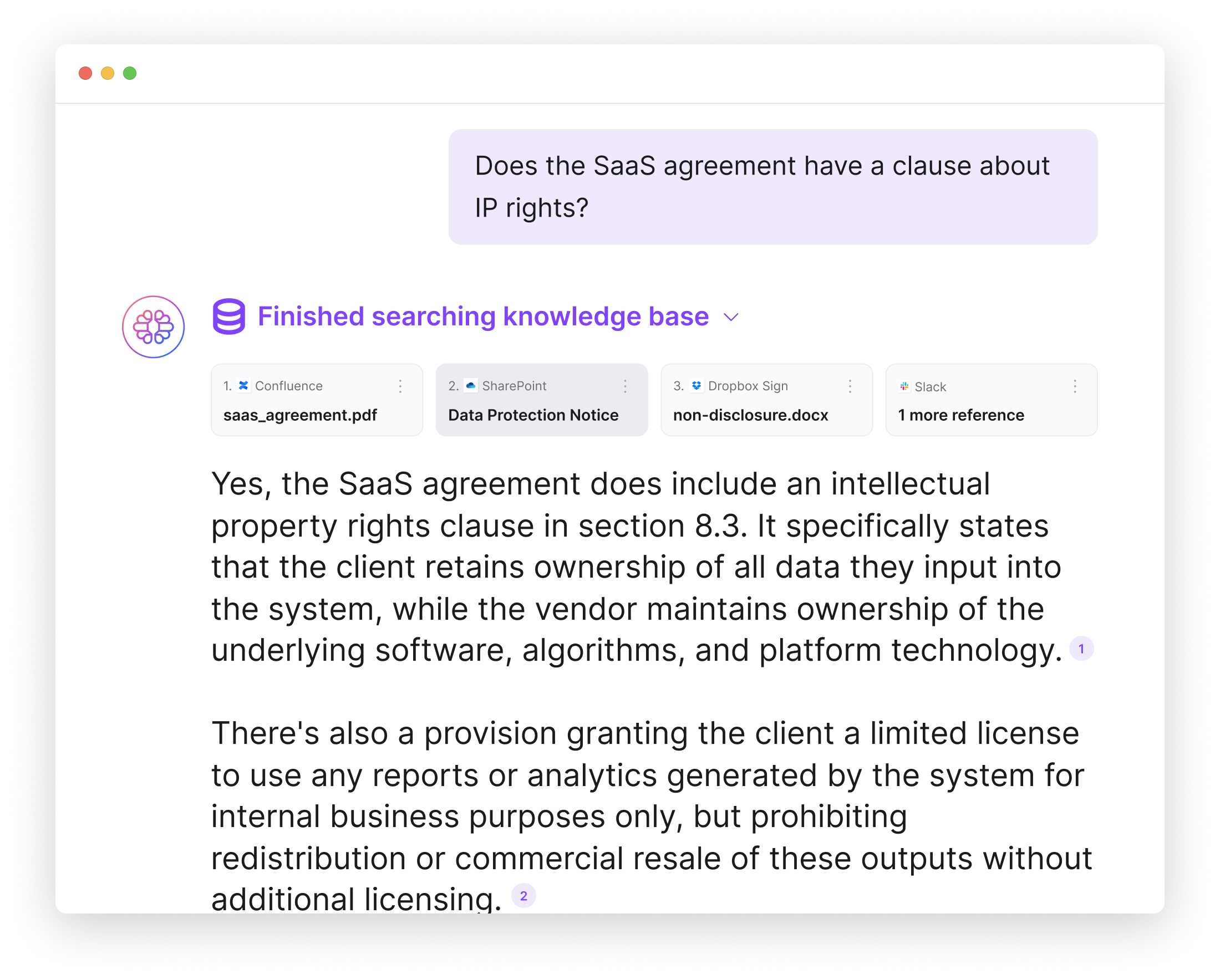
Agentic RAGs can scan different knowledge base systems to summarize all documents related to your query and present them to you in a few sentences. Agentic RAGs can also summarize specific documents, generate new information, or generate insights by summarizing all categorized documents.
Research
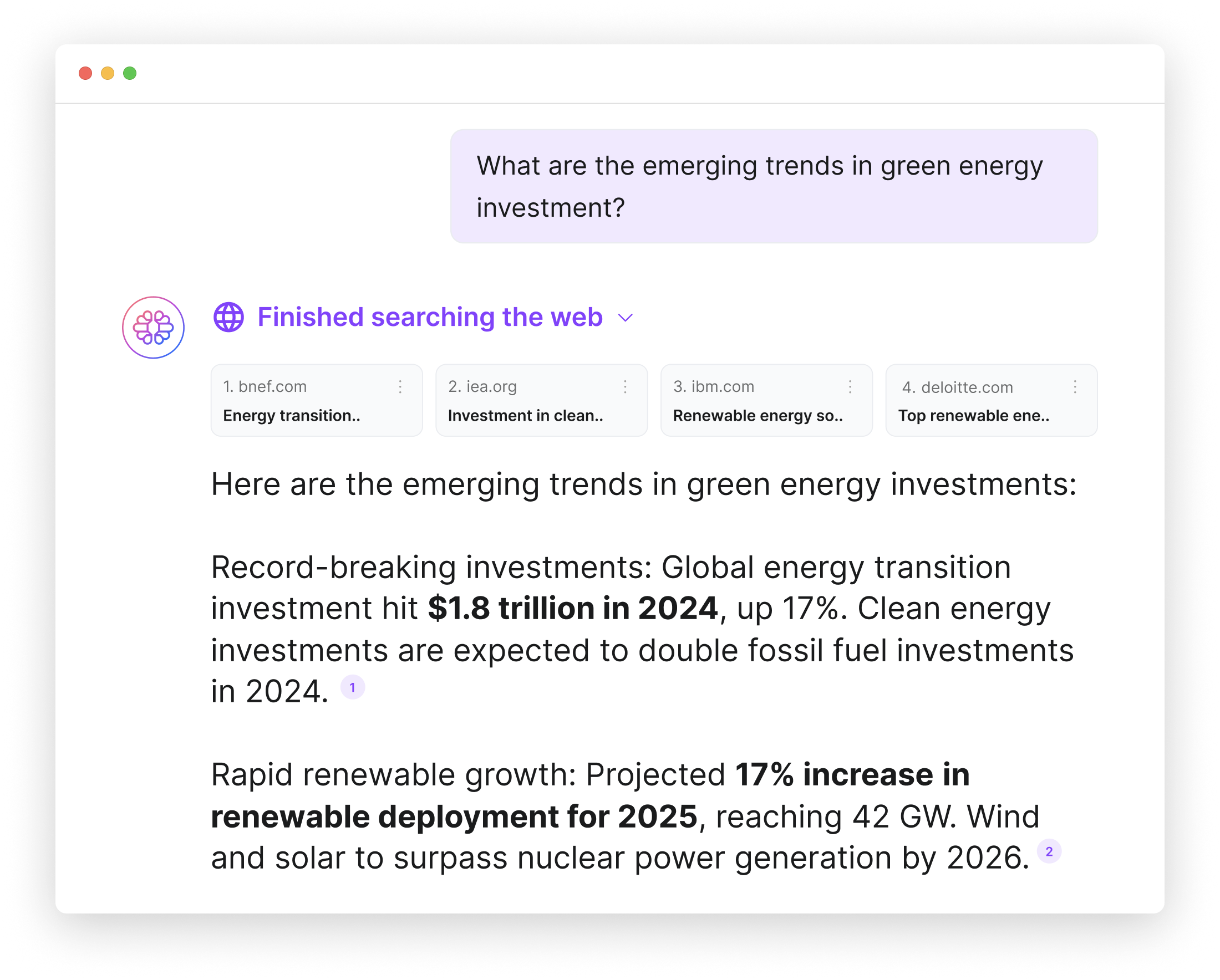
Agentic RAG makes it easy for product or strategy teams to pull information from multiple datasets and combine relevant information to generate new and unique insights. While this process might take hours, days, or weeks manually, Agentic RAG eliminates the heavy lifting and speeds up the entire process.
TextCortex – Leverage Agentic RAG
If you're looking for a company AI assistant that offers Agentic RAG that you can integrate directly with your company, TextCortex is designed for you. TextCortex offers knowledge bases, AI agents, Agentic RAG, a conversational AI assistant, multiple LLMs, workflow automation, and writing assistance features for company users.
Using TextCortex, you can automate tasks across all your departments, including marketing, finance, and human resources, and utilize AI agents for specific workflows. Our AI agents integrate with your company's multiple databases to collect all relevant data and convert it into information.
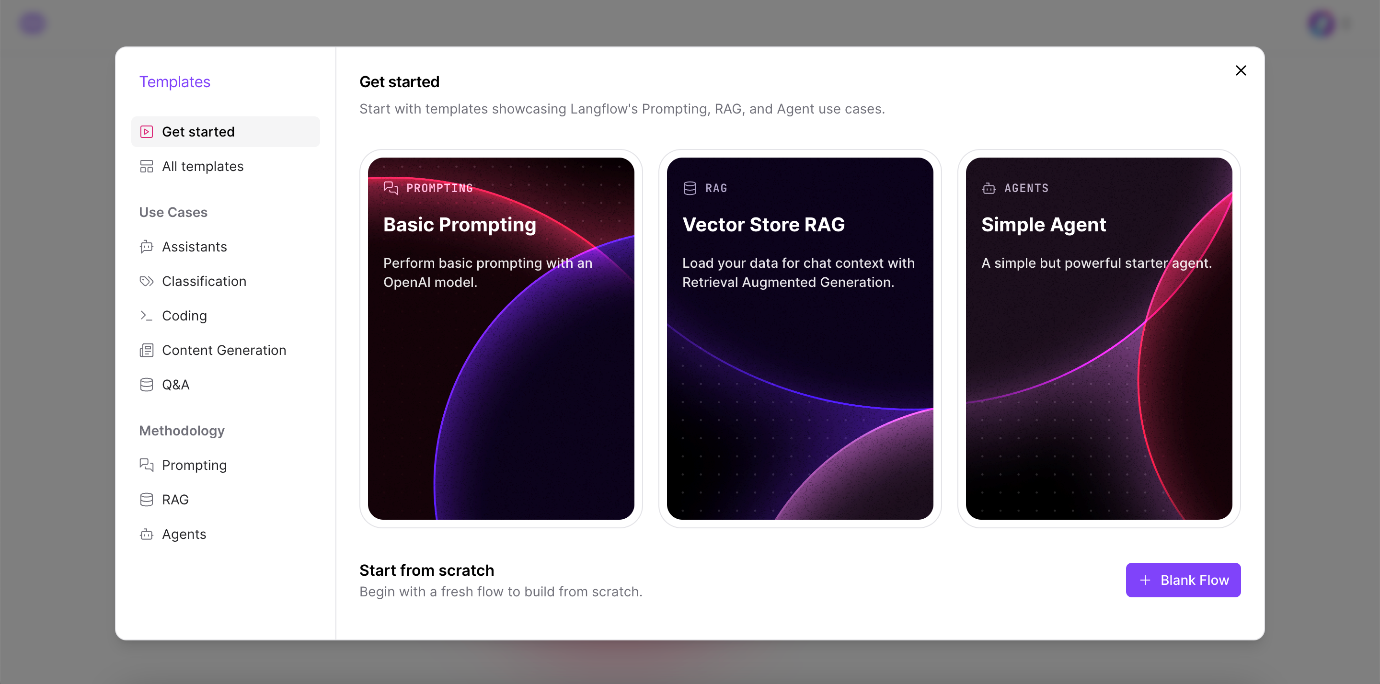
With TextCortex, you can analyze documents, data sets, knowledge, and all your data sources on any topic. TextCortex scans all your knowledge bases, collects relevant data for your query, and analyzes it to generate insights.
If you want to improve your employees' performance and save time, ZenoChat, the conversational AI assistant, is an effective solution for all your employees. With ZenoChat, your employees can find all their data through Zeno, saving time rather than manually searching for it. Check out the results from one of our case studies:
- Reduction of internal expertise search time from minutes to seconds
- 10-12% more efficient proposal creation
- Employee confidence in working with AI improved from 8/10 to 10/10
- Employee enthusiasm toward AI increased from 25% to 67%
- 94% of employees report that AI improves their work quality
Frequently Asked Questions
What is the difference between simple RAG and agentic RAG?
Simple RAG allows large language models to generate output using a specific knowledge base and is effective for basic or intermediate queries. Agentic RAG can generate output using multiple knowledge bases and is effective for complex, multi-step tasks. For example, TextCortex comes with Agentic RAG, which can generate output using multiple databases and automate workflows.
What is the agentic RAG?
Agentic RAG is an implementation that enables large language models to generate output using multiple databases and collects only relevant information by analyzing user input.
What is the basic RAG explanation?
Retrieval-augmented generation (RAG) is the process of optimizing the output of large language models so that it can use a specific knowledge base instead of its training data. While basic RAG can generate output using only a specific knowledge base, agentic AI can generate output using multiple knowledge bases and databases.
.png)
.png)
.png)