
%20(10).png)
AI technology continues to make our daily and professional lives easier. One of the most significant developments is AI agents: systems that can analyze complex environments, break down tasks, and make independent decisions. AI agents come with concrete advantages for large-scale organizations, particularly around automation and productivity.
In this article, we'll explore what AI agents are and the advantages they provide to businesses.
TL;DR: AI agents are AI assistants that can analyze company data, divide complex tasks into manageable subtasks, and make independent decisions to complete given objectives. They work by perceiving an environment, planning, triggering the right AI tools, and improving through feedback. The 4 core advantages they provide to businesses are: complex task automation, time savings, increased efficiency, and improved productivity. TextCortex lets enterprises deploy AI agents on their own data with ISO 27001, SOC 2, and EU AI Act compliance.
AI Agents 101
AI agents are AI assistants that can analyze the environment they're integrated with, make independent decisions, and take action to perform a given task. AI agents provide automation, consistent outputs, and access to multiple AI models such as GPT-4o and Claude to their users. They give organizations all the tools and planning stages needed to automate workflows without constant human supervision.
How do AI Agents Work?
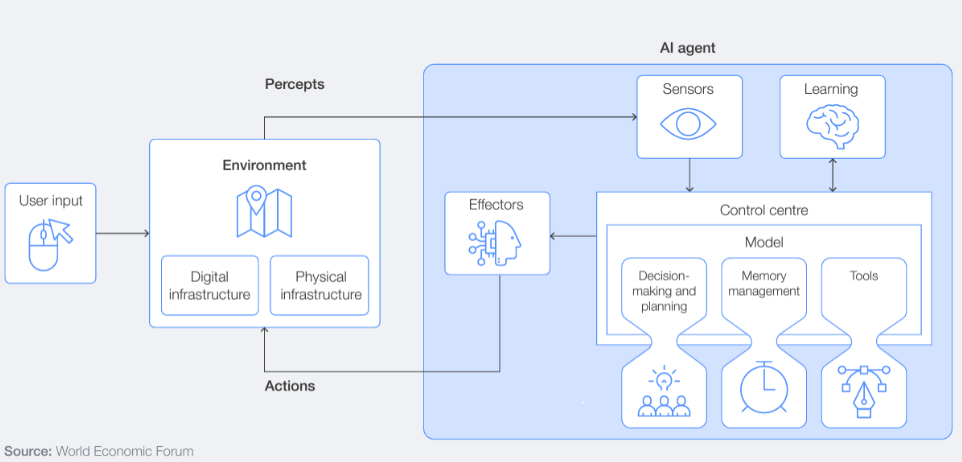
After the user assigns an objective, AI agents perceive the digital or physical environment they're in with their sensors and trigger the planning and decision-making stages to achieve the objectives. The AI agent then analyzes its knowledge and takes action by triggering the AI tools it needs. At the end of this process, the output is delivered to the environment, and thanks to feedback, the AI agent improves and trains itself.
AI Agent Types
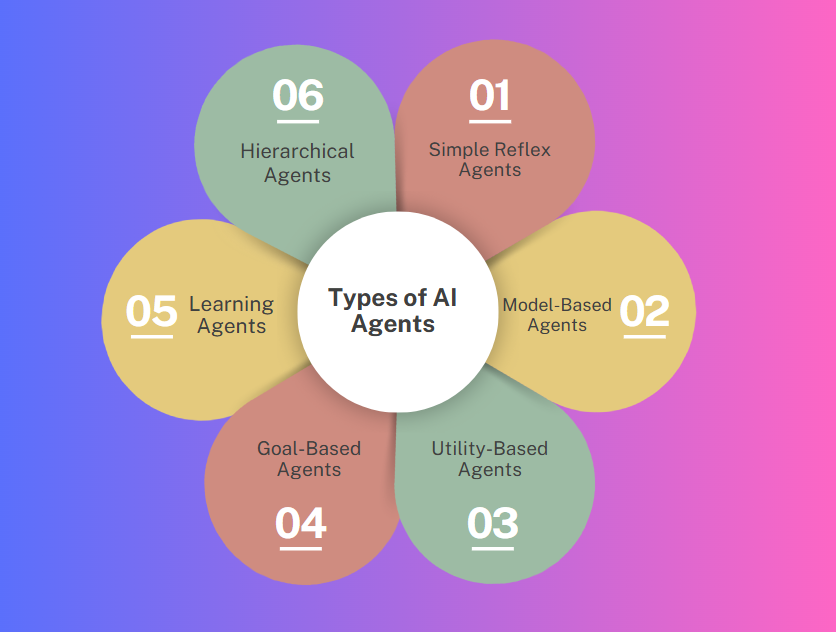
AI agents have 6 different types depending on the features they offer, AI models, and intended use:
- Simple Reflex Agents
- Model-Based Agents
- Utility-Based Agents
- Goal-Based Agents
- Learning Agents
- Hierarchical Agents
Advantages of AI Agents
AI agents are designed to ease the workload of organizations and automate repetitive complex tasks. They can also provide solutions to individual users in specific cases. Whether used for individual or commercial purposes, AI agents offer measurable benefits.
1. Complex Task Automation
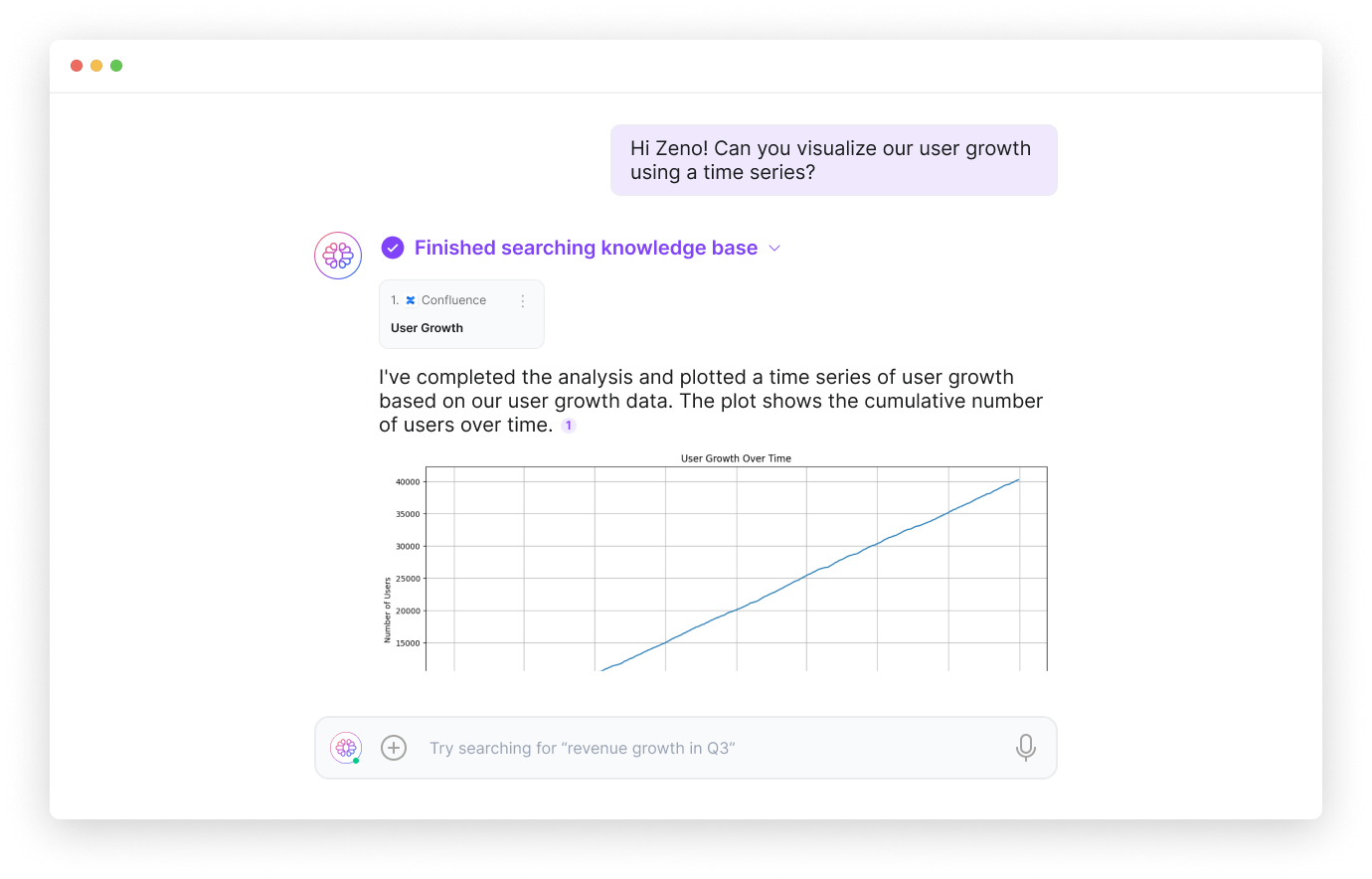
Since AI agents integrate with the environment and analyze the company's knowledge base, they can automate complex tasks in a consistent and high-quality manner by breaking them down into actionable steps. Since AI agents also include different AI models such as LLMs and image generators, they can handle any requirement of complex tasks without human guidance. If you want to automate repetitive complex tasks such as data analysis in customer support, marketing, and sales departments, AI agents are built for this.
2. Time Saving
AI agents prevent employees from wasting time on repetitive tasks by automating complex workflows with the AI models they contain. Since AI agents have independent decision-making and planning features, they don't require an employee to control them and minimize the human workforce required for repetitive tasks. Employees save time by transferring time-consuming, complex tasks to AI agents.
3. Increased Efficiency
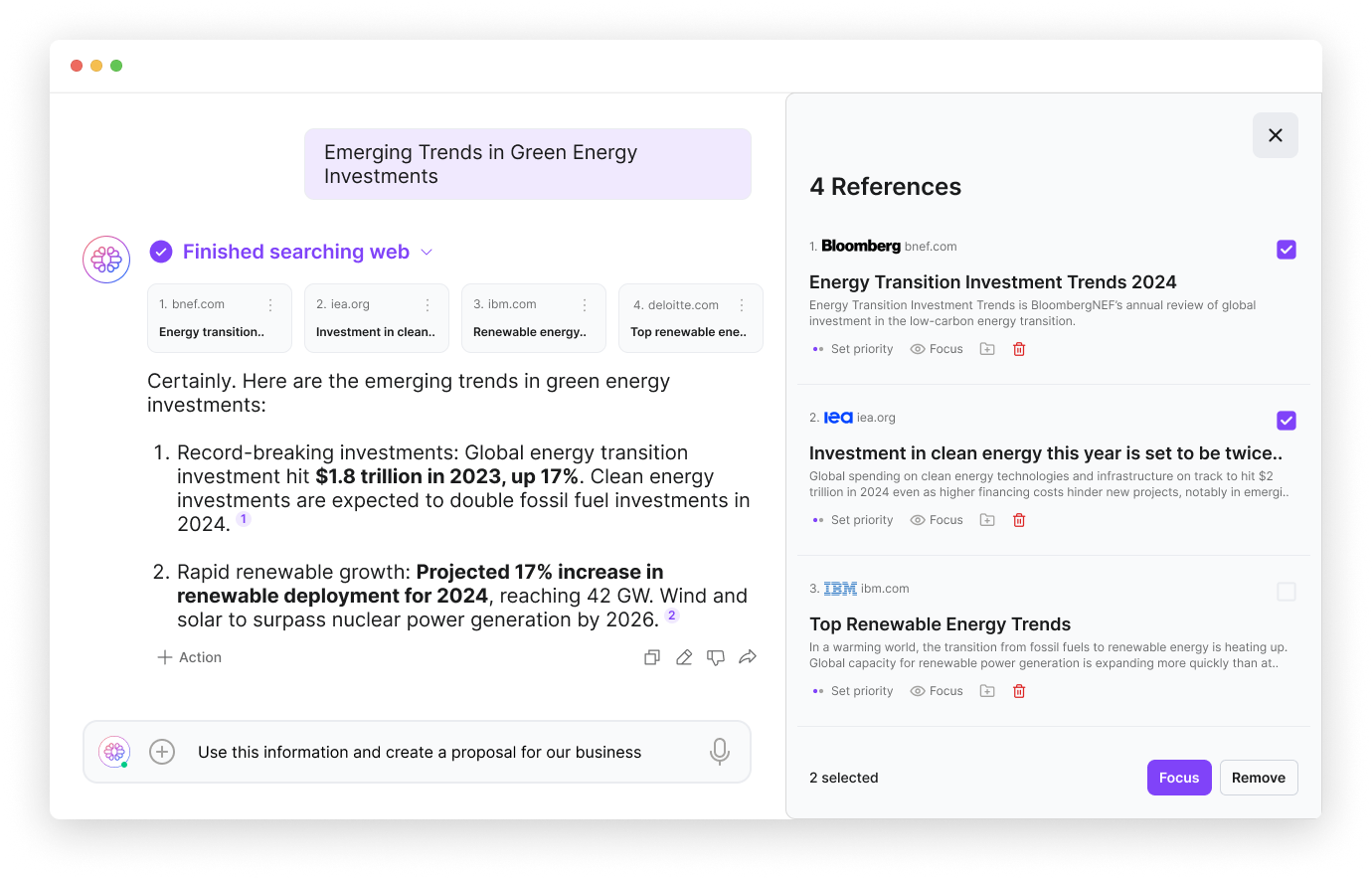
AI agents plan the most effective roadmap to achieve an objective and ensure that repetitive tasks are completed consistently. Since AI agents self-train with the feedback they receive, they generate increasingly specific outputs for your company over time. Quality increases, task time decreases, and outputs stay consistent, which compounds into meaningfully increased efficiency.
4. Improved Productivity
AI agents automate monotonous and repetitive complex tasks, allowing employees to focus on more important work. Employees can focus on specific areas of the company and department instead of wasting time on tasks that a well-configured agent can handle. AI agents also quickly complete time-consuming tasks such as data analysis and turn your data into actionable knowledge, letting employees move to critical decisions faster.
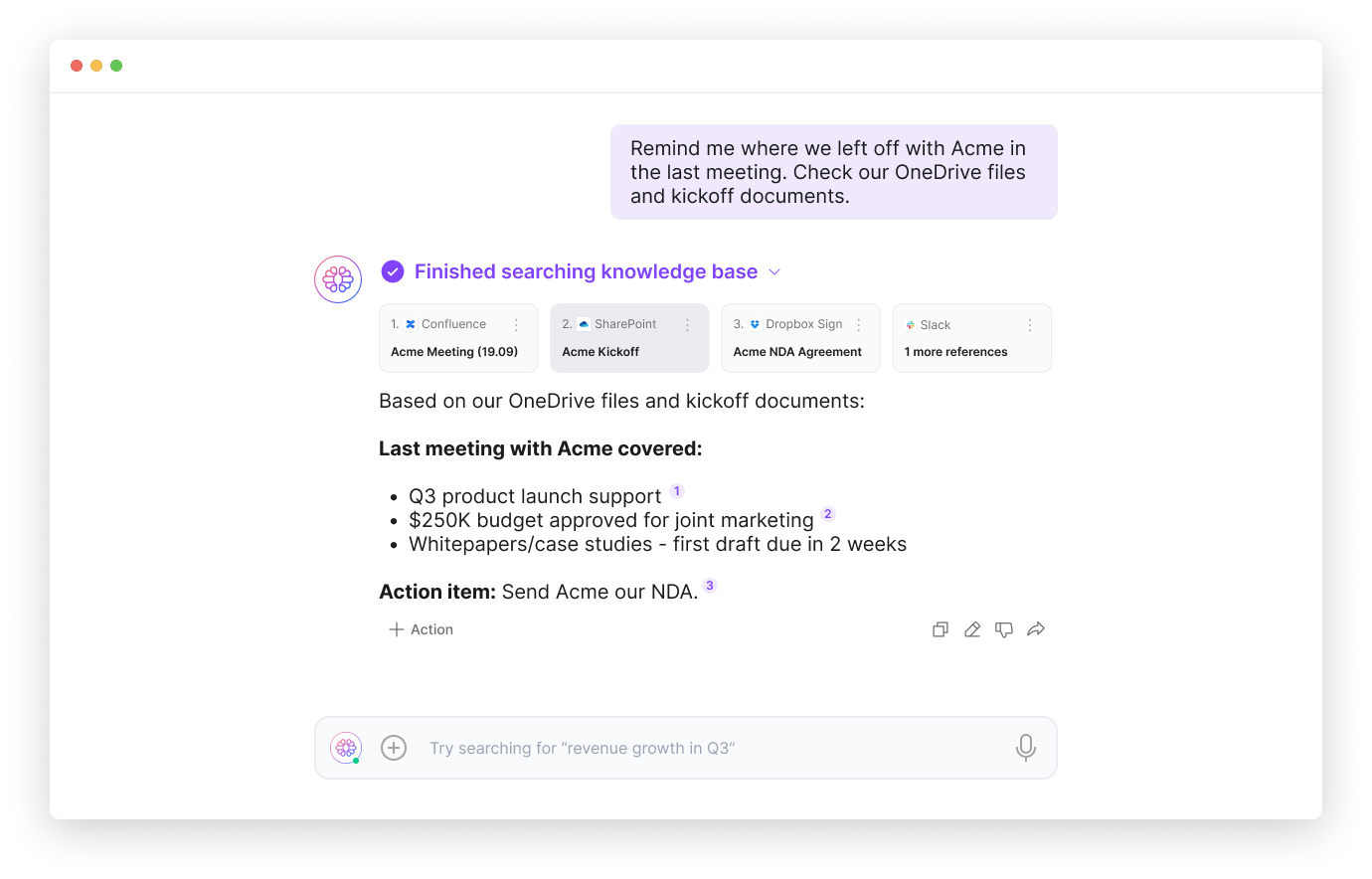
TextCortex: Enterprise AI Agent Platform
TextCortex is an EU-based enterprise AI platform that lets organizations deploy AI agents on their own company data, with multiple LLMs, powerful RAG, image generation, knowledge bases, web search, brand voices, and documentation templates. TextCortex aims to reduce the workload of its users and automate repetitive complex tasks.
With TextCortex's knowledge bases, you can upload your internal data and quickly complete tasks such as data analysis and retrieval, or turn your data into actionable insights. With TextCortex's brand voices feature, you can have all outputs generated with your brand's tone of voice. With TextCortex's web search feature, you can speed up research tasks and reach accurate results without manually searching.
See results from b2venture, an investment firm with over €800M AUM deploying TextCortex AI agents:
- 7x AI usage growth across the investment team
- 70% team adoption achieved
- 5-10 hours saved per investment opportunity assessed
- 10+ specialized AI agents deployed across distinct research and workflow functions
TextCortex is ISO 27001 certified, SOC 2 certified, fully GDPR and EU AI Act compliant, serving Fortune 500 and DAX 40 customers worldwide. Sign up to start deploying AI agents on your enterprise data.
Frequently Asked Questions
What are the benefits of AI agents?
AI agents are AI model systems that provide better reasoning, planning, data analysis, and self-training. They offer companies benefits such as increased efficiency, time savings, automation, and improved productivity. Using TextCortex's workflow automation, you can automate repetitive and complex tasks, save your employees time, and boost your organization's overall productivity.
What are the types of AI agents?
AI agents have different types depending on their intended use and the features they offer. The 6 major AI agent types are:
- Simple Reflex Agents
- Model-Based Agents
- Utility-Based Agents
- Goal-Based Agents
- Learning Agents
- Hierarchical Agents
Why do enterprises need AI agents?
If you want to adapt your organization to developing AI technologies and gain an advantage in the technology race, AI agents are a practical starting point. AI agents save labor by automating repetitive and complex tasks with minimal human input. This lets your team focus extra capacity on more critical areas such as human resources, customer support, and product development.
How do AI agents differ from traditional automation?
Traditional automation follows fixed rules and can only handle scenarios it was explicitly programmed for. AI agents adapt to new situations, learn from feedback, make decisions based on context, and improve their performance over time. When an unexpected situation arises, an AI agent can reason through it; a traditional automation script simply fails or triggers an error.
What is a learning AI agent?
A learning AI agent continuously improves its performance through user feedback and experience. Unlike simple reflex agents that follow fixed rules, learning agents analyze the outcomes of their decisions and adjust their behavior over time. For enterprise deployment, this means an agent trained on your company data becomes more accurate and specific to your organization's context the longer it runs.
How long does it take to deploy AI agents in an enterprise?
Basic deployment (connecting to data sources, configuring agents for specific tasks) typically takes days to weeks. Meaningful adoption across a team, where employees regularly use agents and trust their outputs, usually takes 4 to 8 weeks with structured onboarding. b2venture achieved 70% team adoption with TextCortex and deployed 10+ specialized agents across their investment team.
.png)
.png)
.png)