%20(31).png)
From operations to task distribution, effective corporate communication enables a business to improve and use its workforce effectively. Corporate communication provides both the exchange of information between employees and leaders, and allows employees to be better managed and focused on their work.
In this article, we'll explore corporate communication and share practical methods to help you improve it.
TL;DR: Corporate communication refers to the various ways businesses and organizations communicate, both internally (between employees and teams) and externally (with customers, stakeholders, and investors). According to McKinsey, companies with effective communication practices are 3.5x more likely to outperform their peers. Key improvements come from consistency, transparency, audience-specific messaging, two-way feedback loops, and AI tools that automate and enhance communication workflows. TextCortex helps enterprise teams draft communications faster, analyze feedback, and manage internal knowledge from one platform.
What is Corporate Communication?
Corporate communication refers to the communication of businesses and organizations through various internal and external means. With corporate communication, you can manage and organize your internal and external information exchange and create a positive image of your company. Corporate communication covers a variety of disciplines such as public relations, employee communication, crisis management, and customer conversation.
Importance of Effective Corporate Communication
Effective corporate communication positively affects your public relations: customer satisfaction and the image of your company in the eyes of stockholders. This increases the trust of both your customers and your business partners. But the benefits of corporate communication extend well beyond external parties.
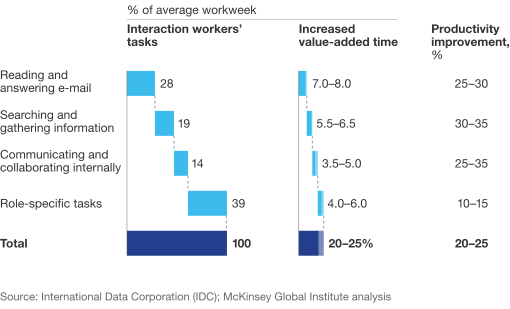
According to McKinsey's research, well-connected teams can increase their productivity by 20 to 25%. A team needs clear, concise, and quick communication to be well-connected. Effective corporate communication management also ensures that all employees and teams of your company work collaboratively, and with it comes a 3.5x greater likelihood of outperforming peers, according to McKinsey's 2024 research.1
Corporate Communication Type: Internal
Corporate communication has 2 types, the first of which is internal. Internal corporate communication covers communication between employees, between leaders and employees, between team leaders, and between teams. Internal corporate communication directly influences morale and operational efficiency. Internal corporate communication channels include:
- Emails: Fast and concise emails are used as the primary communication tool by most companies.
- Newsletters: Keep your employees informed about company updates and news.
- Chat Tools: Enable real-time communication among team members and offer dynamic communication.
- Meetings and Presentations: Allow leaders to communicate interactively with all staff and supervisors at the same time.
- Intranets and Digital Workspaces: Allow company members to communicate asynchronously through tools such as Notion, Microsoft SharePoint, and AI-powered knowledge platforms.

Corporate Communication Type: External
The second type of corporate communication, external corporate communication, covers the company's communication with customers, stockholders, and other organizations. With external corporate communication, you can shape your business's reputation, strengthen public relations, and increase your company's credibility. External corporate communication channels include:
- Website and Social Media: The public face of your company, ideal for brand awareness.
- Blog Pages: Ideal for product or service updates and driving traffic to your website.
- Press Releases, Conferences, and Media Relations: Manage how you communicate information to the public.
- Advertising and Marketing: Ideal for promoting your products, building brand loyalty, and communicating with customers.
- Annual Reports: Allows you to be transparent about your business results and share this information with customers or stakeholders.

How to Improve Corporate Communication?
By improving corporate communication, you can both increase the productivity of your employees and build brand awareness. There are a few essential methods to improve your corporate communication by considering the needs of your company.
Consistency in Messaging
The first factor essential to internal corporate communication is consistency in messaging. Consistent communication ensures that your employees always know what to do and that your customers and stakeholders trust your company. By establishing consistent communication with your employees, you can increase their morale, boost their productivity, and enhance their loyalty to your company.
Transparency and Honesty
According to Forbes's research, nearly half of workers report their productivity being affected by ineffective communication. The biggest problem with ineffective communication is that messages are not clear and transparent enough. By using transparent, honest, and clear sentences in your internal corporate communication, you can ensure that your employees work effectively. 86% of executives and employees cite lack of effective communication as the primary cause of workplace failures.1
Tailoring Communication to Specific Audiences
Whether internal or external, the jargon, tone of voice, and details of your message should be appropriate for the target audience receiving it. When sending a message to the marketing department, for example, you need to make sure that your employees can understand all the words in your message. This will make it easier for the recipients to understand the context, and your message will land more effectively.
Two-way Communication and Feedback
Interactive dialogues with your employees, customers, or stakeholders clarify points of confusion and build stronger relationships. Your customers' feedback will help you develop your company's service or product and build customer loyalty. Employees who feel their voice is heard report 62% lower stress levels and are 4.6x more likely to feel empowered to perform their best work.

Integrate AI into Corporate Communication
Examining and integrating developing technologies into your company is a method that ensures success and productivity growth. AI technologies can analyze large amounts of data, adjust the tone of voice of your messages, simplify content for specific audiences, and surface relevant information from your internal knowledge base on demand.
TextCortex: Boost Corporate Communication
TextCortex is an EU-based enterprise AI platform developed to reduce your workload and help in all aspects of your company with multiple LLMs, natural language processing capabilities, data analysis, insight generation, and a range of team-focused features.

With TextCortex, you can create emails in seconds, rewrite messages with a tone of voice that appeals to specific audiences, analyze customer feedback and convert it into tables and graphs, summarize large amounts of data to generate useful insights, and improve corporate communication by integrating all your company's internal data.
Knowledge Management for Internal Communication
TextCortex offers a conversational AI that lets employees interact with your company's knowledge base in natural language. Unlike static intranets or document repositories, TextCortex analyzes queries and generates synthesized responses using your internal data, so employees get accurate, context-aware answers rather than a list of documents to manually search.
The knowledge base integration feature allows you to generate and manage internal communication documents such as SOPs, analyze all your data, and summarize information. Once you upload or connect your documents, you can integrate all your data into TextCortex with Google Drive, Microsoft OneDrive/SharePoint, and Notion integration options in just a few steps.
See results from Atares, deploying TextCortex for operational communication and productivity:
- 20 hours per week saved in operational time after deployment
- Reduced time spent on manual communication drafting, follow-ups, and document search
- Teams able to focus more time on strategic work
TextCortex is ISO 27001 certified, SOC 2 certified, GDPR compliant, and EU AI Act aligned. Fortune 500 and DAX 40 companies use it today. Create your free TextCortex account and discover how to improve corporate communication across your business.
Frequently Asked Questions
What is corporate communication?
Corporate communication refers to all the ways a business communicates, both internally (between employees, teams, and leadership) and externally (with customers, stakeholders, investors, and the public). It encompasses public relations, employee communication, crisis management, marketing, and customer conversations.
What are the 2 types of corporate communication?
The 2 types are internal and external corporate communication. Internal communication covers exchanges between employees, teams, and leadership through emails, chat tools, meetings, intranets, and newsletters. External communication covers the company's interactions with customers, investors, and the public through websites, social media, press releases, advertising, and annual reports.
Why is effective corporate communication important?
Effective corporate communication directly impacts productivity, employee engagement, and business outcomes. McKinsey research shows companies with effective communication practices are 3.5x more likely to outperform their peers. Gallup's 2025 data shows disengaged employees, often a product of poor communication, cost the global economy $438 billion in lost productivity annually.
How can AI improve corporate communication?
AI tools improve corporate communication in several ways: drafting personalized messages at scale, adjusting tone of voice for specific audiences, analyzing customer feedback and converting it into actionable insights, summarizing large volumes of internal data, and surfacing the right information at the right time through knowledge base queries. Teams spend less time drafting and searching, and more time acting.
What is internal corporate communication?
Internal corporate communication is the exchange of information between employees, teams, team leaders, and executives within a company. It covers everything from day-to-day task coordination to company-wide announcements and strategic alignment. Strong internal communication is a primary driver of employee engagement: Gallup research shows 70% of the variance between a good and mediocre workplace comes down to manager communication.
How do I improve internal communication at my enterprise?
Start with 4 priorities: consistent messaging so employees always know the company's direction; transparent and clear language that leaves no room for misinterpretation; tailored communication for each audience; and two-way feedback mechanisms. Adding AI tools like TextCortex accelerates all of these, automating communication drafting, organizing institutional knowledge, and giving every employee on-demand access to accurate company information.
1 McKinsey. "Communication Excellence and Business Performance." 2024. mckinsey.com
.png)
.png)
.png)