
68% of enterprises have experienced data leaks linked to AI tool usage, yet only 23% have a formal security policy in place.1 That gap is where most damage happens. Generative AI is genuinely useful for automating repetitive tasks, strengthening knowledge retrieval, and turning internal databases into actionable documents. But every workflow that touches sensitive data is also a potential data exit.
TL;DR: GenAI has become the #1 vector for corporate data leaving enterprise control: 77% of employees have pasted company data into AI tools, 82% via personal unmanaged accounts. Preventing data leakage from AI tools requires a formal security policy, vetted tool selection, prompt protection, employee training, and continuous audit logging. Working with platforms that hold ISO 27001, SOC 2 Type II, and EU AI Act compliance gives you the governance layer to make those controls enforceable.
What Are Enterprise AI Tools?
Enterprise AI tools are technologies designed to integrate with company workflows and reduce professional workloads. TextCortex, for example, automates repetitive workflows, strengthens knowledge base access, and enables data retrieval across internal systems. Because this process touches sensitive enterprise data, compliance and access controls aren't optional features; they're the foundation.
Key AI Data Security Challenges
77% of employees have pasted company data into AI chatbots, and 82% of them did so via personal, unmanaged accounts that bypass enterprise controls.2 Cyberhaven research found that 11% of data pasted into ChatGPT is confidential, including source code, strategy documents, and customer records.3 GenAI now accounts for 32% of all corporate-to-personal data exfiltration, making it the #1 vector for data moving outside enterprise control.2 A separate 2025 study by Kiteworks found that 93% of employees share confidential company data through unauthorized AI tools, often without realizing the risk.4
Here are the most pressing data security challenges when using AI at the enterprise level:
- Adversarial Machine Learning Attacks: Malicious actors targeting AI systems to manipulate behavior, evade detection, or extract sensitive training data
- Data Poisoning: Corruption of AI training data to produce biased or harmful outputs
- Privacy & Data Misuse: Excessive data collection crossing ethical boundaries and creating surveillance risks
- Zero-Day Attacks on AI Systems: Growing vulnerabilities targeting AI infrastructure specifically
- AI Agent Security: New threat vectors from autonomous AI agents acting independently on connected systems
- Regulatory Compliance: Navigating evolving global legal frameworks for AI and data privacy
- Shadow AI: Unauthorized AI tools being used by employees without IT oversight, creating blind spots and unmanaged data channels
How to Prevent Data Leakage from AI Tools: Best Practices
Here are the most effective strategies for locking down data security when using AI tools.
1. Establish a Clear AI Security Policy
The most effective starting point is a formal AI security policy that defines what counts as confidential information and specifies which data should never be entered into a public or external model. Without a written policy, employees operate in ambiguity, and ambiguity is where leakage happens. Organizations with formal GenAI governance policies reduce data leakage incidents by up to 46%.1
2. Identify AI Tools Based on Security Standards
Hundreds of AI tools are on the market, and their security postures vary enormously. Before approving any tool for enterprise use, verify what data it processes, how it's stored, whether it trains on your inputs, and what certifications it holds. Approved tools should provide data protection controls and monitoring systems out of the box, not as add-ons.
3. Host AI Tools in Secure Private Infrastructure
Sharing internal data with third-party AI platforms always carries some risk. Hosting AI models on private infrastructure, or choosing vendors with EU-hosted, single-tenant deployments, gives your organization full control over data flow and usage. This is especially important for enterprises operating under GDPR or the EU AI Act.
4. AI Prompt Protection
Prompt injection holds the #1 spot on the OWASP Top 10 for LLM Applications 2025. The most common data leakage vectors are prompt poisoning and prompt injection, where malicious inputs trick the model into revealing sensitive information or taking unauthorized actions. Data Loss Prevention (DLP) solutions automatically block flagged sensitive data from leaving the environment. These controls need to cover both user inputs and model outputs.
5. Employee Training
Most employees who paste sensitive data into AI tools don't realize they're doing anything wrong. Training sessions that clarify what can and can't be shared, what constitutes confidential data, and how to use AI tools without exposing IP are essential. TextCortex includes a structured 3-month AI training program with 4 workshops and team certification, because training determines adoption quality.
6. Audits and Logs
Logging all actions of AI models lets you observe how they respond to prompts and inputs, detect prompt injection attempts early, and build an audit trail for compliance purposes. Without logs, you have no visibility into what the AI system actually did or accessed.
Bonus: Check Compliance Certifications
Before integrating any AI platform into enterprise workflows, check what compliance certifications it holds. At minimum, look for ISO 27001, SOC 2 Type II, GDPR compliance, and EU AI Act alignment. These certifications signal that the vendor treats security as a continuous discipline, not a one-time audit. This is the simplest filter for separating platforms that take security seriously from those that don't.
TextCortex: Governed Enterprise AI Infrastructure
TextCortex is an EU-based enterprise AI infrastructure platform. Organizations use it to deploy and govern AI agents on their own company data, with multi-model access (GPT-4o, Claude, Gemini) from one secure, governed environment. It includes built-in RBAC, permission-aware retrieval, audit logging, and a 3-month AI training program with 4 workshops and team certification.
TextCortex Security and Compliance Program
TextCortex holds ISO 27001 and SOC 2 Type II certifications, and is fully compliant with GDPR and the EU AI Act. All data stays in EU-hosted infrastructure, with no cross-border processing unless explicitly configured.
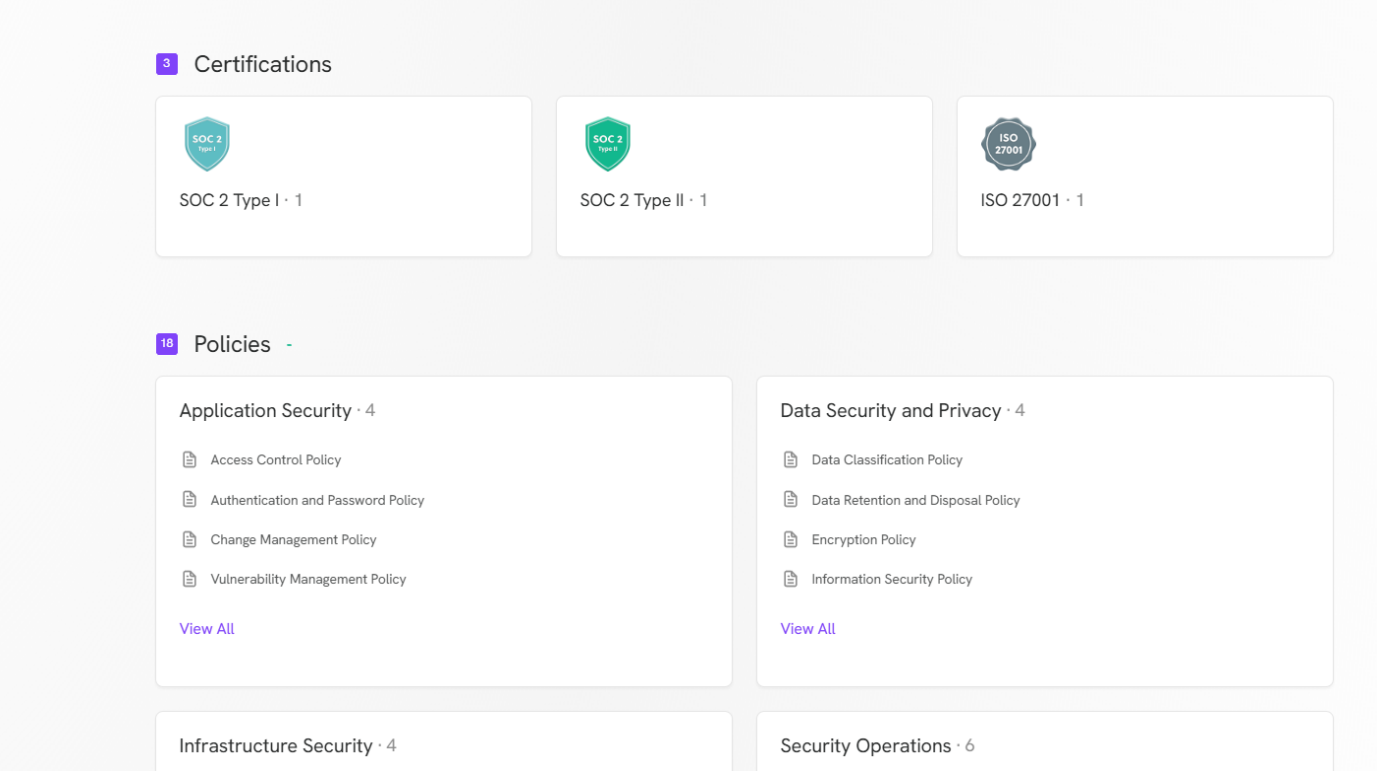
The platform includes monitoring controls for tracking all AI system activity continuously. Full security documentation at trust.textcortex.com.
b2venture (a VC firm managing over €800M in assets) deployed TextCortex and saw 7x growth in AI usage across their investment team, with 70% team adoption and 5-10 hours saved per investment opportunity. Read the full case study here.
Frequently Asked Questions
How to prevent AI data leakage?
Best practices for preventing data leakage from AI systems:
- Establish a clear AI security policy
- Identify AI tools based on security standards
- Host AI tools in private, EU-compliant servers
- Train your employees on safe AI usage
- Use AI prompt protection and DLP tools
- Log and audit all AI model actions
- Check AI platforms' compliance certifications before onboarding
How to keep data safe when using AI tools?
Avoid sharing personal or confidential information in prompts, review each AI tool's privacy settings before use, and stick to enterprise-managed accounts rather than personal ones. Most free AI models process your inputs for training by default; enterprise plans with data processing agreements are a different category entirely.
What is shadow AI and why is it a security risk?
Shadow AI refers to AI tools used by employees without IT or security team approval. It's a major risk because these tools operate outside enterprise controls, meaning sensitive data shared through them can't be monitored, audited, or recovered. A 2025 BlackFog study found that 60% of employees knowingly accept security risks to work faster using unsanctioned tools. Shadow AI is now one of the top vectors for unintentional data exfiltration.
What compliance certifications should an enterprise AI platform have?
At minimum, look for ISO 27001 (information security management), SOC 2 Type II (controls audit), GDPR compliance (EU data privacy), and EU AI Act alignment. These aren't just checkboxes; they indicate the vendor undergoes regular third-party audits and maintains security controls as a continuous practice.
Sources
1 Metomic. "State of Data Security Report." 2025. metomic.io
2 LayerX Security. "Enterprise AI and SaaS Data Security Report 2025." 2025. layerxsecurity.com
3 Cyberhaven. "AI Data Research." 2024. cyberhaven.com
4 Kiteworks. "Employees Sharing Confidential Data with Unauthorized AI Tools." 2025. kiteworks.com
.png)
.png)
.png)