
.png)
The increasing token price of AI models has limited their accessibility to everyone. Specifically, the output pricing of GPT-5.5 and Claude Opus 4.7 models restricted their use to specific cases. Fortunately, models like Kimi K2.6, offering high performance and low token pricing, have come to the rescue. Kimi K2.6 boasts benchmark performance comparable to both GPT-5.5 and Claude Opus 4.7, while offering significantly lower pricing. If you're curious about the Kimi K2.6 model, we've got you covered!
In this article, we'll explore the Kimi K2.6 model and examine its performance.
TL; DR
Kimi K2.6 is Moonshot AI’s affordable flagship competing with GPT-5.5 and Claude Opus 4.7. It supports text, image, and video inputs with a 256K context window, and comes in four variants: Instant, Agent, Thinking, and Agent Swarm (300 parallel sub-agents, 4,000 steps). API pricing is $0.95 per million input tokens and $4 per million output tokens, undercutting rivals significantly. It excels at long-horizon coding (12-hour autonomous sessions), agentic tasks, and multimodal reasoning, beating GPT-5.4 and Opus 4.6 in several benchmarks while occasionally surpassing Gemini 3.1 Pro. Access is free via the Kimi chatbot or through its API; for EU-hosted, GDPR-compliant enterprise use, TextCortex provides an alternative deployment path.
What is Kimi K2.6?
Kimi K2.6 is the latest flagship Kimi model developed by Moonshot AI. Kimi K2.6 supports text, image, and video input and offers users 256K context windows. In addition, Kimi K2.6 comes with features such as JSON mode, partial mode, internet search, thinking, and non-thinking models. All these features make Kimi K2.6 ideal for long coding, agent execution, multimodal understanding, and workflow management.

Kimi K2.6 Models
The Kimi K2.6 model comes with four different sub-models: Kimi K2.6 Instant, Kimi K2.6 Agent, Kimi K2.6 Thinking, and Kimi K2.6 Agent Swarm.
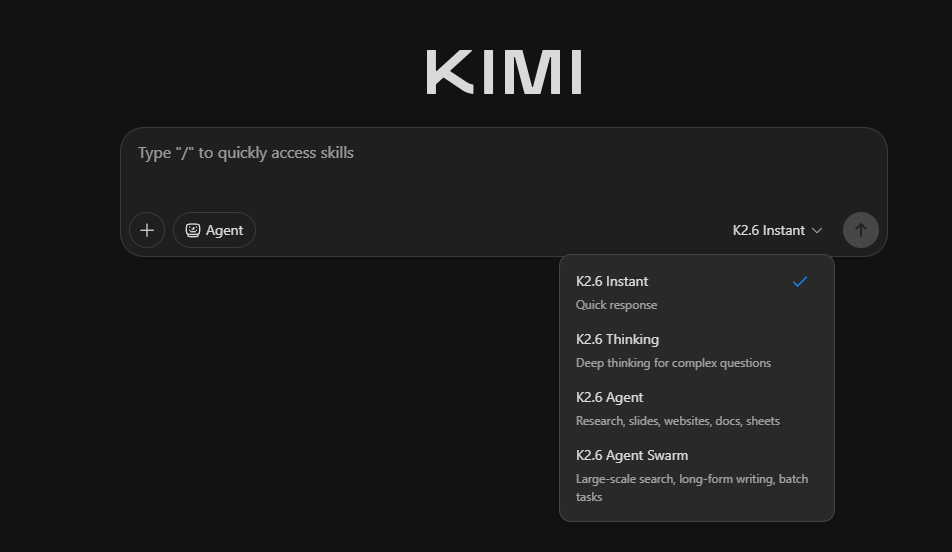
Kimi K2.6 Instant models are ideal for tasks like email writing, where you need fast and quick output. Kimi K2.6 Agent models are ideal for a single autonomous agent with tool access offers and tasks requiring action, such as code generation, debugging, and similar tasks with a clear output goal. Kimi K2.6 Thinking models, while generating slower output, are ideal for tasks requiring reasoning, such as code review, document analysis, security reasoning, and architecture decision-making. Agent Swarm can spawn 300 parallel sub-agents, perform 4000 coordinated steps, and is ideal for users who need to automate complex multistep tasks. Additionally, you can create skills with Agent Swarm, similar to Claude AI.
How to Access Kimi K2.6?
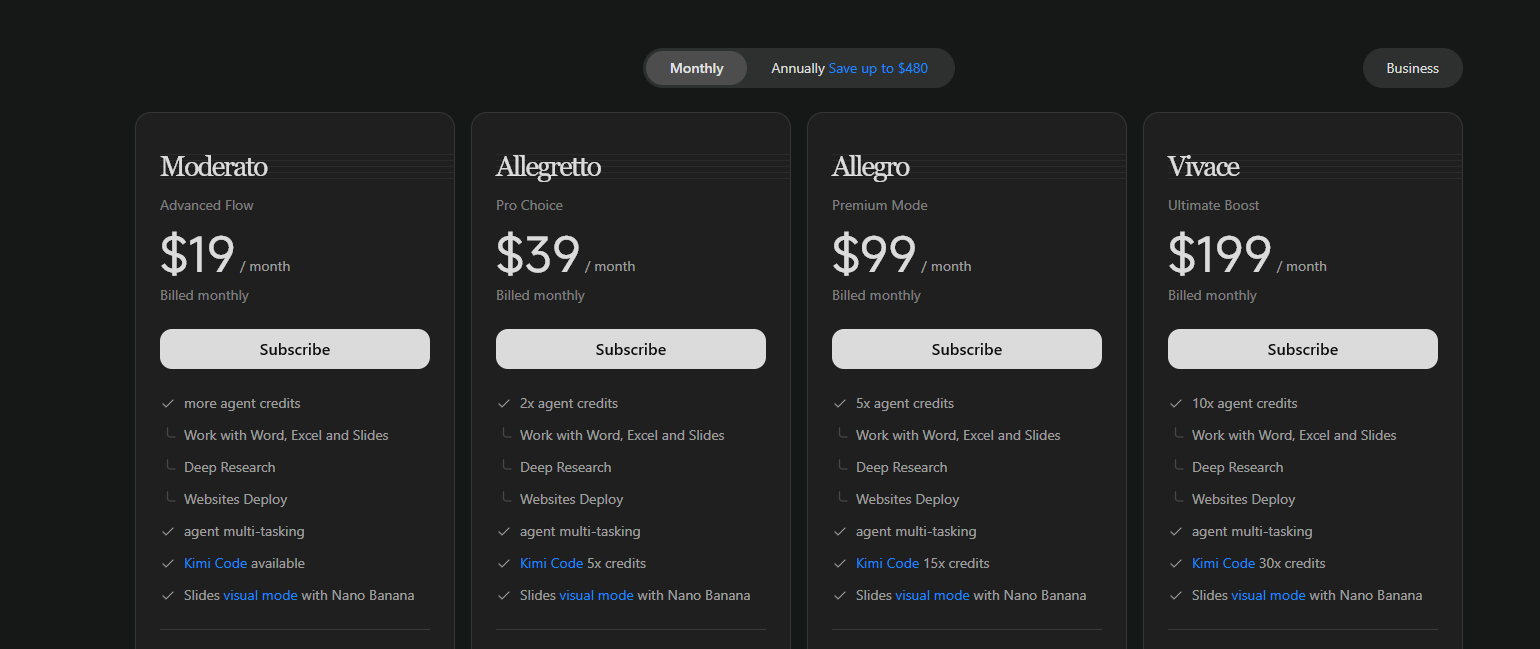
There are two main ways to access Kimi K2.6 tokens. The first is to use Kimi K2.6 through the Kimi AI Chatbot. After logging into the Kimi AI chatbot web application, creating an account is sufficient to use it for free. If you want to use Kimi K2.6 tokens with more token rights, you need to subscribe to one of Kimi's paid plans.
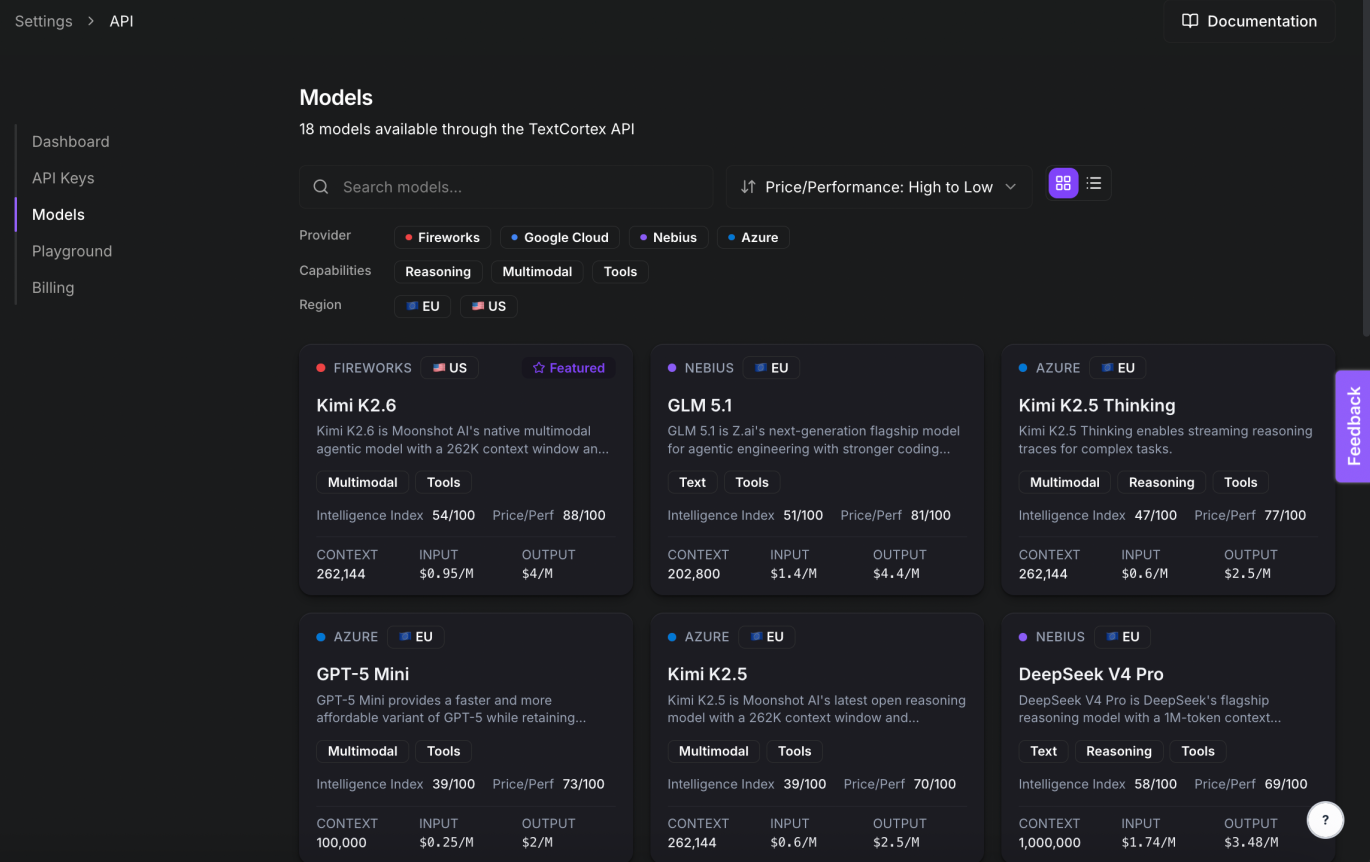
Another way to access Kimi K2.6 models is to use them as an API. With the Kimi K2.6 API, you can use Kimi K2.6 models in your own local AI app or build AI models using them.
One way to integrate the Kimi K2.6 model into your enterprise workflow is by using TextCortex. With TextCortex, you can use the Kimi K2.6 model both as an AI chatbot and as an AI agent. TextCortex allows you to use Kimi K2.6 to create AI agents, build workflow automations, and complete complex enterprise tasks.
Kimi K2.6 Pricing
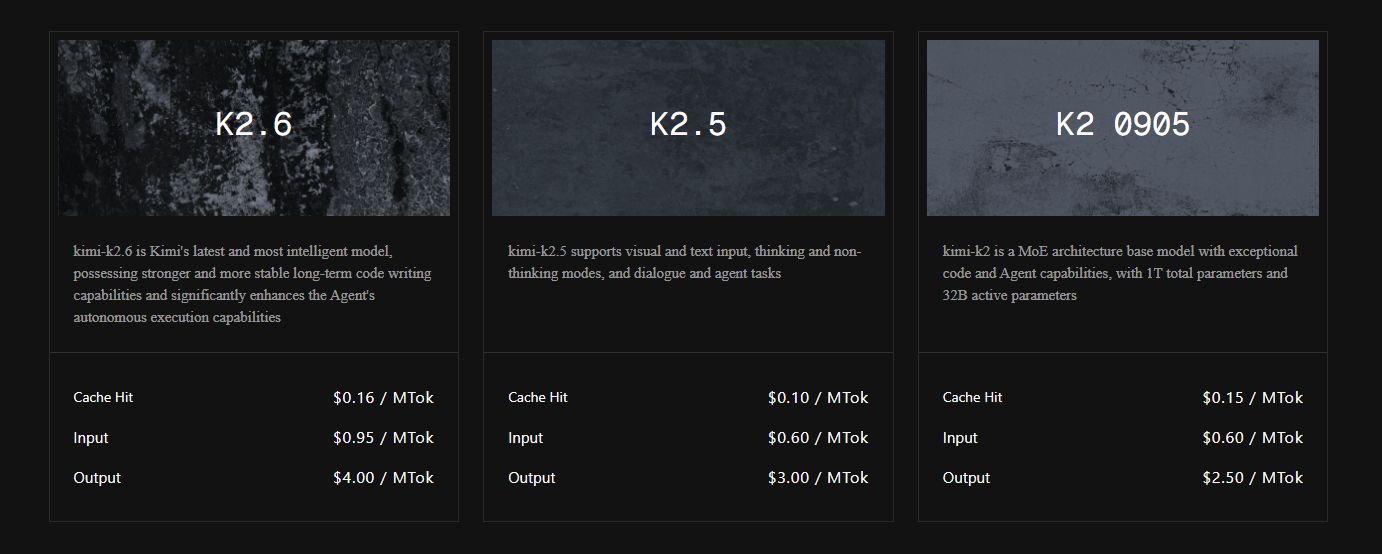
Although the Kimi K2.6 model competes with models like GPT-5.5 and Claude Opus 4.7, it is much more affordable in terms of pricing. Kimi K2.6 API pricing:
- $0.95 per million input tokens
- $4 per million output tokens
- $0.16 per million cache hit input tokens
Kimi K2.6 Performance & Features
While the Kimi K2.6 model offers much more affordable pricing compared to its competitors, what about its performance? Let's take a closer look at the performance and features of the Kimi K2.6.
Kimi K2.6 Key Features
Kimi K2.6 model offers its users features:
- 256K context window
- Native multimodality
- Thinking and non-thinking models
- Tool and computer use
- agent orientation
- OpenAI-compatible API
- Kimi Code
Kimi K2.6 Benchmark Performance
When it comes to Kimi K2.6’s benchmark performance, it’s possible to see that it competes with its rivals, the Claude Opus 4.6, GPT-5.4, and Gemini 3.1 Pro models, and even achieves higher scores than its competitors in some benchmarks. In the Terminal-Bench 2.0 test, designed to measure the coding performance of LLMs, the Kimi K2.6 model outperforms the Opus 4.6 and GPT-5.4 models, while lagging slightly behind the Gemini 3.1 Pro model. On the other hand, in the SWE-Bench Pro test, also used to measure the coding capabilities of LLMs, the Kimi K2.6 model has a higher score than all its competitors, including the Gemini 3.1 Pro.
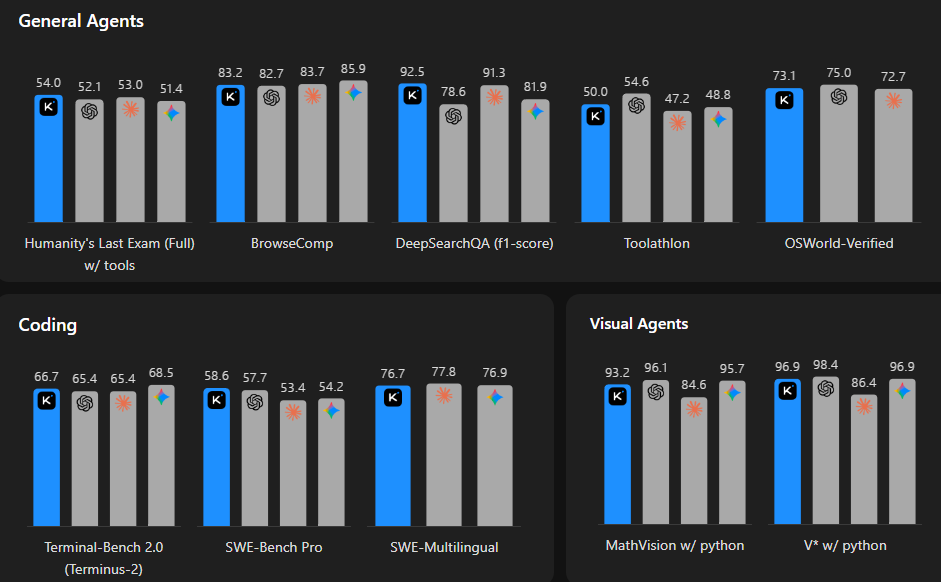
Furthermore, the Kimi K2.6 model achieves high scores in benchmarks such as Humanity’s Last Exam, BrowseComp, and OSWorld-Verified, which are used to measure agentic performance, and MathVision, which is used to measure the visual performance of LLMs.
Kimi K2.6 Long-Horizon Coding
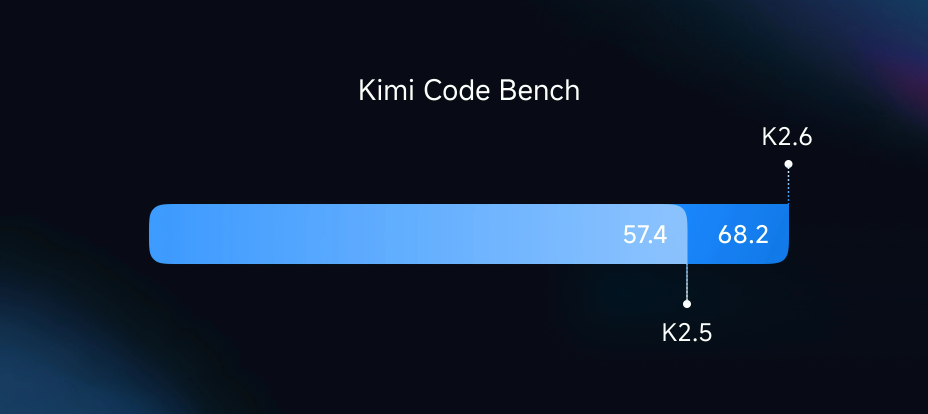
One of the strengths of the Kimi K2.6 model is its long-horizon coding sessions. The model offers higher long-horizon coding performance than its predecessor, and can accurately call the necessary tools from over 4,000, execute them continuously for 12 hours, and autonomously manage the entire process.
TextCortex AI: Integrate Kimi K2.6 Into Your Business
If you are looking for an effective way to integrate the Kimi K2.6 model into your enterprise workflow, TextCortex is the solution for your enterprise. TextCortex is a leading workflow automation and European model provider that aims to reduce the workload of your enterprise.
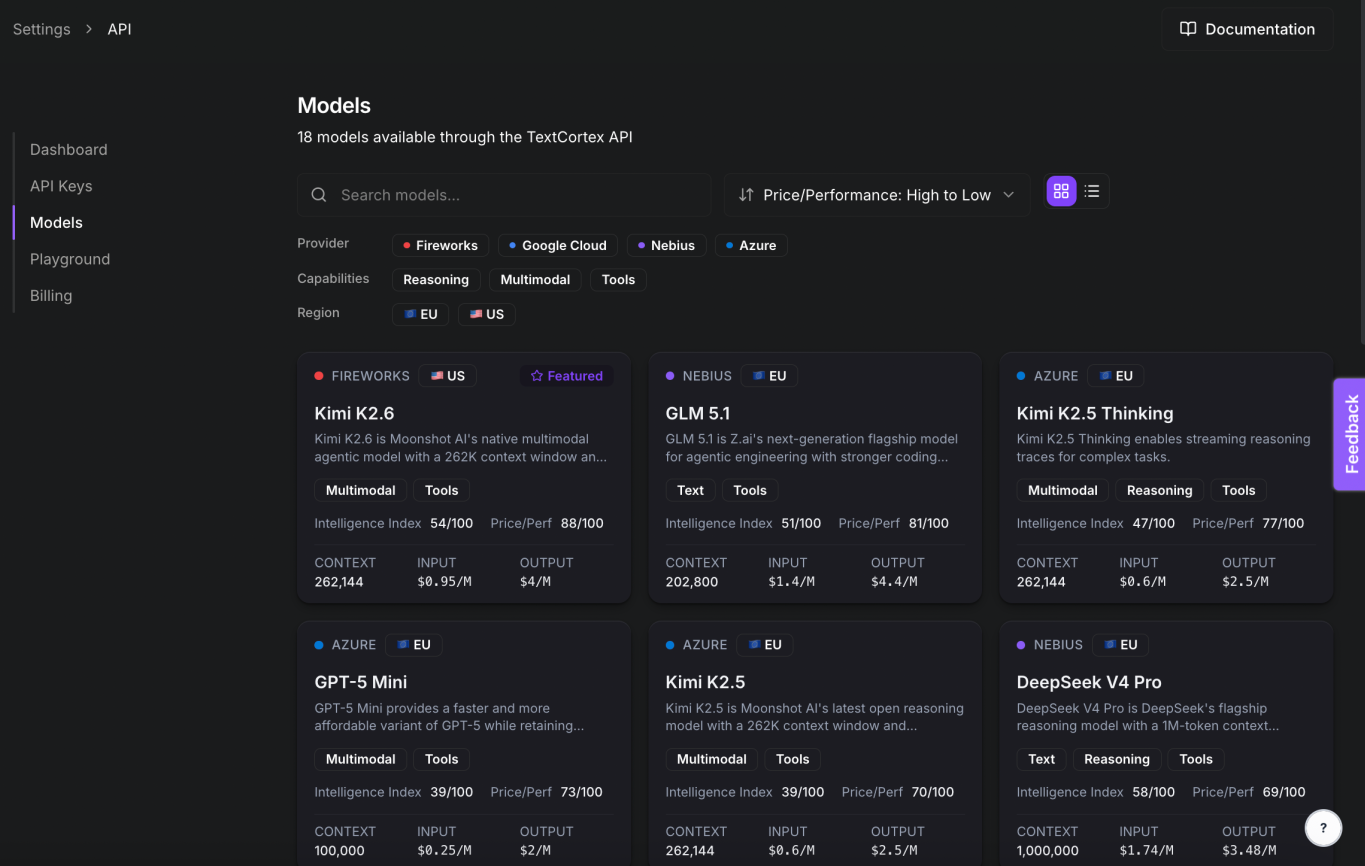
With TextCortex, you can integrate the Kimi K2.6 model into your enterprise workflow, utilize 18 advanced large language models including Kimi K2.6 to automate complex tasks, and take your knowledge management to the next level.
Create Kimi K2.6 Powered AI Agents
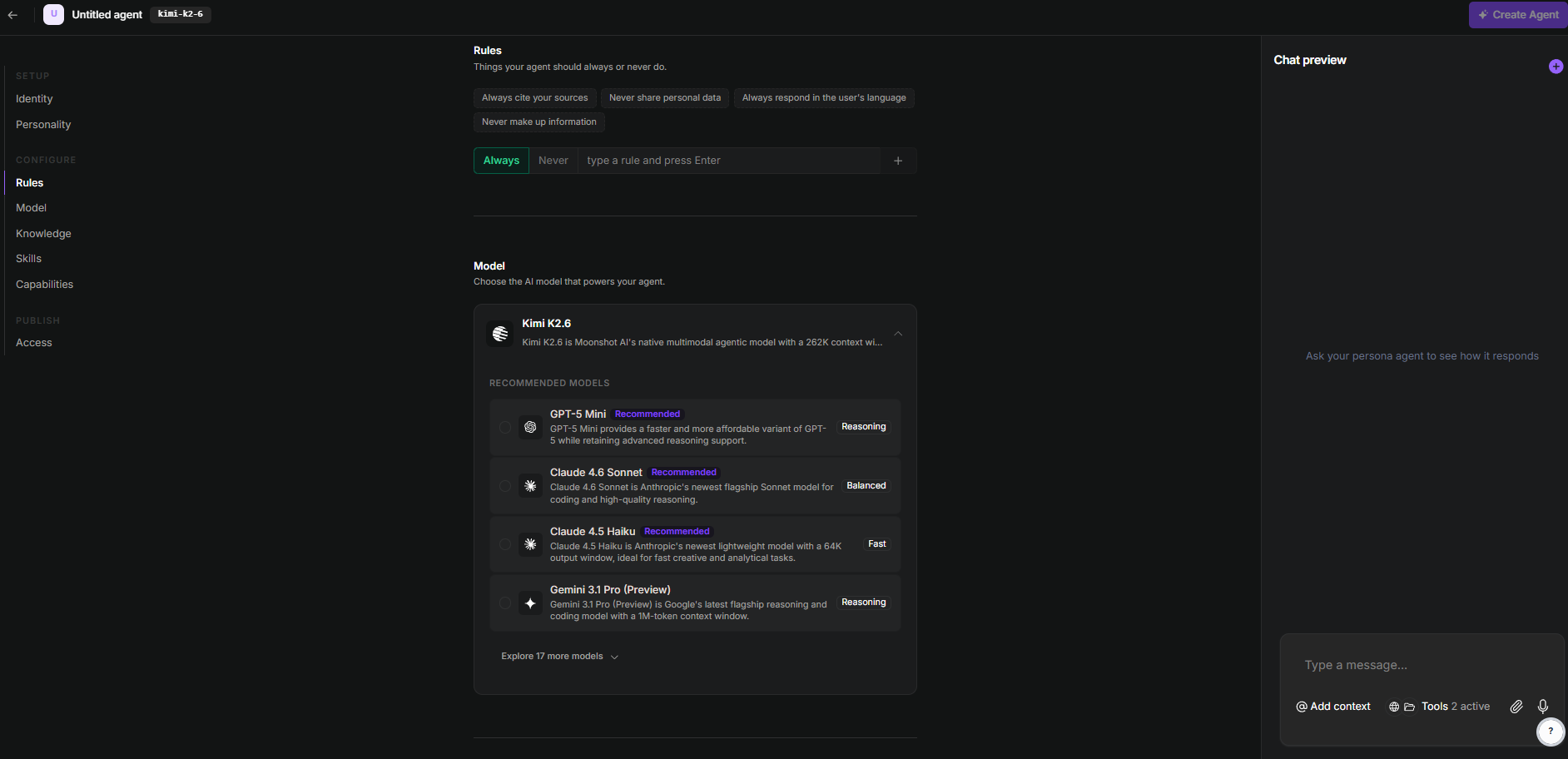
With TextCortex, you can build AI agents powered by the Kimi K2.6 model to meet the specific needs of your enterprise. For example, you can build a code debugging agent powered by the Kimi K2.6 model for your developer team and optimize your AI agent with skills for specific case studies.
Deploy Kimi K2.6 via EU-Hosted Provider
Kimi K2.6 models are not hosted in the EU by default. Therefore, you need to purchase hosting directly from China or the US to use them. However, thanks to TextCortex, you can use Kimi K2.6 models as a GDPR-compliant and EU-hosted API. The TextCortex API allows you to integrate Kimi K2.6 models into your AI model in the EU.
Frequently Asked Questions
Is Kimi K2.6 only for coding?
Although Kimi K2.6 has strong coding capabilities, it is not just for coding. Kimi K2.6 offers multimodality, agentic reasoning, visual understanding, research and tool-assisted workflows.
Is Kimi K2.6 smarter than ChatGPT?
No, the Kimi K2.6 model ranks just behind the ChatGPT model in most benchmarks. There are also benchmarks, such as terminal-bench, where the Kimi K2.6 model performs better than ChatGPT.
Is Kimi K2.6 a local model?
Kimi K2.6 is an open-source large language model. You can run it locally or use it as an API from providers. If you are looking for an EU-hosted provider for the Kimi K2.6 model, TextCortex is the solution for you.
.png)
.png)
.png)