
.png)
Anthropic is an AI platform that stands out for offering a wide context window and subsequently introduces methods for using its own large language models more effectively. Anthropic has both introduced AI agent skills to the AI world and constantly competed with and sometimes outperformed its rival large language models. Continuing this LLM competition, Anthropic released the Claude Opus 4.7 model on April 16, 2026. If you are interested in the Claude Opus 4.7 model and its capabilities, we've got you covered!
In this article, we will examine the Claude Opus 4.7 model and explore its features.
TL; DR
- Anthropic released Claude Opus 4.7 on April 16, 2026, positioning it as a major upgrade over Opus 4.6 in coding, reasoning, agentic tool use, search, computer use, financial analysis, and visual reasoning.
- Opus 4.7 improves visual reasoning in particular, enabling higher-resolution image analysis and stronger slide/visual design generation.
- You can access Opus 4.7 via the Claude web/desktop app, through the API, or by integrating it into enterprise workflows with platforms like TextCortex.
- Opus 4.7 is available across Anthropic’s ecosystem at launch, including Claude Code, Amazon Bedrock, Google Vertex AI, and Microsoft Foundry.
Claude Opus 4.7 Review
Claude Opus 4.7, released on April 16, 2026, is one of Anthropic's latest advanced large language models. Compared to its predecessor, Opus 4.6, Opus 4.7 offers more advanced coding, reasoning, agentic coding, agentic search, tool use, computer use, financial analysis, and visual reasoning. Thanks to its advanced visual reasoning, Claude Opus 4.7 can analyze images with higher resolutions and generate higher-quality slides and visual designs.
How to access Claude Opus 4.7?
There are three main ways to access the Claude Opus 4.7 Model. The first is to use it through Claude AI. Thanks to both the web and desktop applications of Claude AI, you can access and use the Claude Opus 4.7 model as you wish. Another way to access the Claude Opus 4.7 model is to use it as an API. With the Claude Opus 4.7 API, you can power your own AI tool or AI agent using the Opus 4.7 model.
An innovative and simple way to access the Claude Opus 4.7 model is to use it via TextCortex. TextCortex is an enterprise AI infrastructure that allows you to integrate various large language models, including Claude Opus 4.7, into your enterprise workflow.
Is Claude Opus 4.7 free to use?
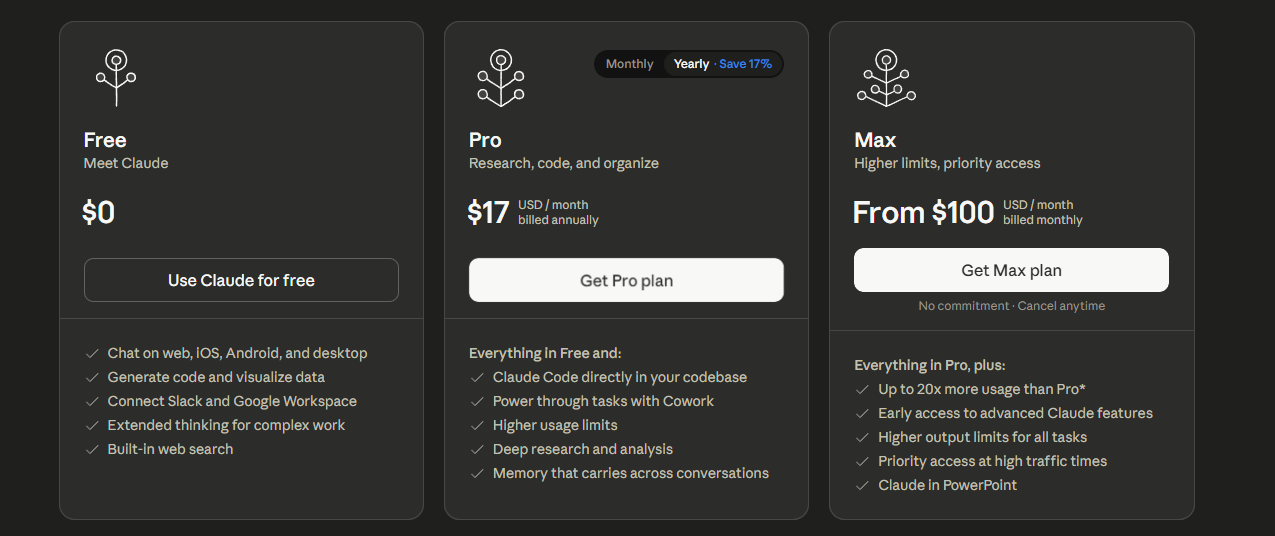
If you want to access the Claude Opus 4.7 model via web or desktop application, you need to subscribe to the Claude Pro or a higher plan, which costs $17 per month.
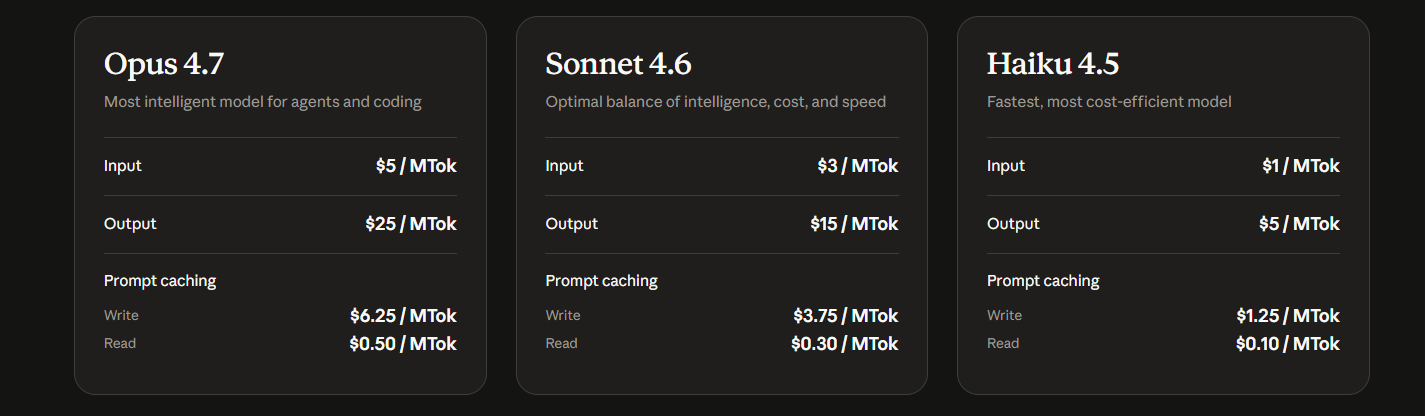
If you are using the Claude Opus 4.7 model as an API, the pricing is the same as the Claude Opus 4.6 model:
- $5 per million input tokens
- $25 per million output tokens
Is Opus 4.7 available for the Claude code?
Opus 4.7 is available across all Claude products as of its release, including Claude Code, Amazon Bedrock, Google Vertex AI, and Microsoft Foundry. In other words, you can start using Opus 4.7 through the Claude applications you are already using.
Claude Opus 4.7 Features & Capabilities
If you're curious about the innovations and offerings of the Claude Opus 4.7 model, let's take a look together.
Claude Opus 4.7 Benchmark Performance
The Claude Opus 4.7 model outperformed its predecessor, the Claude Opus 4.6, in all benchmarks. Furthermore, the Claude Opus 4.7 model also outperformed its competitor, the GPT-5.4 model, in benchmarks such as agentic coding, reasoning, scaled tool use, and agentic computer use. For example, while the GPT-5.4 model scored 57.7% in the SWE-bench Pro benchmark, which measures agentic coding, the Claude Opus 4.7 achieved a score of 64.3% in the same benchmark.
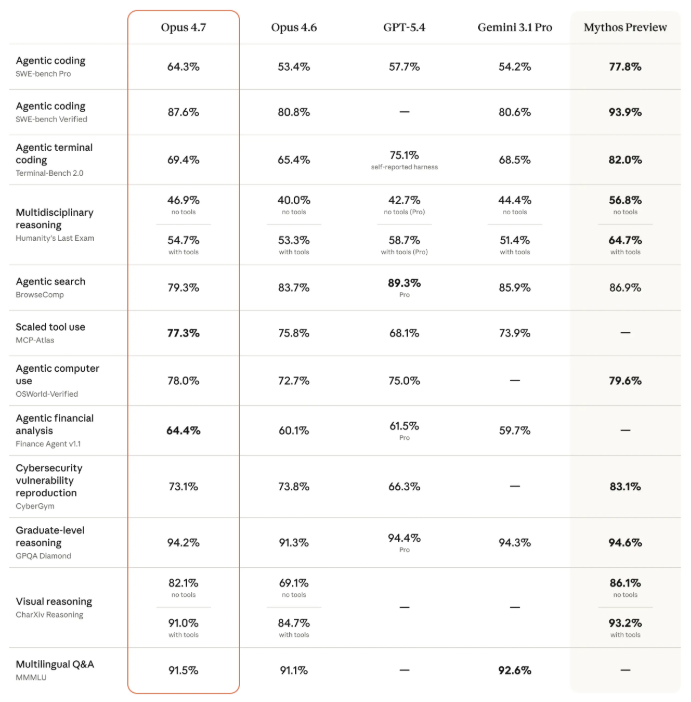
Furthermore, as seen in the benchmark table, the Claude Opus 4.7 model scores higher in all benchmarks compared to its predecessor, the Claude Opus 4.6. Especially considering that the model is priced the same as the Opus 4.6, it means we get a more advanced and better-performing device for the same price.
Claude Opus 4.7 Token Usage
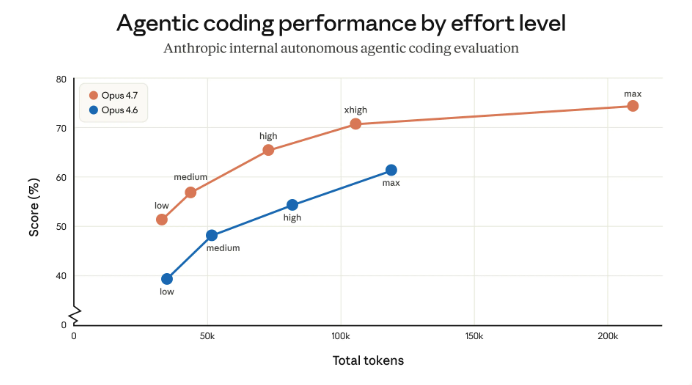
Although the Claude Opus 4.7 model is an upgraded version of the Claude Opus 4.6 model, it uses more tokens than its predecessor. According to Anthropic’s release article, the Claude Opus 4.7 model can use up to 35% more tokens for the same input compared to its predecessor. Furthermore, the Claude Opus 4.7 model may incur unexpected costs for enterprises due to the increased token usage in higher effort scenarios. While the model increases input token usage, the same is not true for output tokens. Therefore, we recommend monitoring token consumption using methods such as task budget and effort parameters before using the model.
Claude Opus 4.7 Safety
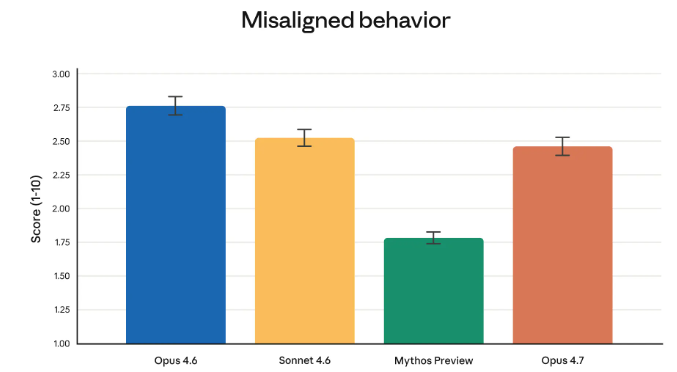
The Claude Opus 4.7 model has a similar safety profile to its predecessor, the Claude Opus 4.6 model. While the model offers improved prompt injection resistance compared to its predecessor, it is weaker in other safety areas, such as the tendency to give overly detailed harm-reduction advice on controlled substances.
TextCortex AI: Integrate Opus 4.7 Into Your Workflow
TextCortex allows users to utilize a wide range of large language models, including Claude Opus 4.7, in both everyday tasks and AI agents. TextCortex is a leading knowledge management and workflow automation tool that aims to reduce the time spent on repetitive workflows for enterprises. With TextCortex, you can build Opus 4.7-powered AI agents and automate a wide range of tasks, from coding to data analysis.
TextCortex Features
TextCortex provides knowledge bases that allow users to upload internal data or connect to databases. With knowledge bases, you can create folders for different data groups. Another TextCortex feature is the AI agent framework, which integrates with knowledge bases. With the TextCortex AI agent builder, you can build AI agents to perform and automate specific tasks, and add your knowledge base data. You can build your AI agents manually with TextCortex or use our AI agent builder feature. Furthermore, TextCortex's wide range of LLM support including Claude Opus 4.7 allows you to choose the optimal large language model for each task.
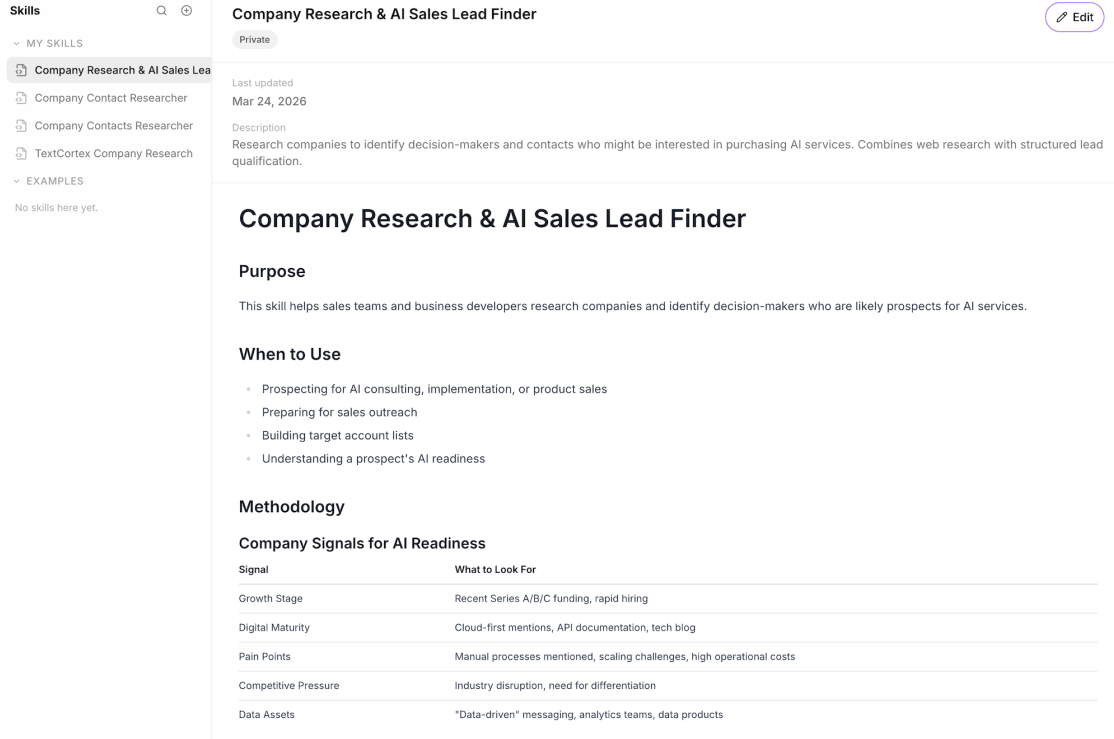
You can leverage our connectors and skills features to use your AI agents more effectively. With the skills feature, you can create prompt groups for specific actions and tasks and use them modularly in any of your AI agents.
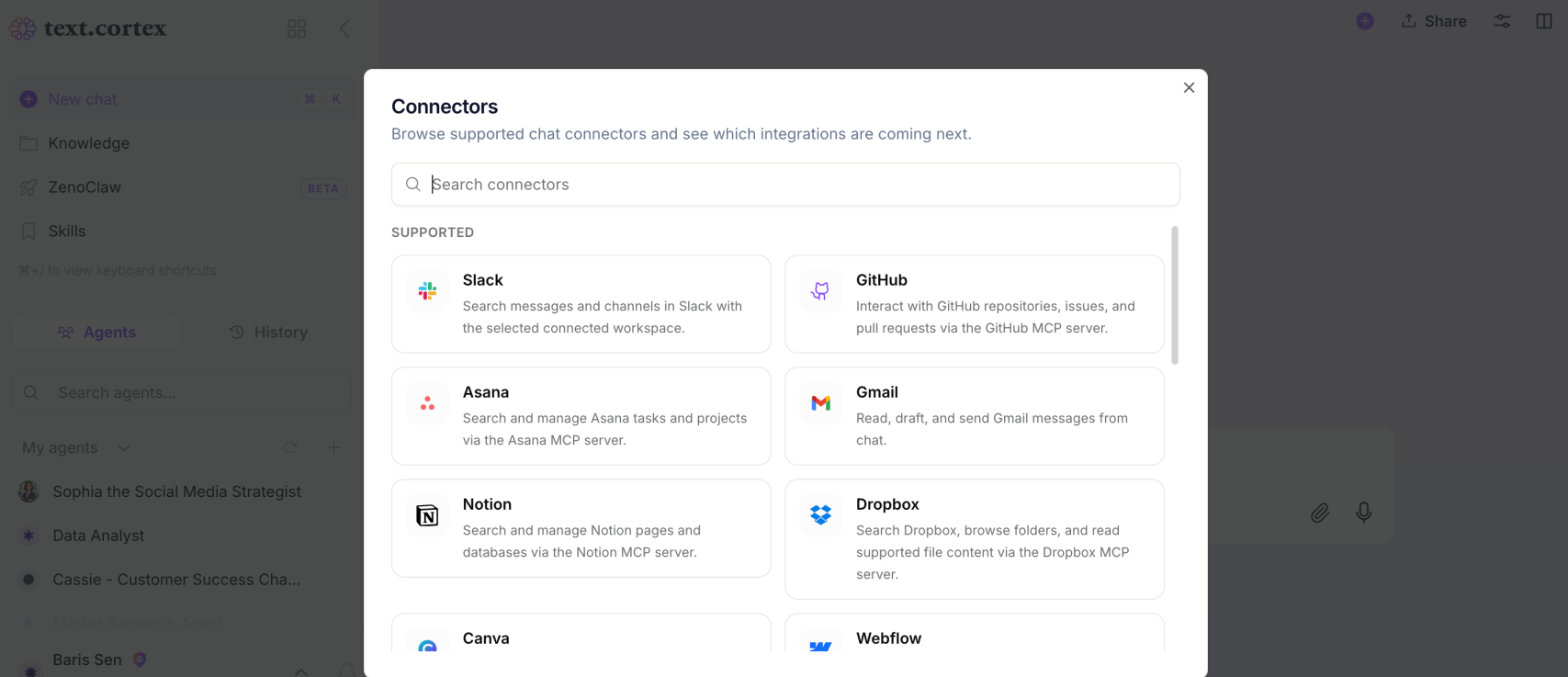
Our connectors feature allows you to integrate third-party apps into your skills or agents. For example, if you want a skill you've created to be activated in Slack, you can integrate Slack with a specific skill using connectors.
Frequently Asked Questions
Is Opus 4.7 better?
The Claude Opus 4.7 is a better model than its predecessor, the Opus 4.6, achieving higher scores in benchmarks.
Is Opus 4.7 in Claude Code?
The Claude Opus 4.7 model is available on all Anthropic products, including the Claude Code.
Is Claude Opus 4.7 free?
No, to use the Claude Opus 4.7 model, you need a Claude Pro or higher paid subscription.
.png)
.png)
.png)