.png)
Anthropic released the Claude Sonnet 5 model on June 30, 2026, following the release of the Mythos and Fable 5 models, offering more frequent use and a lower cost. Claude Sonnet 5 provides features such as tool use, autonomous run, and planning for enterprise-grade agentic use. Additionally, Claude Sonnet 5 comes with a brand-new tokenizer that makes token usage more efficient compared to its predecessor, Claude 4.6 Sonnet. If you're curious about the Claude Sonnet 5 model and its innovations, we've got you covered.
In this article, we will explore the Claude Sonnet 5 model and its new features.
TL; DR
Anthropic released Claude Sonnet 5 on June 30, 2026, offering performance close to Claude Opus 4.8 at Sonnet-tier pricing. It uses a new tokenizer shared with Mythos and Fable 5, cutting token consumption by 30% compared to Sonnet 4.6, effectively delivering a 30% cost saving at the same price point ($3/$15 per million input/output tokens standard, with introductory pricing of $2/$10 through August 31, 2026). Sonnet 5 outperforms its predecessor across benchmarks like SWE-bench Pro, Terminal-Bench 2.1, Humanity's Last Exam, OSWorld-Verified, and GDPval-AA v2, and is particularly cost-efficient for research-focused agentic tasks (while Opus 4.8 remains better for agentic computer use). New behavior changes include default adaptive thinking (replacing manual extended thinking) and stronger resistance to prompt injection and hallucination. Access is available free via the Claude AI chatbot, or via API, Claude Code, and Claude Cowork. Sonnet 5 is not GDPR/EU AI Act compliant by default, but TextCortex offers it as a compliant API and AI agent for enterprise workflow automation, knowledge work, and document analysis.
What is Claude Sonnet 5?
Claude Sonnet 5 is the latest version of the Sonnet model, the middle model in the Claude LLM family. Claude Sonnet 5 offers users similar features to Claude Opus 4.8 at a much lower price. You can use the Claude Sonnet 5 model for both everyday tasks and repetitive enterprise tasks. However, what shines in Claude Sonnet 5 is its agentic performance, such as reasoning, coding, tool use, and knowledge work. These features are sufficient to make Claude Sonnet 5 the default model for your enterprise.
Claude Sonnet 5 Pricing
Claude Sonnet 5 offers the same pricing as its predecessor, Claude Sonnet 4.6. You can use Claude Sonnet 5 for free via the Claude AI chatbot. However, if you want to use Claude Sonnet 5 as an API, you are subject to the following pricing:
- 3 per miljon insatta polletter
- $3.75 per 5m cache write input tokens
- $6 per 1h cache write input tokens
- 15 per miljon utgivna tokens

“Introductory pricing of $2/$10 per million input/output tokens is in effect through August 31, 2026, after which the standard pricing of $3/$15 per million input/output tokens will take effect. “
How to Access Claude Sonnet 5?
You have several ways to access the Claude Sonnet 5 model, the first of which is to use it through the Claude AI chatbot. You can use the Claude Sonnet 5 model for free through the Claude AI chatbot. All you have to do is create an Anthropic account and head to the Claude AI chatbot web application.
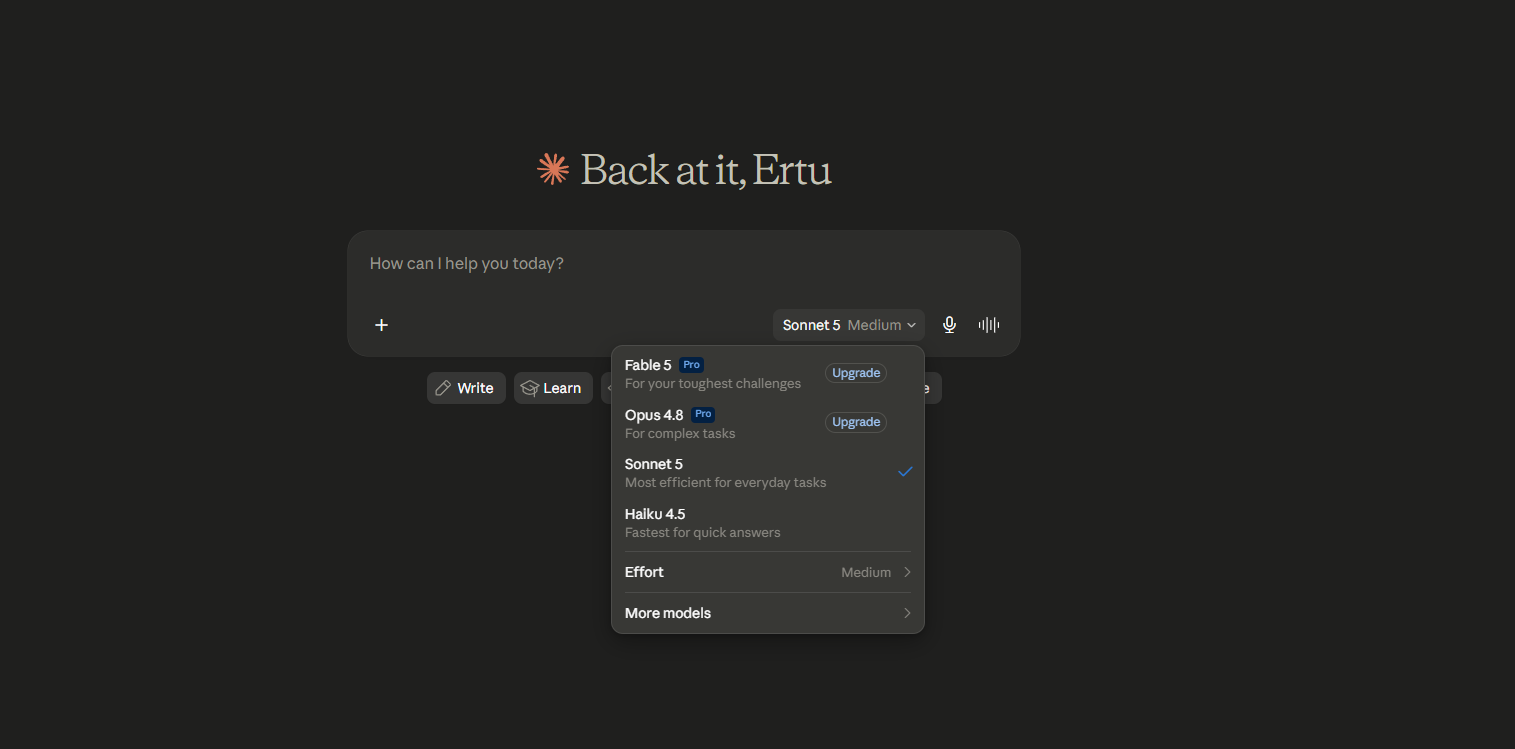
The second way to access the Claude Sonnet 5 model is to use it as an API. With the Claude API, you can use the Sonnet 5 model to power your own AI app. Another way to access the Claude Sonnet 5 model is through Claude platforms such as Claude Code. Since the release of Claude Sonnet 5, it has been integrated into products such as Claude Code and Claude Cowork.

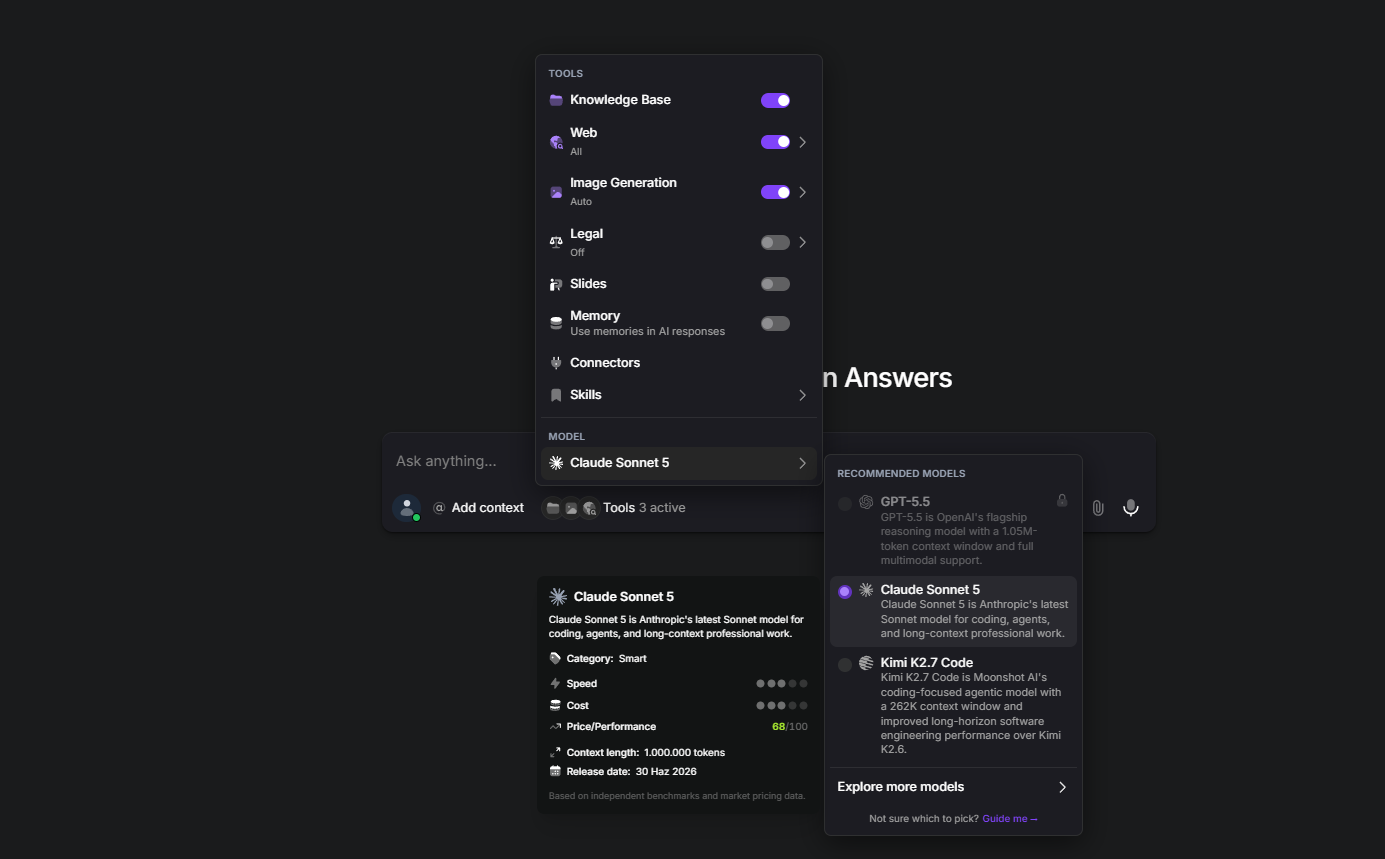
The way to use the Claude Sonnet 5 model at the enterprise level is through TextCortex. With TextCortex AI, you can use the Claude Sonnet 5 model for enterprise tasks such as workflow automation, knowledge work, AI search, document & data analysis, and document creation. Furthermore, with TextCortex, you can use the Sonnet 5 model as both a GDPR and EU AI Act compliant API and AI agent.
Claude Sonnet 5 Features: What’s New?
The Claude Sonnet 5 offers more advanced features and performance values compared to its predecessor, the Claude Sonnet 4.6. Let's take a closer look at the Claude Sonnet 5 features and explore the difference.
Claude Sonnet 5 Benchmark Performance
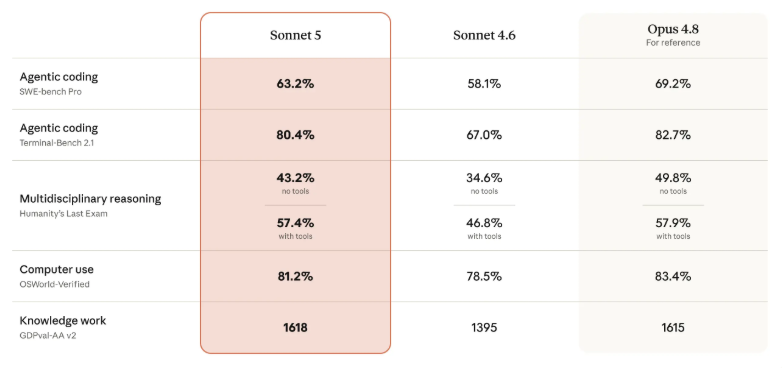
The Claude Sonnet 5 model offers higher performance in all benchmarks compared to its predecessor, the Claude Sonnet 4.6 model. Anthropic's release article states that the benchmark performance of the Claude Sonnet 5 model is similar to that of the Claude Opus 4.8 model. The Claude Sonnet 5 model achieves significantly higher scores than the Claude Sonnet 4.6 model in benchmarks such as SWE-bench Pro (for agentic reasoning), Terminal-Bench 2.1 (for agentic coding), Humanity’s Last Exam (for multidisciplinary reasoning), OSWorld-Verified (for computer use), and GDPval-AA v2 (for knowledge work), while scoring slightly below the Opus 4.8 model.
Claude Sonnet 5 New Tokenizer
One of the biggest innovations of the Claude Sonnet 5 model is the transition to a new tokenizer system that came with the Claude Mythos and Fable 5 models. This tokenizer system aims to save tokens and therefore costs by spending them much more efficiently. According to Anthropic’s documentation, the Claude Sonnet 5 model spends 30% fewer tokens for tasks of the same volume compared to its predecessor, the Claude Sonnet 4.6 model. Considering that the Claude Sonnet 5 model has the same pricing as the Sonnet 4.6 model, we can say that the Sonnet 5 model provides a 30% cost saving compared to its predecessor. In other words, when using Claude, you will now complete the same tasks at a 30% lower price.
Claude Sonnet 5 Agentic Use
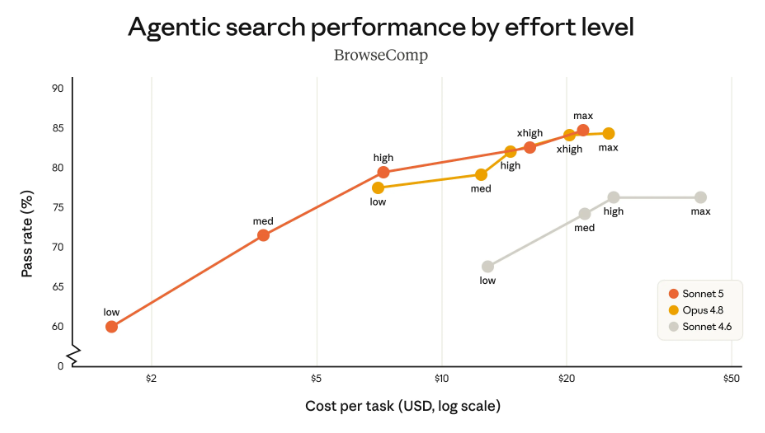
The Claude Sonnet 5 model offers more effective and cost-efficient performance for agentic use compared to the Sonnet 4.6 model. When comparing the Claude Sonnet 5 and Claude Sonnet 4.6 models for agentic use, the Sonnet 4.6 model is significantly more expensive to perform the same tasks, while the Sonnet 5 model can complete the same tasks more effectively and at a lower cost. In this context, we can say that the Claude Sonnet 5 model has similar performance to the Claude Opus 4.8 model. However, when it comes to practical use, we face a dilemma: choosing between the Claude Sonnet 5 and Claude Opus 4.8 models for agentic use. According to Anthropic's release article data, the Claude Sonnet 5 model is more cost-efficient for research-related agentic use. In contrast, the Claude Opus 4.8 model is more cost-efficient for agentic computer use. You can find the cost-performance equilibrium by making this choice based on the effort requirements of the task you wish to complete.
Claude Sonnet 5 Behavior Changes
One of the new features introduced with Claude Sonnet 5 is the model's behavior changes. The Claude Sonnet 5 model offers adaptive thinking by default. Since Claude Sonnet 5 will increase the use of the adaptive thinking token, you can use the command “thinking: {type: "disabled"}”. This command will disable adaptive thinking in Claude Sonnet 5, just like its predecessor. Additionally, manual extended thinking has been removed from the Claude Sonnet 5 model. You can now adjust this parameter through adaptive thinking.
Claude Sonnet 5 Safety and Compliance
The Claude Sonnet 5 model is better at refusing malicious requests and resisting hijack attempts in prompt injection attacks compared to its predecessor, the Claude Sonnet 4.6 model. It also shows lower rates of hallucination than Sonnet 4.6. However, the Claude Sonnet 5 model does not offer regulatory compliance by default. If you want to use it as both an API and agent in compliance with regulations such as GDPR and the EU AI Act, TextCortex is the solution for you.
TextCortex AI: Use Sonnet 5 as GDPR Compliant
If you're looking to use the Claude Sonnet 5 model as your enterprise infrastructure to power your AI agent or enhance your knowledge work, TextCortex is the solution for you. TextCortex is a leading knowledge management and workflow automation tool that aims to reduce the workload of enterprises by providing them with comparative automations, better knowledge work, and seamless integrations. In addition, TextCortex offers users better security and compliance for a wide range of LLMs, including Sonnet 5.
Access Sonnet 5 via TextCortex API
If you want to use the Claude Sonnet 5 model in the European region in compliance with regulations and the EU AI Act, TextCortex is the solution for you. Through TextCortex, you can access a wide range of large language models, including Claude Sonnet 5, as APIs in a GDPR-compliant and EU AI Act compliant manner. This allows you to use Claude Sonnet 5 and other Claude models to automate your workflow and make your enterprise smarter in the EU region without violating any laws.
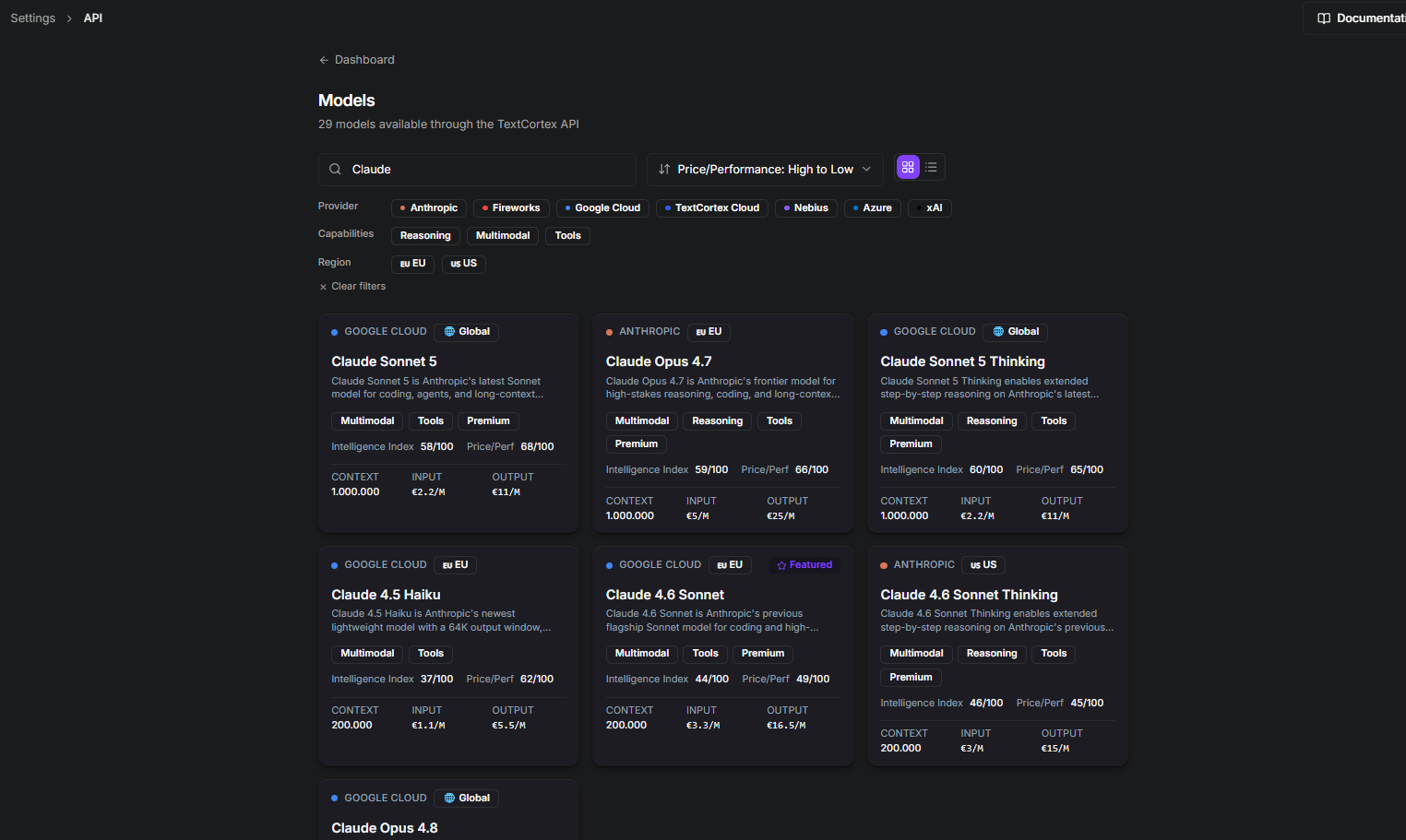
Claude Sonnet 5 Powered AI Agents
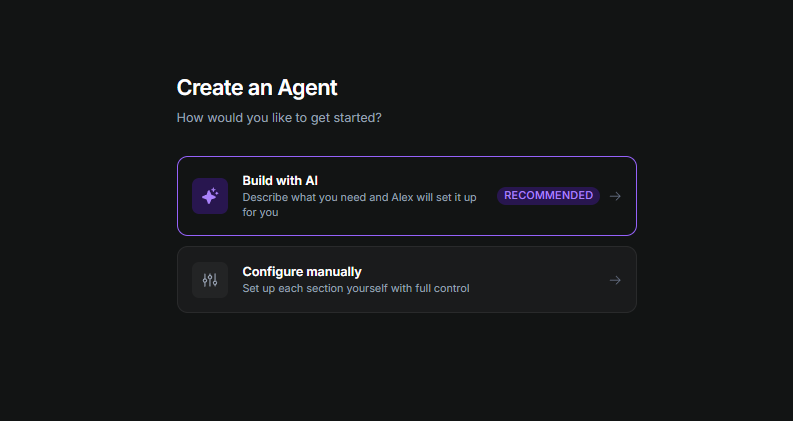
With TextCortex, you can build AI agents that use the Claude Sonnet 5 model as the default model and automate various tasks within your enterprise. For example, with the TextCortex AI agent builder, you can build AI agents that automate your M&A due diligence tasks such as document review, contract review, and data analysis, generating accurate and consistent output every time and saving you time. There are two methods for building AI agents with TextCortex: the first is to build it with AI, and the second is to build it manually.
Vanliga frågor och svar
What can Claude Sonnet 5 do?
Claude Sonnet 5 can help you complete a variety of tasks, from enterprise tasks to everyday tasks. Because Claude Sonnet 5 offers improved agentic performance, you can also use it to automate repetitive tasks.
Is Claude Sonnet 5 good?
The Claude Sonnet 5 offers significantly better performance than its predecessor, the Claude Sonnet 4.6, while offering slightly lower performance than the Claude Opus 4.8. Additionally, thanks to its new tokenizer system, the Sonnet 5 has 30% lower token consumption compared to its predecessor.
Is Claude Sonnet 5 free?
The Claude Sonnet 5 model is a free-to-use model accessible via claude.ai. However, if you wish to use the Claude Sonnet 5 model as an API, you will need to pay a token fee.
.png)
.png)
.png)