.png)
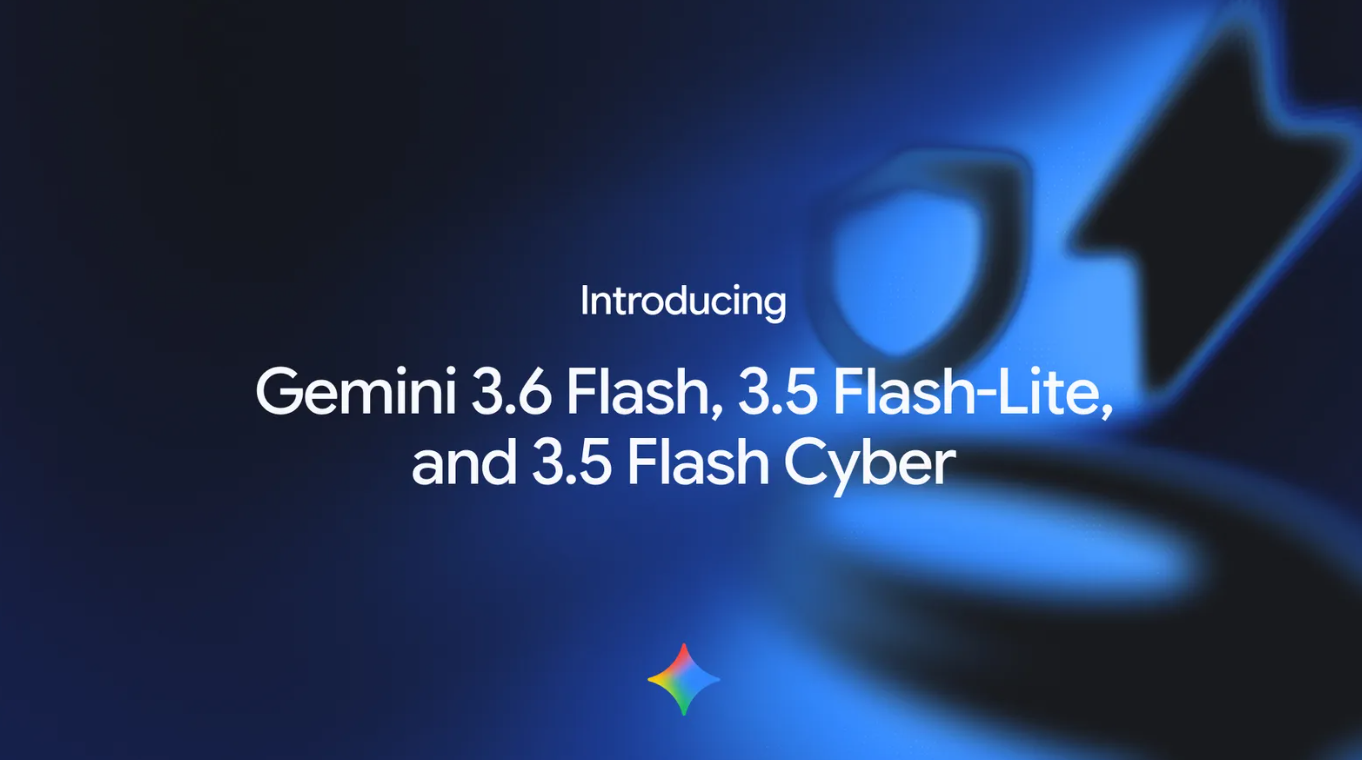
Following Anthropic and OpenAI, Google has also announced its model that delivers high performance with lower token expenditure in coding, knowledge work, and agentic reasoning tasks: Gemini 3.6 Flash. Gemini 3.6 Flash is accessible both as an API and through Gemini AI. It comes bundled with the 3.5 Flash Lite and 3.5 Flash Cyber models. If you're curious about what Gemini 3.6 Flash is and its capabilities, we've got you covered!
In this article, we will examine the features and performance of Gemini 3.6 Flash.
TL; DR
Google released Gemini 3.6 Flash on July 21, 2026, a lightweight, low-latency model optimized for coding, agentic reasoning, multimodal tasks, and knowledge work at a strong price-performance ratio. It is available alongside Gemini 3.5 Flash Lite and Gemini 3.5 Flash Cyber. You can try it free through Gemini AI, and API access costs $1.5 per million input tokens and $7.5 per million output tokens. Gemini 3.6 Flash uses 17% fewer tokens than Gemini 3.5 Flash, lowering overall costs while improving performance. It also includes built-in computer use for reliable agentic workflows and outperforms frontier models in tool use and knowledge work, though it still trails GPT-5.6 Luna by 18% on DeepSWE v1.1. The model is not EU AI Act or GDPR compliant by default, but TextCortex offers it as an EU-hosted, compliant API and as the engine for custom AI agents, knowledge bases, and workflow automation.
What is Gemini 3.6 Flash?
Gemini 3.6 Flash is a large language model developed by Google and released on July 21, 2026. Compared to its predecessors, it offers advanced coding, agentic reasoning, high performance in multimodal tasks, low latency, and reliable performance. Gemini 3.6 Flash aims to provide the optimal price-performance ratio for agentic workflows. It was developed based on customer feedback and developer comments from previous Gemini models.
Is Gemini 3.6 Flash Free to Use?
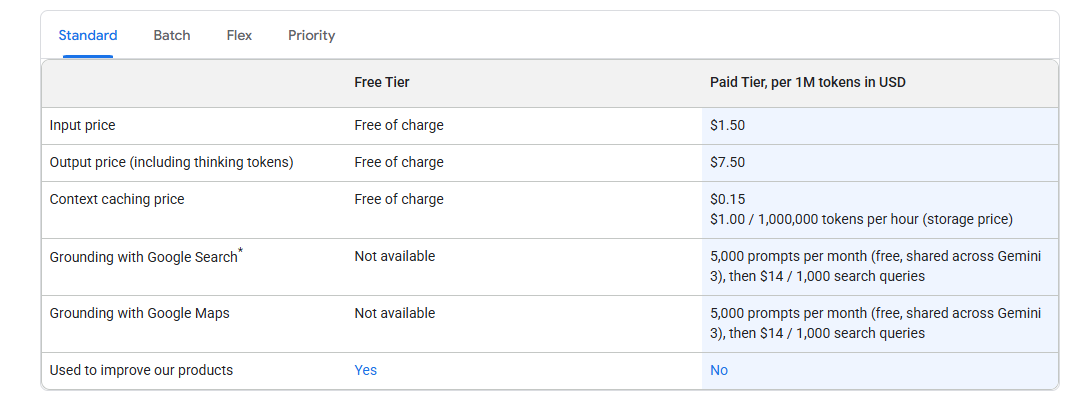
You can use and try the Gemini 3.6 Flash model for free via Gemini AI. However, if you want to use the Gemini 3.6 Flash model as an API for your enterprise workflow, you will need to pay the API pricing. The API pricing for the Gemini 3.6 Flash model is as follows:
- 1.5 pro Million eingegebener Token
- 7.5 pro Million ausgegebener Token
How to Access Gemini 3.6 Flash?
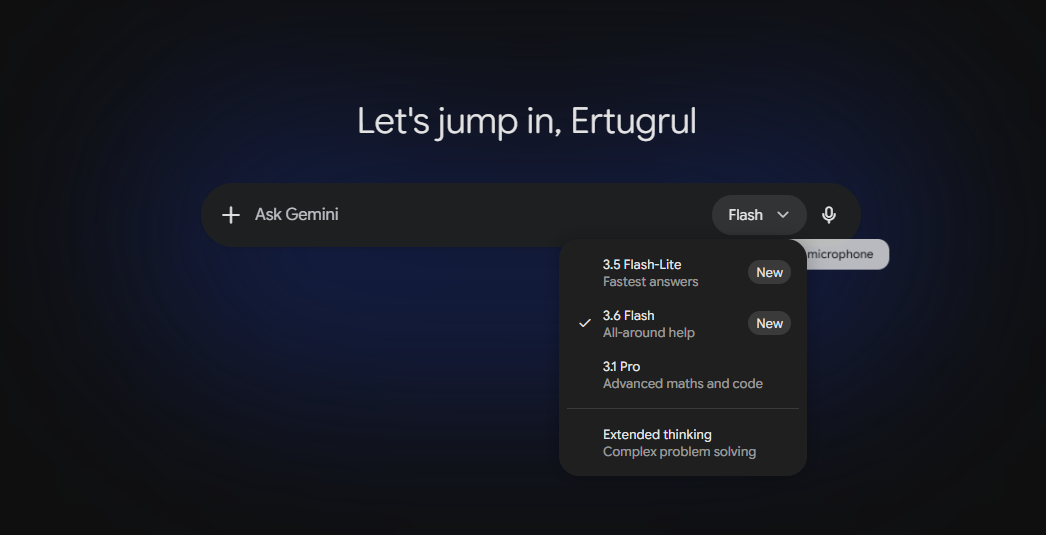
The easiest and most straightforward way to access the Gemini 3.6 Flash model is by using it through the Gemini AI chatbot. You can use the Gemini 3.6 Flash model free of charge through the Gemini AI chatbot.
Another way to access the Gemini Flash 3.6 model is to use it as an API. However, if you are looking for an innovative and enterprise-focused way to access the Gemini Flash 3.6 model, you can use TextCortex. TextCortex allows you to integrate a wide range of large language models, including Gemini Flash 3.6, into your enterprise workflow.
Gemini 3.6 Flash Features & Performance
The Gemini 3.6 Flash model comes with new features, capabilities, and performance limits, the most notable of which is lower token consumption. If you're curious about the features of the Gemini 3.6 Flash model, we've listed them for you!
Benchmark-Leistung
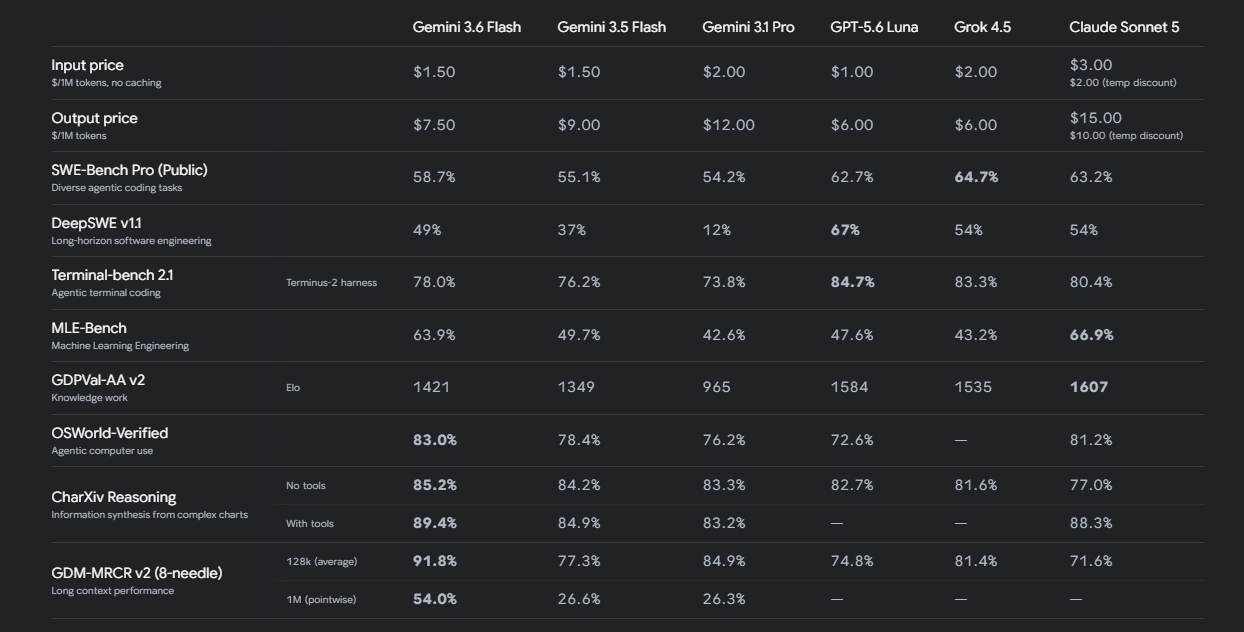
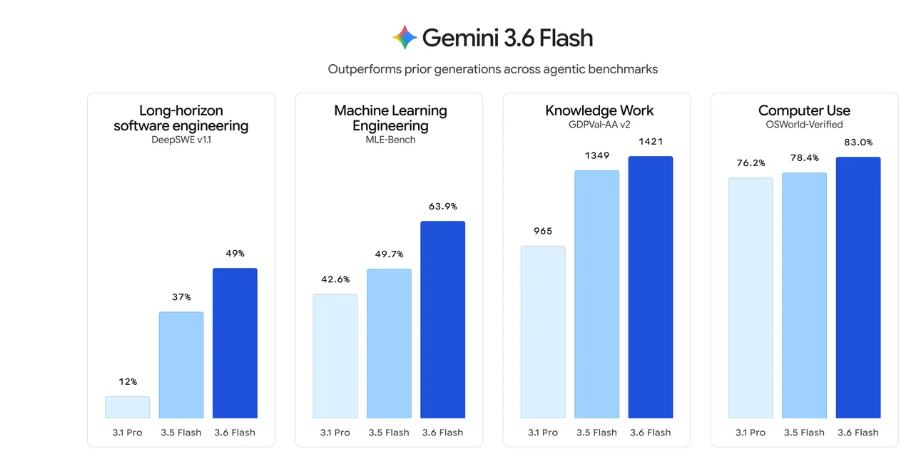
While the Gemini 3.6 Flash model offers significantly improved benchmark performance compared to its predecessors, it doesn't surpass competitors in every benchmark. For example, while the Gemini 3.6 Flash model scores higher than both its predecessors and competitors in the OSWorld-Verified benchmark, it lags behind the GPT-5.6 Luna model by 18% in the DeepSWE v1.1 benchmark.
Fewer Token Consumption
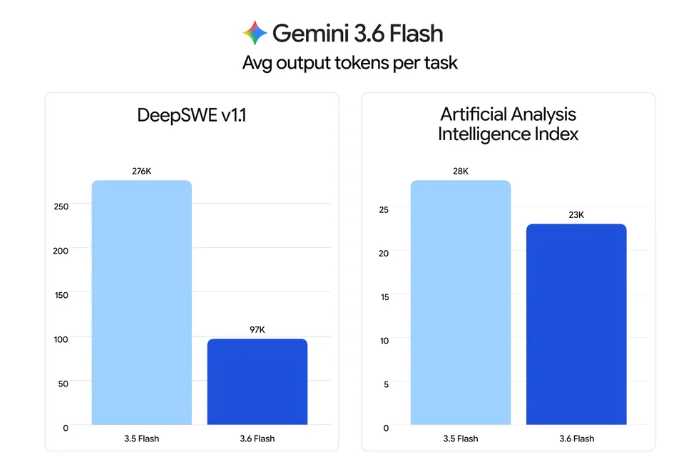
The Gemini 3.6 Flash model uses 17% fewer tokens to perform the same tasks compared to its predecessor, the Gemini Flash 3.5 model. According to Google's article, the Gemini 3.6 Flash model consumed 17% fewer tokens than the Gemini 3.5 Flash model in the Artificial Analysis Index. In this context, the Gemini 3.6 Flash model allows you to save costs by spending fewer tokens in your automated workflows. Furthermore, the lower input-output pricing of the Gemini 3.6 Flash model compared to its predecessor will significantly increase your cost savings. Moreover, the model's higher performance means it can handle more complex tasks more easily.
Better Agentic Performance
The Gemini 3.6 Flash model offers significantly better performance in agentic reasoning, knowledge work, tool use, and machine learning engineering compared to its predecessors, the Gemini 3.5 Flash and Gemini Pro 3.1 models. The agentic performance of the Gemini 3.6 Flash model makes it ideal for automating repetitive, multistep, and complex workflows. Furthermore, the Gemini 3.6 Flash model outperforms frontier models in agentic tasks involving tool use and knowledge work. The model also has computer use as a built-in tool to reliably support agentic tasks across surfaces.
TextCortex AI: Implement Gemini 3.6 Flash Into Your Business
If you want to use the Gemini 3.6 Flash model to automate your enterprise workflow and enhance your knowledge work, TextCortex AI is the solution you're looking for. TextCortex is a leading knowledge management and workflow automation platform that aims to reduce the workload of enterprises and save them time and cost. With TextCortex, you can use a wide range of frontier and powerful large language models, including Gemini 3.6 Flash, to automate or accelerate your enterprise tasks.
Access Gemini 3.6 Flash as EU Hosted
The Gemini 3.6 Flash model is not compliant with the EU AI Act and GDPR by default. If you want to access the Gemini 3.6 Flash model as GDPR compliant, TextCortex is the solution for you. With the TextCortex API, you can use the Gemini 3.6 Flash model as EU-hosted and GDPR compliant. TextCortex offers frontier LLMs, including Gemini 3.6 Flash, and other cost-effective LLMs as EU-hosted and GDPR compliant. This allows you to use the Gemini 3.6 Flash model in your businesses operating in the European region without any legal issues.
Gemini 3.6 Flash Powered AI Agents
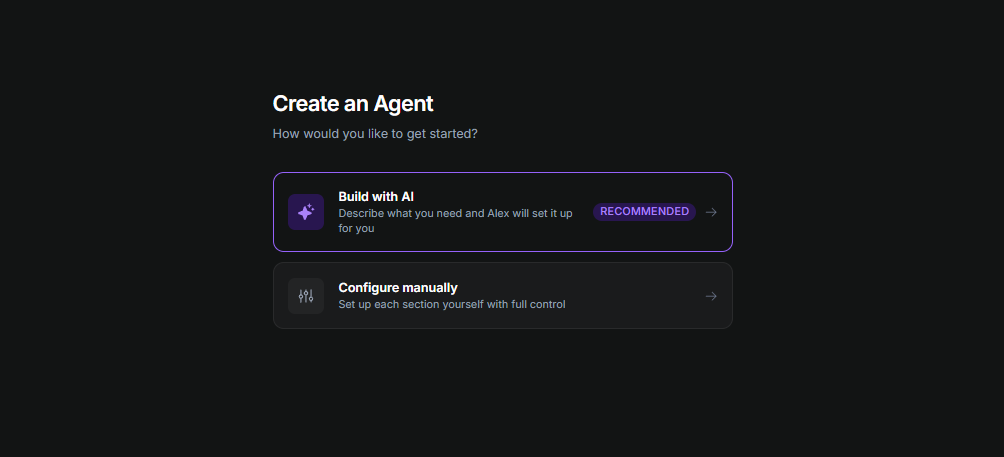
An effective way to use the Gemini 3.6 Flash model is to automate your workflows or streamline your tasks by using it as an AI agent. With TextCortex, you can build custom AI agents for any task or workflow, and even fine-tune them with modular behavioral rules called "skills." There are two ways to build an AI agent with TextCortex. The first is to build the AI agent you need in a conversational format with AI support. The second method is a manual building framework that allows you to customize everything from the default model to the always and never behaviors it should perform.
Empowered Your AI Agents via Knowledge Bases
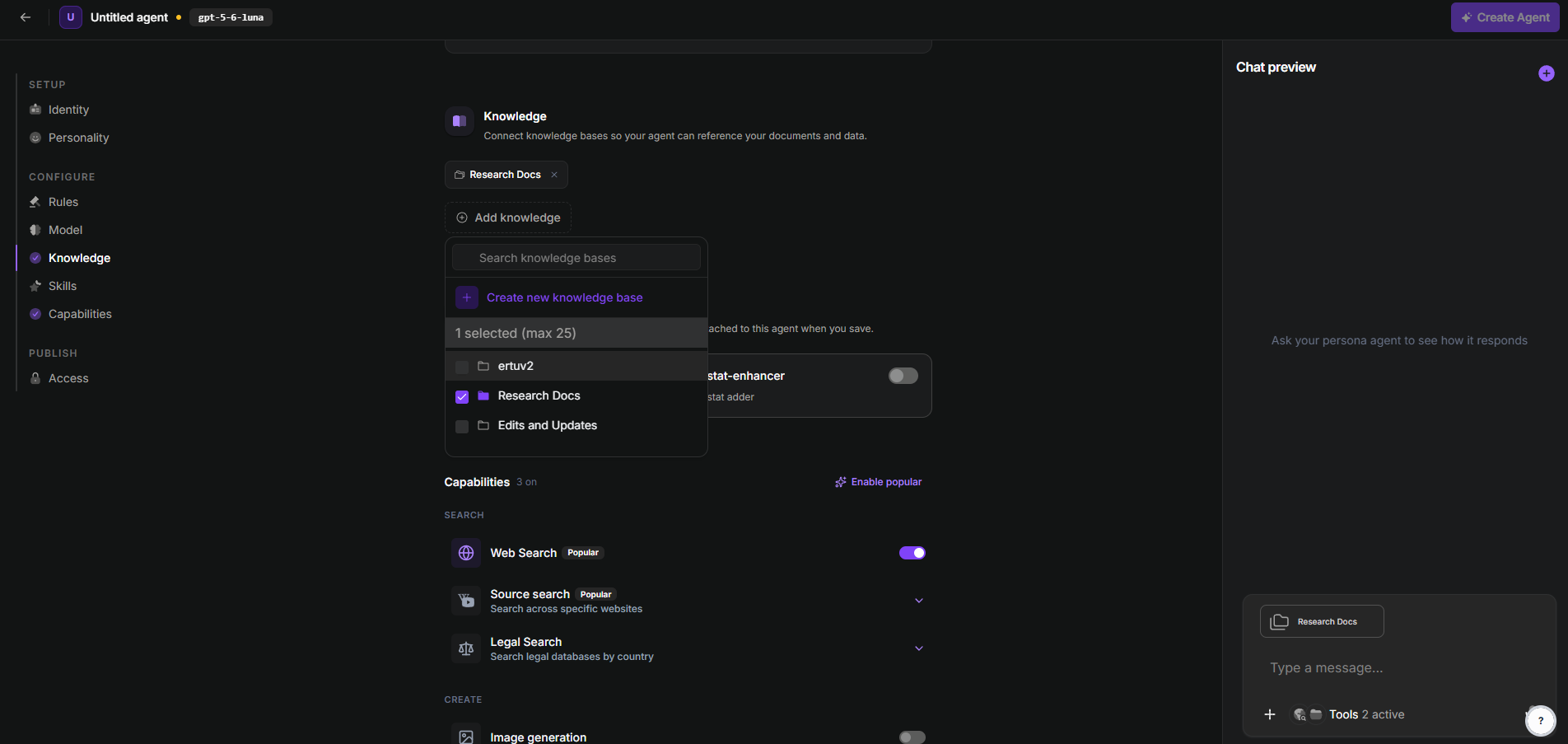
TextCortex offers its users knowledge bases where they can connect their internal databases or manually upload documents. With our knowledge bases, you can integrate the databases you use in your enterprise tasks into TextCortex. You can then use these databases for knowledge work or AI search via AI chatbots. Furthermore, if you want your TextCortex AI agents to work with specific databases, you can assign your knowledge bases to the agents during the building process. Another way to use your AI agents and databases together is to enter the knowledge base name with the "@" symbol in the chatbox during use, for example, "@Research Docs". Then, you can use your built AI agents to complete tasks such as data analysis, AI search, and turning raw data into insights using your desired knowledge base.
.png)
.png)
.png)